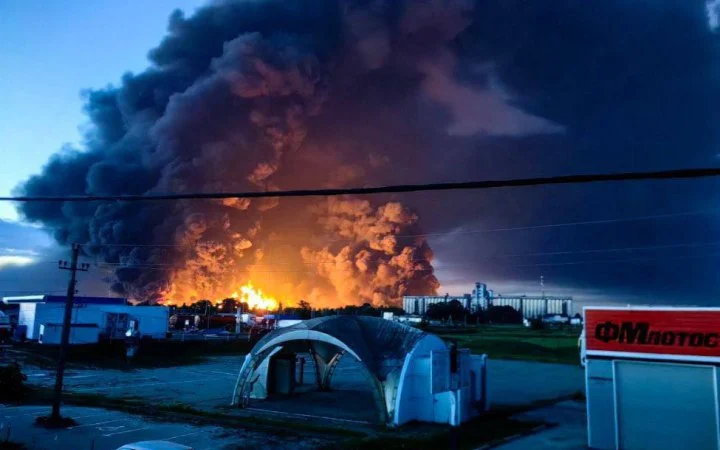
President Zelensky called the strike "a very successful start to Constitution Day." According to him, two facilities were hit overnight: the Slavyansk oil refinery in Krasnodar Krai — approximately 300 km from the front line — and an oil refinery in Yaroslavl Oblast, nearly 700 km from the Ukrainian border. Both facilities were burning, and NASA's FIRMS satellite service detected thermal anomalies in the Slavyansk-on-Kuban area.
Why these targets
The Slavyansk refinery is one of Russia's largest independent oil refineries in the south — it supplies fuel, including to occupied Crimea. As noted by OSINT channel Exilenova+, "given current operations in Crimea, this is a very attractive target." The Yaroslavl plant is critical for Russia's central regions. Striking both simultaneously is deliberate pressure on fuel supply logistics, not a point demonstration.
The strike's context is direct: on June 25, Zelensky approved a 40-day SBU operation aimed at "forcing the aggressor to stop the war," according to Kyiv Independent. The attack on two refineries on June 28 is effectively the first publicly confirmed large-scale strike within this campaign.
"I approved a 40-day operation by the Service to influence the aggressor state with the aim of pressuring it to end the war"
President Zelensky on Telegram, June 25, 2026
Crimea: from tourist season to emergency status
The fuel crisis on the peninsula is already material. According to Radio Free Europe/Radio Liberty, on June 21, Crimea's occupation administration halted fuel sales to private individuals and businesses — gas stations operate exclusively for state structures. The head of the collaborationist administration, Aksyonov, did not specify when sales would resume. Crimea subsequently declared a regional emergency — two days after announcing the 40-day operation.
Strategic logic and limits
A systematic campaign against oil refining yields measurable effects. According to analysts at the Caspian Policy Center, Ukraine has struck Russian oil refineries at least 61 times since January 2024, with at least 40 resulting in fires or prolonged damage. According to the Baker Institute, Russia's oil refining volume has fallen to its lowest level in 12 years, and maritime oil product exports have declined by nearly 10%.
- Slavyansk refinery — one of southern Russia's largest independent plants; critical for Crimea and Krasnodar Krai
- Yaroslavl refinery — ~700 km from the border; supplies Russia's central regions
- Moscow refinery — struck twice in June 2026; supplies over one-third of fuel to the capital region
Euronews describes Kyiv's logic as follows: strikes on deep rear areas "bring the war to Russian population that has lived in relative peace for over four years." But the 40-day operation has a specific deadline — and a specific measure of success that Zelensky has not publicly revealed.
If by the end of 40 days the fuel crisis in Russia deepens to the point where restrictions spread from Crimea to central regions — this will be the first public test of whether economic pressure without negotiations can change the Kremlin's position.







