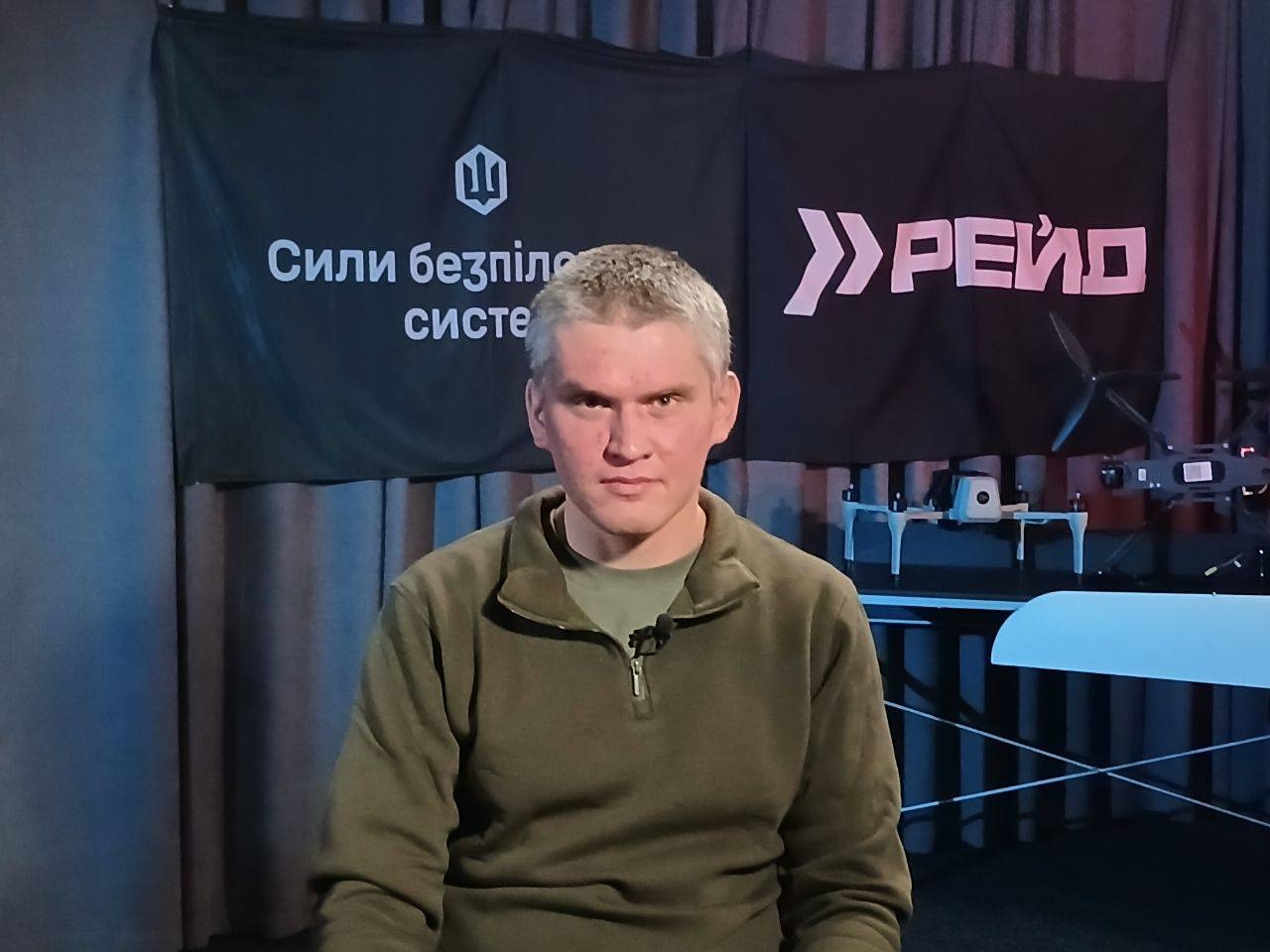
Raid of the 413th Regiment: numbers as a mirror of the problem
Electronic warfare operators of the 413th Regiment "Raid" suppressed 86 Russian Molniya-type strike UAVs in January. This number was named in an interview with LIGA.net by a "Raid" serviceman and Defense Express weapons expert Ivan Kyrychevskyi. The fact itself is not just a statistic: behind it lies a technological dependency that allowed the Russian Federation to strengthen battlefield coordination.
Why Starlink mattered for the Russians
According to Kyrychevskyi, satellite internet terminals served the Russians as a tool of inter-service command. That meant small infantry groups, strike FPV drones and artillery could operate as a single system almost in real time — increasing the effectiveness of strikes and the difficulty of countering them from our side.
"Such a figure for suppressing Russian drones is a vivid illustration of the role Starlink performed for the Russians... For them it was exactly a tool of inter-service command, needed to combine small infantry groups, strike UAVs into a single striking fist, and to have all that supported almost in real time by guided bombs and artillery strikes"
— Ivan Kyrychevskyi, "Raid" serviceman, Defense Express expert
What exactly is being used and how it works
The Molniya is a cheap fixed-wing strike UAV often used as a kamikaze drone. It has a small mass and simple construction (fuselage ~1.5 m, wingspan ~1.2 m); the payload can even include an anti-tank mine TM-62M, speed up to ~90 km/h and a flight range of at least 40 km. Because of their low cost and ease of production, these devices are used to wear down air defense (AD) and electronic warfare (EW) systems.
Context: what changed after Starlink was found on drones
In January there were reports of the first cases of satellite internet being used in Russian attacks (incidents near Kropyvnytskyi and a drone flight to Dnipro were mentioned). After that, Ukraine introduced registration of terminals — for both military and civilian use — and announced disconnection of unverified devices. This is a direct step intended to reduce the enemy's access to uncontrolled command channels.
Consequences and outlook
Kyrychevskyi notes that flights of Molniyas have not been completely halted — the drones continue to be used, but the loss of a simple unified communications platform reduces the potential for mass coordination. In his assessment, the Russian Federation is already looking for alternative solutions in the field of satellite communications, but each such replacement will require time and resources.
What this means for us: restricting access to unverified terminals is not an instant "end" to drones, but a strategic step toward complicating the enemy's rapid and centralized coordination of attacks. The next question is how quickly partners and our services can turn a temporary gain into a long-term technological advantage.
Source: interview with LIGA.net; comments by Ivan Kyrychevskyi (Defense Express); open reports on terminal registration in Ukraine.





