What happened
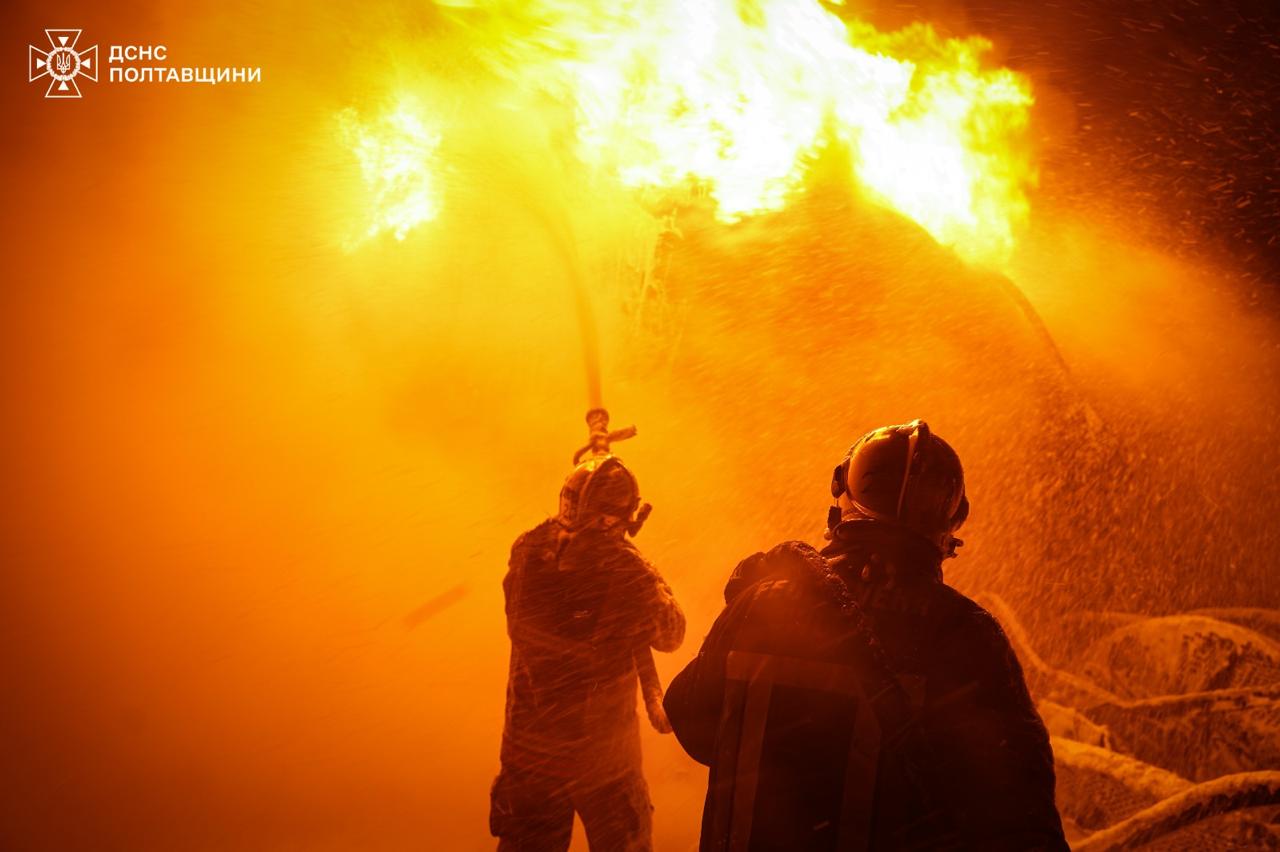
On the night into Sunday, February 8, Russian drones carried out a massive strike on Naftogaz facilities in Poltava region. Naftogaz CEO Serhiy Koretskyi confirmed hits by hostile UAVs: according to the company, there is damage to assets and equipment; however, official reports say that the incident resulted in no casualties.
"Emergency crews, technical services and all relevant units are working in an intensified mode to eliminate the consequences of the attack"
— Serhiy Koretskyi, CEO of NJSC "Naftogaz of Ukraine"
This strike was the 19th targeted attack on Naftogaz facilities since the beginning of the year, indicating a systematic pattern of attacks on energy infrastructure.
Rescuers' response and scale
According to the State Emergency Service (SES), fires at several sites in Myrhorod district were localized and extinguished. About 200 rescuers and roughly 60 pieces of equipment were involved in the operations; the fires were fought in an operational mode — as of 11:16 the blaze had been extinguished.
"In Myrhorod district, as a result of direct hits and falling drone debris, fires broke out at several sites of one of the enterprises"
— Vitaliy Dyakivnych, head of the Poltava Regional Military Administration
At the same time, across the country on the night of February 7–8 there were strikes by drones and cruise missiles; according to Prime Minister Denys Shmyhal, substations, overhead power lines and certain thermal power plants (notably the Burshtynska and Dobrotvirska) were hit, causing some regions to experience emergency power outages.
Why it matters
Attacks on the energy sector have more of a strategic than tactical dimension: systematic strikes undermine supply stability, create a risk of long-term equipment damage, and strain recovery logistics during cold weather. Key takeaways now are:
- This is part of a coordinated campaign of pressure on critical infrastructure, which has already seen dozens of incidents this year.
- The quick response by the SES and emergency crews minimized human losses, but does not remove the need to restore machinery and equipment.
- Emergency power cuts in regions reveal the vulnerability of distribution networks and the need for backup sources and strengthened air defenses to protect critical infrastructure.
What’s next
In the short term, the priority is restoring damaged equipment and ensuring worker safety; in the long term, it is increasing the resilience of the energy system, diversifying supplies and securing international technical support. Experts note that the effectiveness of these measures depends on the speed of delivery of components and resources for repairs, as well as on the level of air defense for critical facilities.
The practical question for partners and state institutions remains: will there be sufficient capacity for rapid restoration and reinforced protection — and how will this affect timetables for restoring electricity supply in the affected regions?





