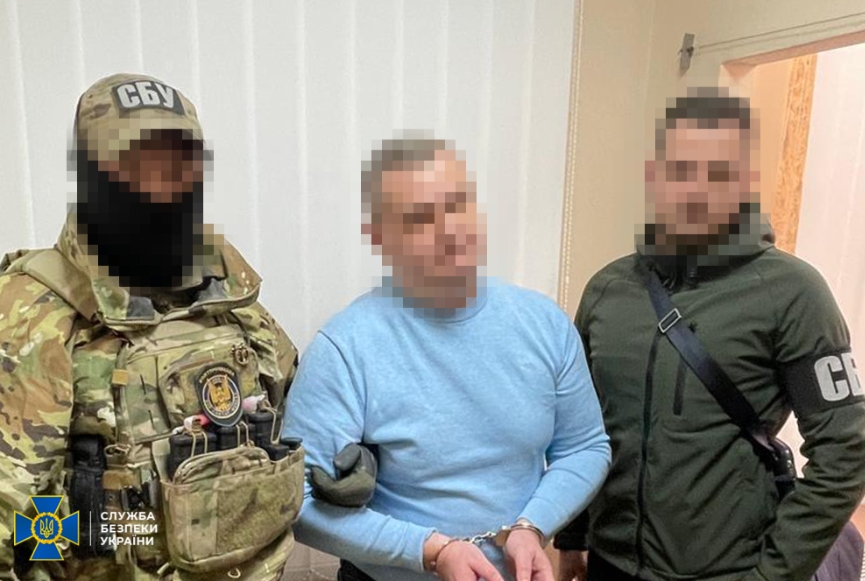
The counterintelligence service of Ukraine's Security Service reported suspicion against an engineer at a strategic defense enterprise in Dnipropetrovsk region. According to the investigation materials, the man simultaneously worked for the Federal Security Service and the Main Intelligence Directorate of the General Staff of the Armed Forces of Russia. A double assignment from competing intelligence services is rare even by wartime standards.
Scheme: Son as a Tool of Pressure
According to the SBU, recruitment occurred through the suspect's personal vulnerability: his son is serving a sentence in Russia for drug-related crimes. Russian handlers promised amnesty in exchange for secret data — technical documentation of defense production and geolocation of production facilities. This is a classic scheme of forced recruitment through a hostage — and, as the case materials show, it worked.
«Recruitment through relatives in Russia's reach is a systemic tool, not an exception. The FSB and GRU deliberately seek people with such connections».
— from assessments by specialized analysts of counterintelligence activities
The simultaneous recruitment of a single agent by two different intelligence services — the FSB and GRU — indicates either a lack of coordination between the structures or deliberate duplication of sources to verify data authenticity.
What the Suspect Transmitted
- Production process secrets: technical documentation regarding the plant's defense products
- Facility geolocations: coordinates of restricted facilities, potentially suitable for targeting strikes
- Data on defense production under conditions of martial law
During searches, investigators seized evidence of espionage. The engineer has been notified of suspicion under Part 2 of Article 111 of Ukraine's Criminal Code — state treason committed during martial law. Penalty: life imprisonment with confiscation of property. The suspect is held in custody.
Context: Not an Isolated Case
Dnipropetrovsk region is one of the key areas of Ukraine's defense-industrial complex, making it a priority target for intelligence. During 2025 alone, the SBU has registered at least several cases related to attempts to penetrate defense enterprises or gather data about them in the region. In one case, a GRU agent involved his own minor son in espionage to coordinate strikes on Dnipro. In another case, a Russian citizen with a residence permit spied under the cover of a welder.
Common to these cases is the use of personal connections as an entry point: relatives in Russia, social media with pro-Russian comments, acquaintances in occupied territories.
If the investigation proves that both intelligence services received data from a single source independently of each other, the question arises: did the FSB and GRU know about the common agent — and if so, was part of the transmitted data intentionally verified disinformation from the Ukrainian side?





