What Happened and Why Now
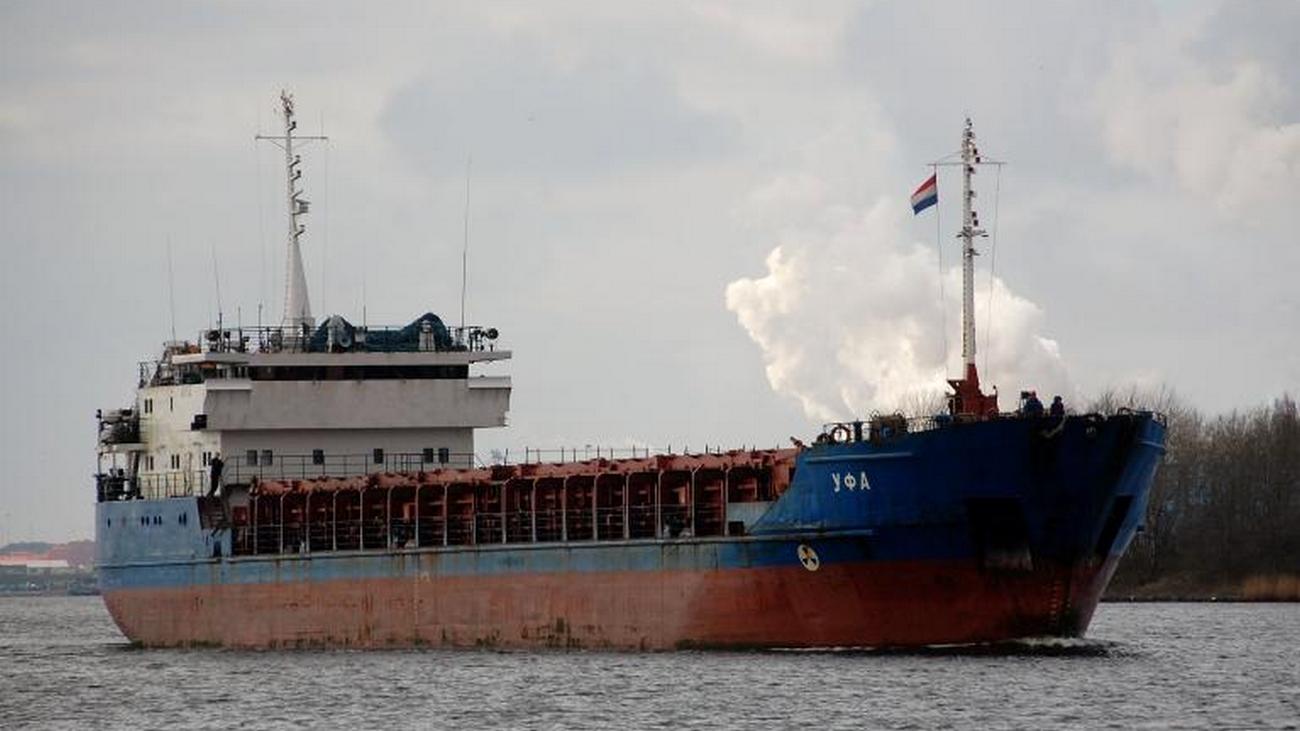
On May 11, Swedish prosecutors confirmed: the dry cargo ship Caffa has been officially confiscated and will remain in the port of Trelleborg in southern Sweden until the conclusion of the trial. This is not merely a continuation of arrest — it is a qualitatively different status. Confiscation means that the court will ultimately decide whether to transfer the vessel to the state that initiated the request. Which state exactly — Swedish prosecutors do not disclose, but Swedish media suggest it is Ukraine.
Prosecutor Göran Larsson explained the logic of the decision concisely:
"A foreign state has requested that certain investigative measures be conducted in Sweden, including those related to the vessel Caffa. I have decided to confiscate the vessel so that the court can consider the question of transferring it to another state."
Göran Larsson, Prosecutor at Sweden's National Unit for International and Organized Crime
The Scheme: False Flag, Disabled AIS, Grain from an Occupied Port
Caffa — a 96-meter dry cargo ship — was detained on March 6, 2025 in the Baltic Sea near Trelleborg. The vessel was traveling from Casablanca to St. Petersburg under the flag of Guinea. Swedish coast guards established that the flag was forged — the corresponding documents proved to be falsified.
- According to Ukrainian intelligence, in July 2025 Caffa loaded grain in occupied Sevastopol — a port under Russian control since 2014.
- The vessel lost its classification in June 2025. Turkish port inspection noted 11 violations in April 2025 — from working conditions to navigation and propulsion safety.
- Of the 11 crew members, 10 are Russian citizens. The captain was detained for using a false flag and suspicion of document forgery, later released.
- Caffa is included on Ukraine's sanctions list precisely because of its involvement in schemes for illegal export of goods from occupied territories.
This is a classic shadow fleet scheme: an old vessel, opaque registration, frequent flag changes, disabled or manipulated AIS signal. Caffa fits it perfectly.
Why This Is More Than Just One Case
The arrest of Caffa occurred against the backdrop of a series of detentions in Swedish waters. As early as March 12, coast guards stopped the tanker Sea Owl I under the flag of the Comoros Islands — also suspected of sanctions violations. Later, the Swedes stopped a third vessel, Flora 1, which since 2023 has changed four names and seven flags.
As Splash247 writes, Swedish prosecutors are essentially testing an algorithm: establish a false flag → prove flaglessness → stop under UNCLOS norms → confiscate. Caffa became the first test of this chain.
In a broader context — Great Britain is already discussing a mechanism whereby funds from shadow fleet vessels or the vessels themselves could be directed toward financing Ukraine's defense. President Zelensky's office called the confiscation of Caffa "a shift from detention to practical action."
What Comes Next
Caffa stands in Trelleborg. The Swedish court must decide: transfer the vessel to the requesting state or not. If the precedent works and Caffa reaches Ukraine or is realized for its benefit — this will first test the reality of the West's new approach to shadow fleet assets. The question is whether Swedish courts have the legal framework for such a transfer — or the case will end in confiscation without practical results for Kyiv.





