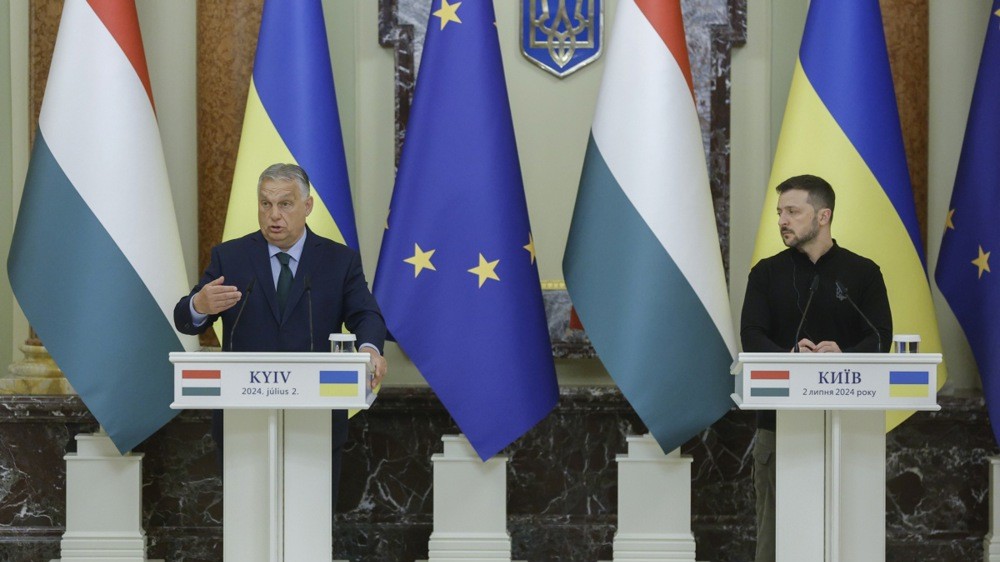
What happened in Davos
During his speech at the World Economic Forum in Davos, President Volodymyr Zelensky sharply outlined the problem of pro‑Russian influence in Europe and cited the Hungarian prime minister as an example. It was not an emotional outcry but a political signal — that the positions of certain European leaders have a direct impact on the security and unity of the continent.
"We all see that the forces trying to destroy Europe do not lose a single day... Every Viktor who lives on Europe's money and at the [same] time tries to sell Europe's interests deserves a knock on the head..."
— Volodymyr Zelensky, President of Ukraine
Orban's response — brief and to the point
Viktor Orban reacted on the social network X, accusing Zelensky of allegedly "not being able or not wanting" to put an end to the war, and stressed that Hungary is not prepared to support Kyiv's military efforts. At the same time, Orban promised that Budapest will continue to supply electricity and imported fuel to Ukraine and will support refugees.
"The Ukrainian people, of course — despite your carefully chosen images — can still rely on us continuing to supply your country with electricity and fuel..."
— Viktor Orban, Prime Minister of Hungary (post on X)
(Editorial clarification: this refers to imported supplies, not to free military aid).
Why this matters to the reader
This is not just a diplomatic quarrel. Budapest's stance affects three tangible things that touch every Ukrainian and every European: the political unity of the EU (the ability to make joint decisions and impose sanctions), the logistics of supplies (energy, fuel, humanitarian support), and the domestic politics of EU countries, where security issues often become a tool in electoral battles.
Western analysts (Financial Times, Brussels think tanks) point out that such public confrontations both mobilize allies and expose weak spots in coalitions — especially when one member of the bloc can use a veto or block initiatives.
What's next
The rhetoric in Davos drove the point home: the question is not words but practical actions. Now the ball is in the partners' court — declarations must move to concrete political decisions and procedures that will either strengthen the EU's unity in supporting Ukraine or reveal divisions that Moscow will try to exploit.
Forecast: if differences are not resolved diplomatically and quickly, this will be reflected in the pace of deliveries and in Kyiv's ability to protect critical infrastructure. If partners can consolidate their approach — signals like Zelensky's speech will help increase pressure on those who put their own politics above European security.
Question to consider: will public criticism turn into mechanisms that minimize external influence on European decisions, or will it remain a tool of domestic politics in certain countries?





