What happened
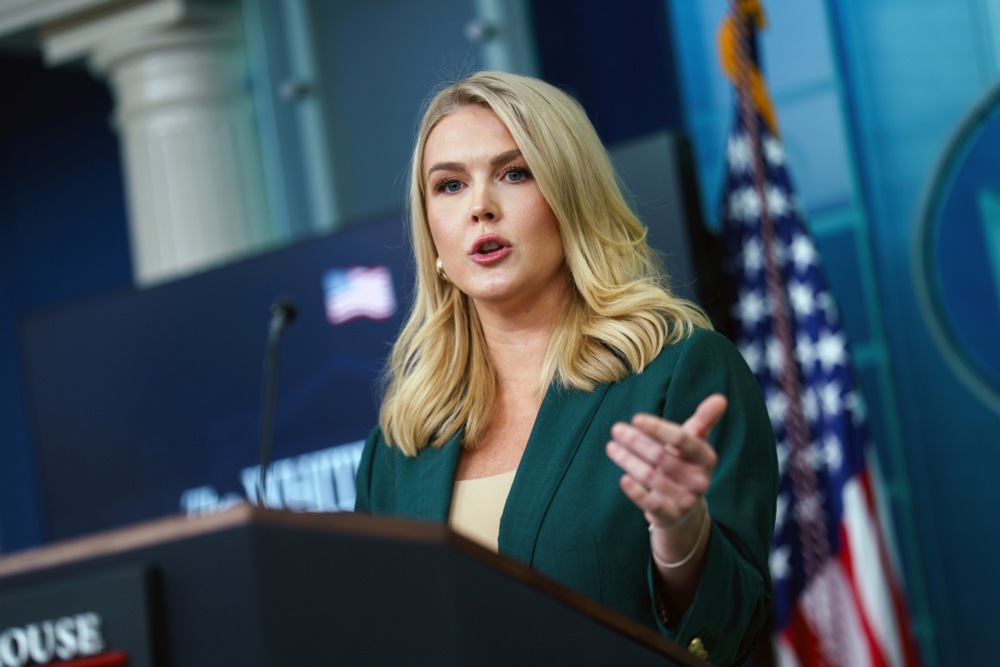
White House Press Secretary Karoline Leavitt told ABC News that President Trump and his team are considering options to acquire Greenland, and among those options is the possibility of using U.S. armed forces. According to The Economist, Washington even discussed the mechanics of a deal that would bypass Copenhagen (the publication mentions an option resembling a COFA‑style agreement).
"President Trump has made clear that acquiring Greenland is a priority for the national security of the United States..."
— Karoline Leavitt, White House Press Secretary
Why it matters
Greenland has not only territorial significance in the Arctic but also strategic assets: satellite and radar systems, air bases (for example — Thule), which control the routes for the deployment of air and naval forces. For the U.S., it is a control point in the Arctic, where Russian and Chinese interest is growing. Therefore, in Washington the explanation is pragmatic: strengthening presence in the region is an instrument of deterrence.
Denmark’s position and risks for NATO
Official Copenhagen took such statements extremely seriously. Danish Prime Minister Margrethe Frederiksen unequivocally warned about the consequences for the alliance in the event of military action or disregard for sovereignty.
"If the U.S. attacks Greenland, that will mean the end of NATO."
— Margrethe Frederiksen, Prime Minister of Denmark
This is a sharp but principled reaction: any attempt to bypass a partner's sovereignty undermines the trust on which collective defense rests. Analysts at The Economist and European experts have already noted that setting a precedent of pressuring the sovereignty of one of its members calls into question NATO’s readiness to act as a single entity in crises.
Possible scenarios and consequences
Briefly on realistic options:
- Diplomatic: negotiations with Denmark and Greenland’s autonomous bodies, packages of investments and security guarantees — the least risky path for the U.S. and its allies.
- Legal/contractual: creation of special agreements (the COFA analogue mentioned in the media) to strengthen military presence without transferring sovereignty — a compromise, but difficult to implement and politically sensitive for Denmark.
- Military: a direct show of force or deployment of troops — a scenario that would have the most serious geopolitical consequences, in particular for trust within NATO and European security.
What this means for Ukraine: weakness within the alliance in resolving disputes between its members or between allies and the U.S. undermines collective security in Europe. Ukraine has an interest in NATO’s stability and predictability: any signs of division or selective behavior by major allies create long‑term risks.
Conclusion
Statements from the White House force us to look beyond the headlines: the Greenland question is not only about islands in the Arctic, but about precedents of allies' behavior and the limits of sovereignty. The expert community agrees that what matters now are not loud declarations but quiet, legally sound diplomatic steps. Whether the U.S. and European partners are ready to turn geostrategic ambitions into stable institutional solutions is the key question for NATO’s future and the continent’s security.





