In brief
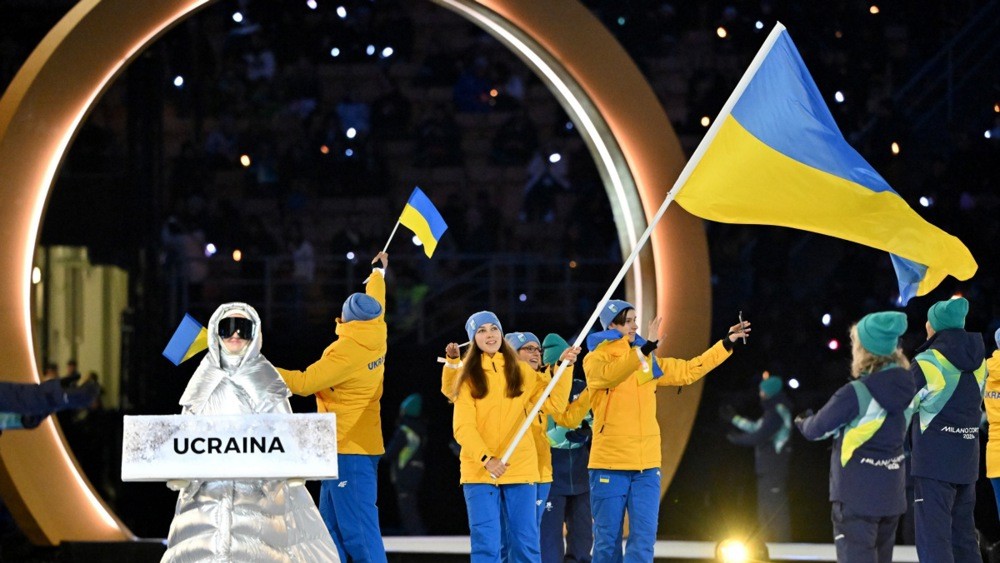
During the opening ceremony of the 2026 Winter Olympic Games in Milan, the placard for the Ukraine team was carried by a woman born in Russia who lives in Italy. Kyiv is demanding an investigation and an official apology from the International Olympic Committee (IOC).
"The fact that the International Olympic Committee chose a Russian to carry the placard with the name [Ukraine] is shameful. It goes beyond any human morality and any principles... And we are, in fact, insisting on an internal investigation and verification within the IOC to find out who allowed this."
— Heorhiy Tykhyi, spokesperson for the Ministry of Foreign Affairs of Ukraine
What is known
At the Olympic opening in Milan the placard for the Ukrainian delegation was carried by a woman who was born in Russia and currently resides in Italy. This was reported by the Foreign Ministry spokesperson at a briefing. Kyiv is asking the IOC for explanations: who made that decision and on what grounds was this person admitted to the teams' presentation ceremony.
Context and risks
The incident carries symbolic weight: in international sport there are unwritten and formalized practices designed to minimize direct contact situations between states that are at war. As the spokesperson noted, such rules operate, for example, in international football. If the procedure for admitting people to ceremonies is weakened or applied selectively, it creates risks to the reputation of the events and opens space for sportswashing.
Related background
In his remarks Tykhyi also recalled decisions to allow some Russian and Belarusian Paralympians to compete under their flags and stressed that Ukrainian representatives view this as part of a broader problem. Separately, less attention in the information space was given to the disqualification of Ukrainian skeleton racer Heraskevych before his first run for intending to compete in a helmet commemorating fallen athletes — an example of how disputed interpretations of rules create tension around sporting decisions.
What Kyiv demands and what the consequences could be
Kyiv is calling for two steps: an official apology and an internal IOC investigation into the process of verifying participants in the ceremony. Experts in international sports law emphasize that such checks could conclude with recommendations to strengthen admission and verification procedures, as well as with personal disciplinary measures against those responsible.
What happens next
The issue is not limited to a single ceremony — it is a test of the IOC's ability to act consistently under pressure from political and reputational challenges. If the response is superficial, it will undermine trust in the organization's neutrality; if a thorough investigation and procedural corrections follow, it will be a chance to reduce the risk of similar incidents in the future.
Now the ball is in the IOC's court: will Kyiv's demands turn into concrete procedural changes and accountability?





