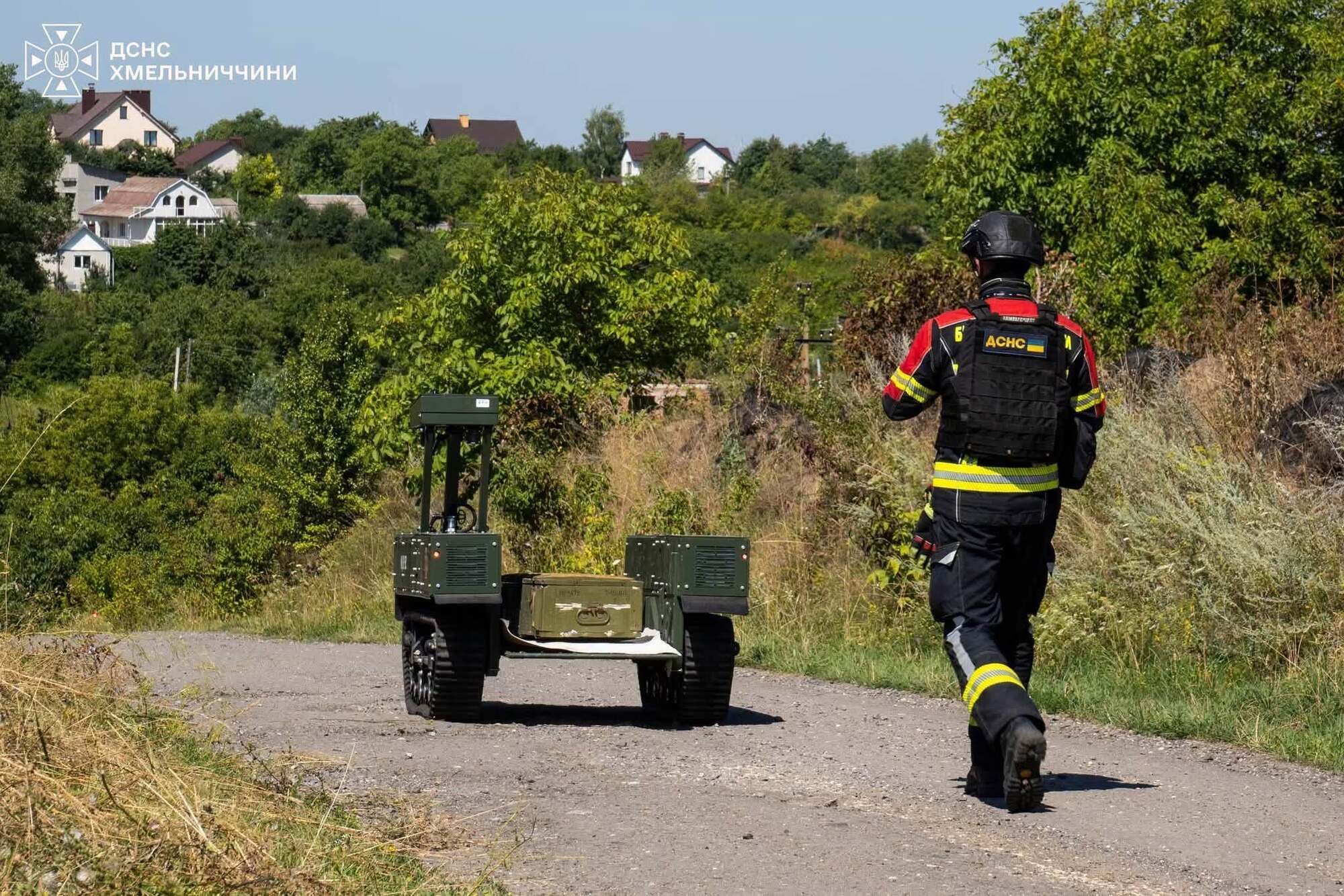
In Khmelnytskyi, cleanup efforts continue following the detonation of ammunition at a training ground on July 31. The fate of five military personnel remains unknown. This was reported by city mayor Oleksandr Semchyshyn and head of the Khmelnytskyi regional military administration Sergiy Tyurin.
"Unfortunately, there is no new information regarding the fate of the five military personnel. Search operations and investigative actions are ongoing," Semchyshyn added.
Work in areas dangerous for humans
The State Emergency Service continues surveying territories adjacent to the training ground. Explosive ordnance disposal experts are assisted by robotic complexes and unmanned aerial vehicles – this approach allows surveying ammunition-contaminated areas without risking additional lives of rescuers. All discovered ammunition and other dangerous objects are being removed and neutralized.
The scale of work is large: 100 buildings and an area of 591.32 hectares have been surveyed, with Khmelnytskyi residents filing 235 damage claims. The aid headquarters for people whose homes were damaged operated on Saturday and will operate from 3:00 PM on Sunday, August 2.
Not combat operations, but rule violations
The Office of the Prosecutor General classified the incident under the article on violations of weapons handling rules. The causes of the explosions are still being investigated, and the culprit faces up to 10 years imprisonment.
This is a fundamental difference from other recent tragedies. Unlike explosions in the Kyiv region, these did not occur following Russian strikes and were not on the front lines, but in a rear-area city that should have been safer by definition. Now the defense-industrial complex is forced to seek solutions not only for protection against RF attacks, but also against its own procedural errors.
On July 31, an explosion occurred at a Special Operations Forces training ground in the Khmelnytskyi community. There was no air raid warning. There were casualties among military personnel. The PG initiated an investigation under Part 2 of Article 414 of the Criminal Code.
Three explosions in a month – different causes, one vulnerability
- On July 24, Russian occupiers attacked a private training ground in the Kyiv region with ballistic missiles during a weapons exhibition. At least 10 killed and nearly 100 wounded reported. Two criminal cases opened. The event organizer was notified of suspicion and taken into custody.
- On July 6, secondary detonation of ammunition occurred in Vyshnevе, Kyiv region, following Russian shelling. Seven people killed, several streets completely destroyed. On July 17, two former Ukroboronprom officials were placed in custody without bail.
Three incidents in a month – an enemy attack, secondary detonation following shelling, and now weapons handling violations in the rear – demonstrate one thing: Ukraine's ammunition storage and testing infrastructure is operating at the limit of its capacity. The question is not whether the next incident will happen, but whether conclusions from the Khmelnytskyi investigation will be drawn before someone repeats the same mistake.







