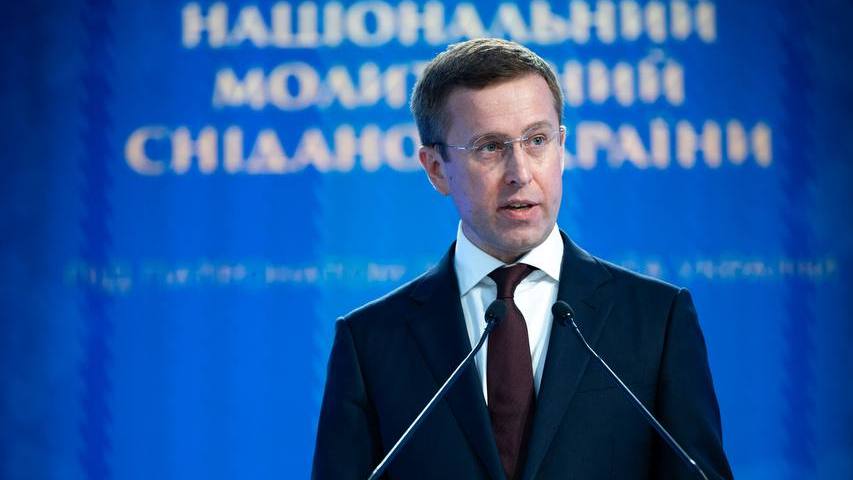
For a soldier in a trench, the difference between "a decision has been made" and "the issue is still being discussed" is measured not by political rhetoric, but by the presence of shells in the next quarter. Prime Minister Serhiy Koretskyi at an event of the Yalta European Strategy (YES) acknowledged: Ukraine is waiting for a concrete decision from partners regarding frozen Russian assets, and whether the state will be able to finance the army on time depends on this decision.
What Belgium is proposing
According to Koretskyi, a new signal has emerged from Brussels. "If we're talking about frozen Russian assets, as far as I know, Belgium's foreign minister has already said that there is potentially a chance to transfer them to an investment fund and in some way distribute responsibility among member states," the prime minister said.
The prime minister added that he understands the concerns of European partners regarding responsibility for the sovereign assets of an aggressor state, but emphasized a different criterion.
"The only criterion for assessing effectiveness is the result: did we survive or not. And on the path to the result, one must make, in particular, difficult decisions. In Ukraine, we make them daily and count on the same kind of response from our partners," Koretskyi said.
Why Belgium continues to resist
It is precisely in Belgium that the majority of frozen Russian assets are physically stored, so any decision about their use would most heavily affect Brussels' financial and legal responsibility. At the end of 2025, Belgian veto blocked the reparations credit plan, and instead the EU agreed on a regular credit of 90 billion euros for 2026-2027 for Ukraine – without direct use of Russian money.
The position of the Belgian authorities remains firm: risks must be distributed among all EU countries, not placed on a single state. Belgium's Defense Minister Theo Francken previously publicly outlined the boundary of the discussion with the words: "This is not up for discussion, the door is closed."
Who is pressuring Brussels
Pressure on the European Commission is mounting not only from Kyiv. A group of EU countries – Sweden, the Netherlands, Spain, and Poland – sent a letter at the end of August demanding immediate resumption of technical and legal work on using 200 billion euros of frozen Russian sovereign assets. This suggests that the idea of a reparations credit has not been completely abandoned, despite the failure of the December plan.
While the search for a political formula continues, only one tool is actually working: interest from assets frozen in the Belgian depositary Euroclear is already financing a credit of up to 50 billion euros, agreed in 2024. This proves that the mechanism is technically possible – the question is only one of scale and political will to extend it to the principal sum of the assets.
What the delay costs
The cost of the issue is not abstract billions, but specific weapons supply timelines. President Volodymyr Zelensky on August 23 stated that the total budget deficit of the Ministry of Defense is 27 billion dollars, and right now 8-10 billion dollars are needed to supply the army with weapons in the first quarter of next year. This is the horizon in which each month of negotiations in Brussels has a direct cost on the front.
The question now is simple: will EU countries agree to distribute legal responsibility for 200 billion euros of assets before Ukraine's defense budget deficit turns into an ammunition shortage at the front, or will Brussels again limit itself to an interim credit and defer the decision until the next summit?
```