What journalists found
In a new investigation Slidstvo.Info showed that after the occupation of Mariupol Russian companies were removing wheat from there and selling it to Turkey and Egypt. Some of these shipments likely originated from production sites in Mariupol itself.
According to the investigation, the family of entrepreneurs associated with drone production — Roman and Lyudmyla Gurovy — run two companies: «Roboavia» (UAV production) and «Nika» (grain trading). Kyiv has already imposed sanctions on «Roboavia» over the manufacture of the «Sarych» UAV.
Supply chain and a specific shipment
Journalists cite a source in the Russian customs service: in 2023 «Nika» exported about 15,500 t of wheat (≈ $3.7 million); in 2024 volumes rose to 59,500 t (≈ $12.9 million).
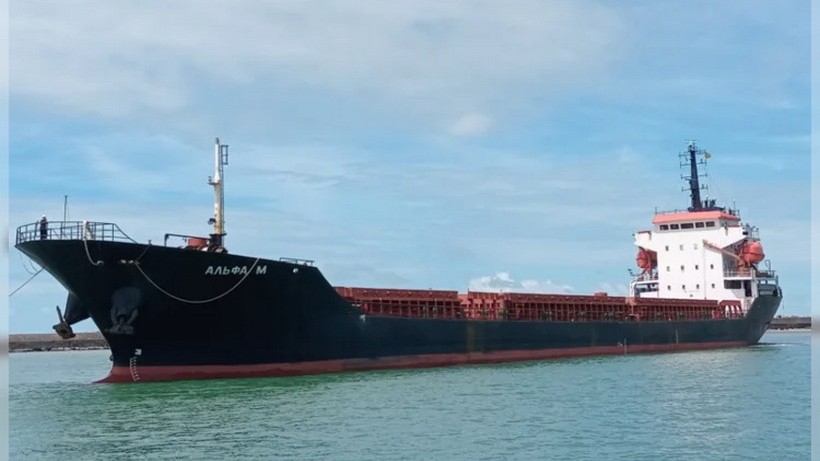
One of the consignments in April 2024 — 7,857 t of wheat — was delivered by the vessel Alfa M (sanctioned by Ukraine) to the company Erisler Gida Sanayi Ve Ticaret A.S. The cargo declaration lists Mariupol as the place of origin, registered as a Russian city.
"Almost all of the agricultural products that 'Nika' sells abroad are exported from occupied Mariupol."
— Slidstvo.Info, investigation
Why this affects humanitarian chains
The Eris Flour Mills website states that the firm is an official supplier of products for the World Food Programme and other UN agencies.
"Official supplier of products to the World Food Programme and the UN agency for assistance to Palestinian refugees"
— Eris Flour Mills website
Slidstvo.Info also found that the quality of the mentioned consignment was tested in an Odesa laboratory: a sample sent from Turkey to the lab indicated the grain's origin as the Russian Federation — the tonnage and date match the 7,857 t shipment.
Context and consequences
This is not an isolated case. Analysts and investigators record the systematic removal of grain from temporarily occupied Ukrainian territories. For Russia and affiliated business networks this is a source of foreign-currency revenue and a means of concealing the product's origin.
There are several consequences for Ukraine and international partners: financial gain for the aggressor, the risk of undermining trust in humanitarian supply chains, and the need to strengthen checks on the origin of products.
What to do next
Two concrete responses are needed: first, international partners and humanitarian agencies must promptly audit suppliers; second, Ukrainian and international law enforcement agencies must trace the delivery chains and hold those who organized the export of stolen grain to account.
Now it's up to the partners: will declarations of support be turned into concrete tools to control supply chains?





