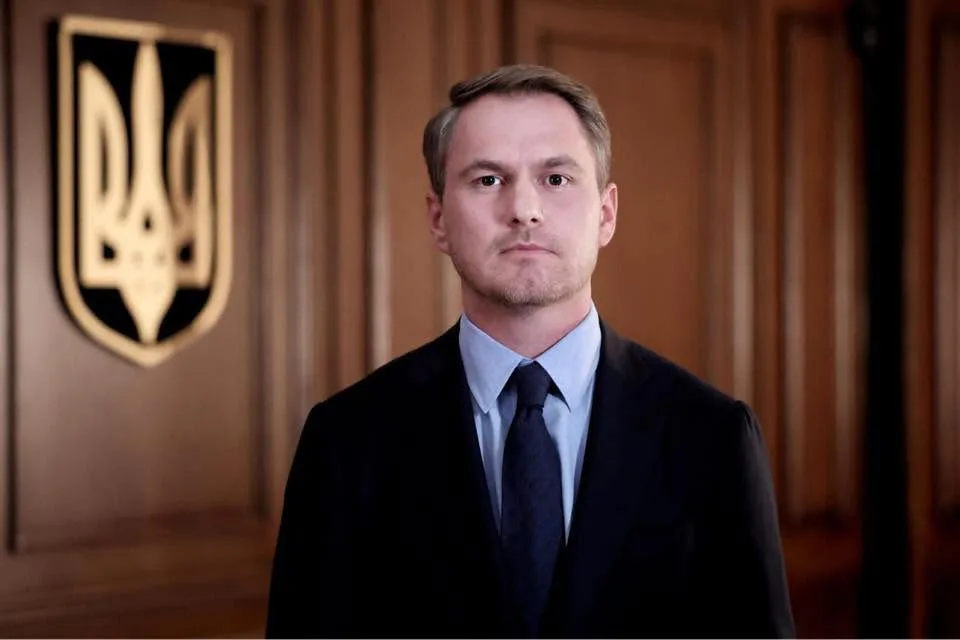
Prosecutor General Ruslan Kravchenko submitted a resignation statement. He announced this on Telegram, according to UNN.
According to Kravchenko, this is a political decision that he made consciously.
I do not want the position of Prosecutor General to be used as a tool of political confrontation. My position regarding the accusations remains unchanged. I thank my colleagues who honestly perform their duties. Those who present accusations in courts, work with victims, document Russian crimes and defend the interests of the state. Your work must not be devalued in any way
He thanked the president and the Verkhovna Rada for their confidence and asked them to accept his dismissal.
What preceded the statement
Recently, Kravchenko publicly stated that he does not cling to his position and never will, emphasizing that the decision about his resignation is exclusively up to the president or parliament. He also said that his position does not exempt him from scrutiny, but also does not cancel the requirement to prove accusations with facts.
He repeats the phrasing about "accusations" in his resignation statement — his position regarding them, according to Kravchenko himself, remains unchanged. This means the issue is not about admitting guilt, but about a decision to leave amid political pressure surrounding his person.
Why this matters
The position of Prosecutor General in Ukraine is one of the key points where the law enforcement system, major politics, and external pressure from partners demanding prosecutorial independence intersect. An early resignation of the head of the GPU amid public accusations is always a signal of a conflict of interests within the system of power, rather than purely a staffing decision.
Kravchenko headed the Prosecutor General's Office during a period when the office simultaneously conducted large-scale work on documenting Russian war crimes and was under constant political pressure. His resignation raises the question of who exactly initiated the pressure and whether it is related to specific cases that the prosecution conducts or has conducted.
The final decision on the resignation must be made by the president or the Verkhovna Rada. If an official submission for appointing a new Prosecutor General appears in the coming days, it will confirm the version of a coordinated political exchange; if the process drags on, the question of the true reasons for Kravchenko's resignation will remain open.