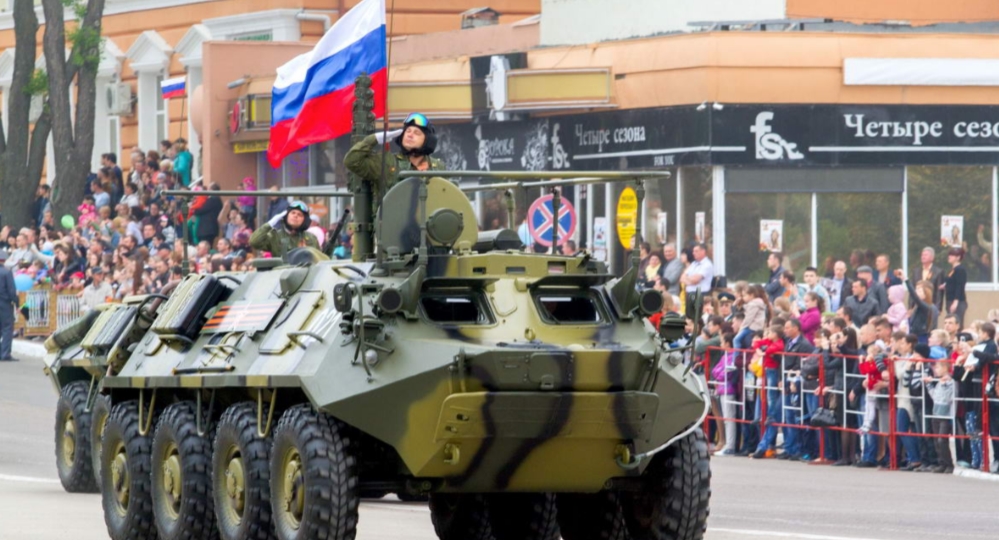
Moldova has done something it has avoided for years: named the commanders of the Operational Group of Russian Forces (OGRF) in Transnistria by name and declared them persona non grata. According to Infotag citing official sources, six individuals made the list — and this is far more than just a diplomatic gesture.
Who is on the list
Parliament Speaker Igor Grosu confirmed the decision without revealing the complete list. Moldovan media identified the names: OGRF Commander Dmitry Zelenkov, his deputies Dmitry Opaleev, Sergey Mashenko and Sergey Shirshov, Chief of Staff Marat Yarulin — and separately Alexey Bogomolov, who, according to Interfax Ukraine, oversees OGRF financing schemes through a field bank in Tiraspol.
What this means in practice
Persona non grata status in this case works like a delayed-action trap: as long as those on the list remain on the left bank of the Dniester, they are untouched. But should any of them attempt to cross the checkpoint to the right bank or fly out through Chisinau International Airport, they will be detained and deported to Russia.
"The OGRF is a foreign military force deployed without the consent of the host state"
Igor Grosu, Speaker of the Moldovan Parliament
Grosu also reminded that under Moldovan law, foreigners have 90 days to legalize their presence. For Russian military personnel, this would mean arriving in Chisinau-controlled territory and regulating their legal status — a scenario none of them realistically considers.
Why now
The OGRF in Transnistria is a remnant of the Soviet 14th Army, which supported separatists during the 1992 conflict. According to Kyiv Post estimates, the formation comprises approximately 1,200 military personnel. For years, Moldova has legally avoided direct confrontation with the presence of these forces, limiting itself to rhetoric about troop withdrawal. Personal sanctions against commanders represent a different pressure format: it does not require the physical withdrawal of troops, but narrows the room for maneuver for officers and fixes their status in Moldovan law.
- ~1,200 Russian military personnel deployed in Transnistria
- 6 officers declared persona non grata
- 90 days — deadline for legalizing presence under Moldovan law
- Detention threatened if attempting to cross the Dniester or fly out from Chisinau
If Chisinau consistently expands the list — including enlisted and non-commissioned personnel — this would turn any OGRF movement outside Transnistria into a legal risk and effectively confine the formation to the left bank. The question is whether Moldova is prepared for a symmetric response from Moscow — for example, restrictions on Moldovan diplomats or citizens in Russia.





