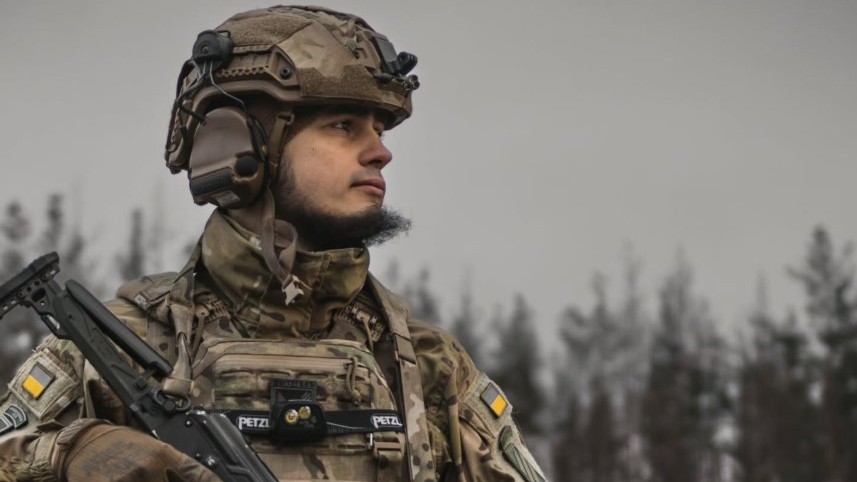
Medium-range drones have become an instrument not of defense but of active position recovery for the Third Army Corps (3 AK). The commander of a squadron of unmanned aerial systems from the 3 AK's unmanned systems battalion, Oleksandr Ivantcov (callsign "Skhid"), told LIGA.net that midstrikes combined with other means of Ukraine's Defense Forces have made it possible not only to contain pressure but also to reclaim previously lost lines on several fronts.
"Today, thanks to both midstrikes and other means and actions of Ukraine's Defense Forces, we have managed not only to stabilize the front but also to reclaim previously lost positions on some fronts."
Oleksandr Ivantcov ("Skhid"), commander of the unmanned aerial systems squadron of the 3 AK's unmanned systems battalion
What are midstrikes and why are they important
Medium-range strikes are the systematic use of weapons that operate beyond long-range artillery (40–50 km) but closer than cruise missiles (200–300+ km). Targets include air defense systems, logistics hubs, and command posts. The arsenal includes domestic Fire Point FP-2 drones with a range of up to 200 km and a warhead of up to 158 kg, RAM-2 unmanned aerial systems, Bulava, and American Hornet systems.
The ISW has documented a strategic effect: according to analysts, medium-range strikes actively impede Russia's ability to transport personnel to the front and supply positions, which significantly reduces the number of reserves that can even reach the line of contact.
The 3 AK context: 150 km of front, two directions
On June 4, 2025, the Third Army Corps was deployed in a zone of responsibility from Borova to Lyman — a stretch of approximately 150 km. This occurred when the situation in the area was critical: Russian forces had advanced significantly on individual sections during the first half of 2025. According to the corps commander Andrii Biletskyi, between June and the end of July, it was possible to slow down and repel offensives.
The corps built a multi-layered system: engineering barriers, 50 km of anti-drone protection on approach routes, thousands of shelters for equipment. The 3 AK's air defense became a leader in combating multicopters on the line of contact. In August 2025, the corps, together with the GUR, liberated Novomykhalivka.
- Borova and Lyman directions — the main zone of responsibility for 3 AK
- Fire Point FP-2 — range up to 200 km, warhead up to 158 kg
- 50 km of anti-drone protection installed on logistics routes
- Novomykhalivka — liberated jointly with the GUR in August 2025
From tactics to system
Midstrikes are not a separate weapon — they are part of a logic that Biletskyi describes as "competition of command systems and decision-making speed." The corps model of 3 AK provides that the commander is responsible for the complete cycle — from preparation to strike. According to 3 AK officers, this integration allows medium-range drones to operate in sync with ground operations rather than as a separate tool.
Military analyst Ivan Kyrychevskyi in a LIGA.net article compares the current effect of midstrikes to the impact of HIMARS in 2022 — with similar logic for destroying enemy logistics but with broader coverage and lower cost per strike.
If 3 AK can maintain the pace of position recovery through winter — this will become the first documented example of how corps-level integration of medium-range drones systemically changes the balance on a specific front line, rather than merely slowing down the adversary.





