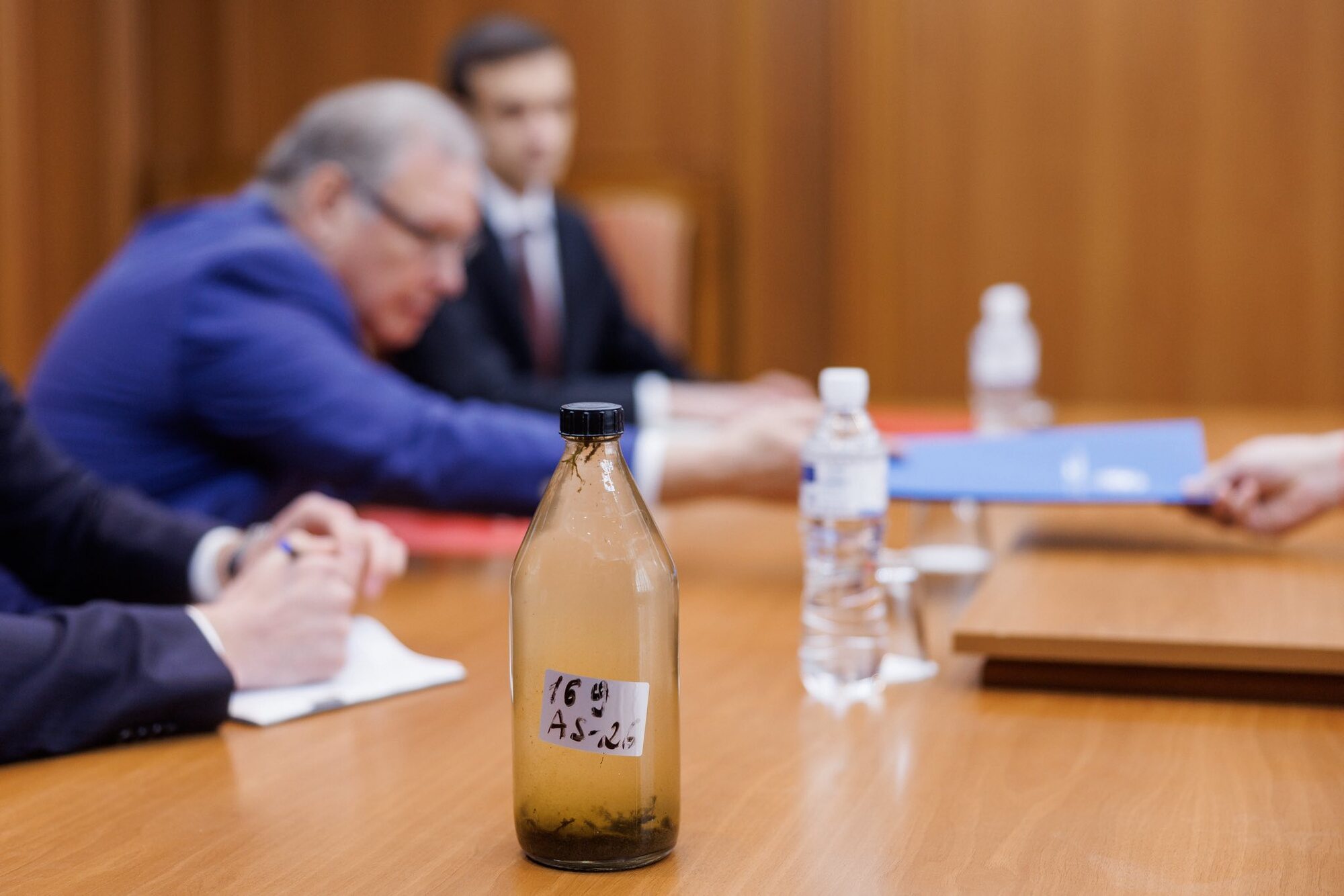
Moldova summoned the Russian ambassador — a bottle as evidence
On 17 March the Ministry of Foreign Affairs of Moldova summoned the Russian ambassador in Chisinau, Oleg Ozerov, and handed him a note of protest. The reason was a leak of petroleum products into the Dniester River after a Russian strike on the hydroelectric complex in Novodnistrovsk on 7 March.
What happened
The pollution became known on 10 March after video footage near the village of Naslavcha showed oily patches on the river. At the meeting with the ambassador the Foreign Ministry brought a bottle of polluted water as a visual piece of evidence of transboundary damage.
Why it matters
The Dniester is the second-largest river in Ukraine and the main water artery of Moldova. It provides drinking water to about 80% of the population of the country and 98% of Chisinau's residents. The spill of petroleum products threatens water supplies, ecosystems, irrigation of agricultural land and the operation of the Dniester Hydroelectric Power Plant.
"We strongly condemn the attack that led to the release of petroleum products into the Dniester River, creating serious risks to the environment and Moldova's water supply."
— Ministry of Foreign Affairs of Moldova
Reaction and consequences
On 13 March Moldova appealed to the EU for technical assistance in eliminating the consequences of the spill, and the government declared an environmental alert regime in the Dniester basin for 15 days. The handing over of a note of protest and the physical evidence in the form of a bottle demonstrate that Chisinau is choosing practical, documented diplomacy over declarations.
For Ukraine, the incident illustrates a broader principle: strikes on critical infrastructure create cross-border crises. This is not only an environmental issue — it is a matter of people's safety and the stability of water supplies in the region.
What’s next
Likely steps include enhanced international monitoring of the river's condition, coordination with European partners for cleanup and damage assessment, and diplomatic demands for compensation and guarantees against the recurrence of similar attacks. Moldova's actions send a signal to partners: environmental security is part of regional security, and it will be addressed not only on paper.
In short: Chisinau has raised the diplomatic stakes by presenting physical evidence of pollution; this turns a local strike on infrastructure into an international problem that requires a practical response from partners.





