What happened
In the night before January 24, Kyiv suffered a massive attack: according to reports, Russia launched 21 rockets and 375 drones. The Air Force reports that air defenses shot down about 357 drones and 15 missiles, but infrastructure damage still occurred.
The most difficult situation is in Troyeshchyna: about 600 buildings have been left without all utilities (heating, water, electricity). In the city overall, roughly 6,000 buildings are without heating. There is one fatality and four wounded in Kyiv; in Kharkiv more than 30 people were injured. In the Chernihiv region, hundreds of thousands of customers are without power.
How services are responding
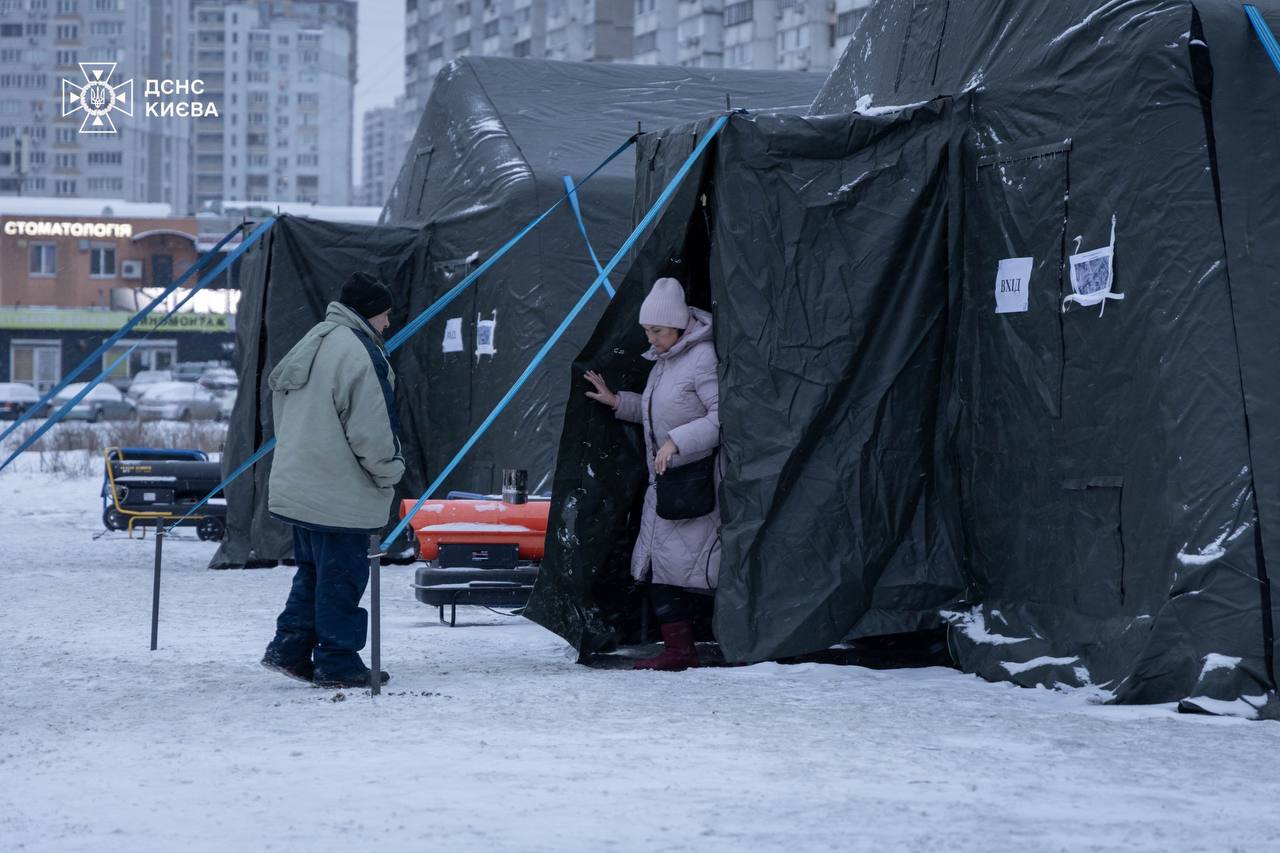
Communal services and energy workers are operating in an intensified mode. In the Desnianskyi district additional heating points are being deployed: designated heating hubs at schools No. 263, No. 264, No. 306, No. 275, No. 293 have already received mobile boiler units for rapid connection. The State Emergency Service (DSNS) is also deploying tent-based warming stations.
"City services are doing everything to overcome the crisis caused by the enemy's attacks, which are trying to leave the capital without light, heat and water"
— Vitali Klitschko, the mayor
Emergency crews are concentrating resources on the most vulnerable networks — boiler houses, substations and main lines. Some repair work may take hours or days, depending on the extent of the damage and the weather.
Why this matters
Attacks on the energy sector have not only tactical but also political significance: destroying heating and water supply systems makes civilian life harder and increases pressure during diplomatic processes. The Foreign Ministry has already called this an element of pressure on the negotiation format.
Energy and defense experts emphasize that critical infrastructure needs backup capacity and rapid repairs, as well as enhanced protection. For now the priority is the safety of people: warming centers, supply of drinking water, and restoring the operation of hospitals and residential buildings.
What’s next
The difficulty of restoration will depend on the speed of the emergency crews and the effectiveness of air defenses. The question for authorities and partners is how to increase the resilience of the energy system and reduce the city's vulnerability in the medium term.
This is a reminder: the war affects the everyday lives of millions of people. How quickly and systematically services and the community work will determine Kyiv's ability to withstand similar strikes.





