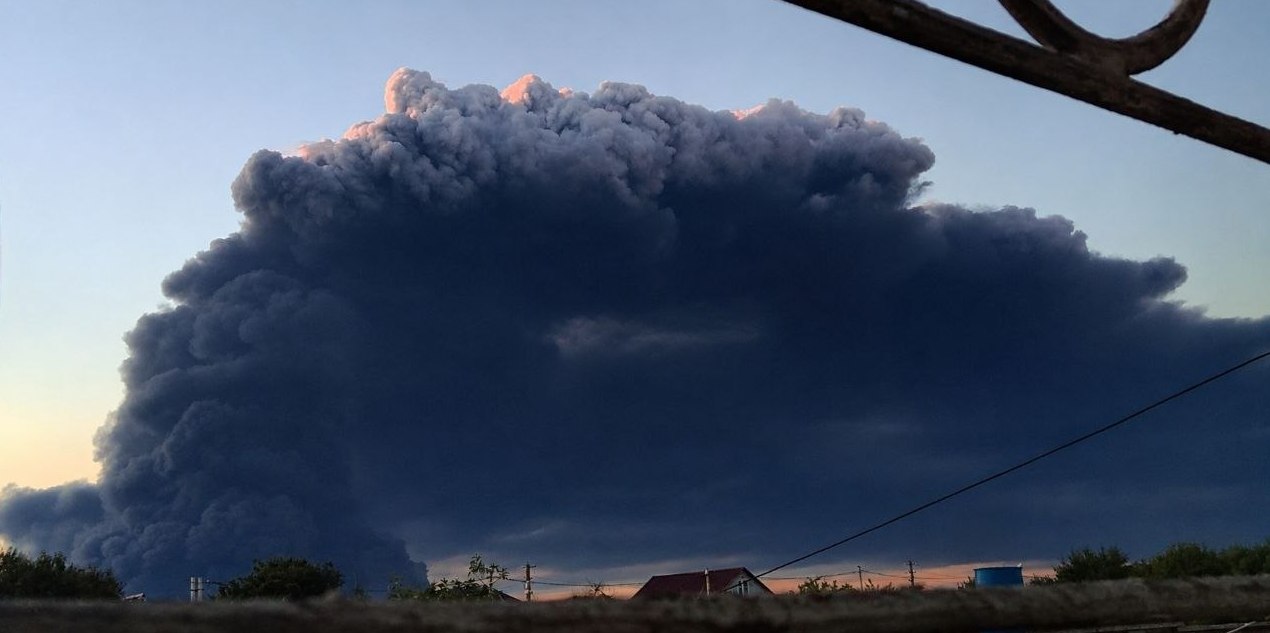
During the night of June 28, drones attacked the Slavyansk-Eco oil refinery in Russia's Krasnodar Krai. A series of powerful explosions engulfed several fuel storage tanks in fire — the smoke plume, according to monitoring group Crimean Wind, extended over 100 km. NASA FIRMS confirmed thermal signals directly at the refinery facility.
A refinery that keeps Crimea on starvation rations
Slavyansk-Eco is no ordinary regional enterprise. Processing capacity is 5.2 million tons of crude per year, accounting for approximately 9% of oil refining in the Southern Federal District. The refinery produces aviation fuel, diesel fractions, fuel oil, and marine fuel. According to Zaxid.net, this refinery is the main supplier of fuel to annexed Crimea.
The logistical context is critical: following previous strikes on the Kerch Bridge and the ban on transporting petroleum products via that route, alternative supply routes to Crimea are already operating at maximum capacity. The strike on Slavyansk-Eco hits the narrowest bottleneck in this supply chain.
Four attacks in two years — and the refinery still operational
The surprising fact of this strike is not the fire itself, but its sequence number. According to Wikipedia citing open sources, the chronology of attacks looks like this:
- April 27, 2024 — SBU drones delivered 9 strikes on the tank farm, damaging a separation unit; the refinery partially shut down operations.
- May 17, 2024 — rectification and atmospheric columns damaged; the refinery completely shut down operations.
- December 17, 2025 — new drone attack, fire.
- June 28, 2026 — fourth strike, massive fire confirmed by satellites.
Between the first and fourth attacks — two years. The refinery recovers each time. This means either Russia is investing significant resources in restoring the facility, or the damage was less critical than it appeared in videos.
Broader context: not just Kuban
The same night — strikes on multiple targets simultaneously. According to Exilenova+ and Zaxid.net, FIRMS thermal signals detected fires at Slavyansk-on-Kuban airfield, a local oil depot, and a power substation in Poltavskaya village. Simultaneously, they attacked the Yanos refinery in Yaroslavl and the Sakska thermal power plant in occupied Crimea. Krasnodar Krai Governor Veniamin Kondratiev confirmed one death from drone fragments and damage to a power line and gas pipeline.
"Also, a fire occurred at the refinery facility in the city, a power line and gas pipeline were damaged."
Operational Headquarters of Krasnodar Krai
Russian Defense Ministry claimed 213 Ukrainian drones were destroyed overnight — but the number of confirmed fires at infrastructure facilities indicates some drones reached their targets.
Recovery or degradation?
The key question after the fourth strike is not "did the refinery burn," but "how many times can it recover." If Russia repairs Slavyansk-Eco within months each time, the fuel crisis in Crimea will manifest as temporary spikes rather than structural collapse. If cumulative damage has exceeded repair capacity — the next heating season will reveal this through fuel prices in occupied territories.







