What happened
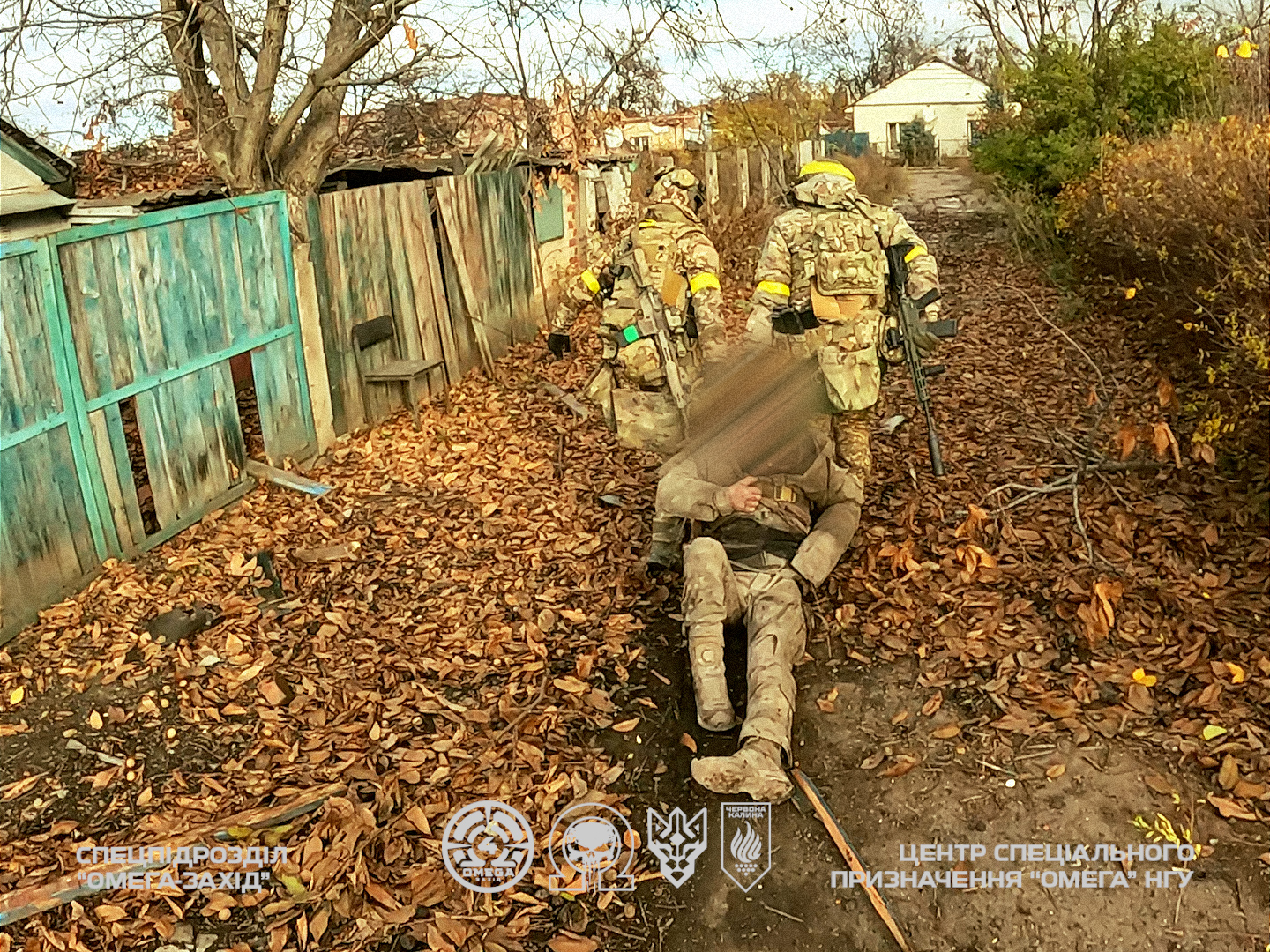
Members of the special unit "Omega-West" carried out an assault in Rodynske near Pokrovsk, as a result of which one wounded enemy combatant was found in the building — he was taken prisoner, the rest were killed. The group commander with the call sign Brodiaga described the operation to LIGA.net.
"The task was to clear two streets. Special attention was paid to a two-story building — we had information that the enemy was concentrating there. We moved out and operated in two teams: covering and assault."
— Brodiaga, commander of the Omega-West special unit group
How the units acted
The building was blocked from two sides. Specialists note that the complex urban environment — ruined structures, metal bars on the windows and reinforced metal doors — forced the assault team to adapt standard approaches.
According to the fighters, the operation was conducted through the windows to reduce the risk of aimed fire. The doors could not be blown off — they were only deformed by the blast. After the blast through the door one Ukrainian fighter was wounded (three gunshot wounds) and was evacuated.
To neutralize the fortifications inside, a grenade was thrown into the room, followed by a cluster of TM-62 anti-tank mines, which led to the destruction of the doors and the disabling of part of the enemy. After the explosion the assault team quickly entered; some of the enemy remained in the basement.
Quote on the result
"Thanks to the coordinated actions of the entire unit — the special purpose group and the fire support groups — the enemy group was completely eliminated"
— BUG, commander of the Omega-West special unit
Support and operational context
The operation was conducted in coordination with a group from the battalion named after General S. Kulchytskyi and with fire support from the 14th Brigade of the National Guard (NGU) "Chervona Kalyna". This is an example of combined action by small assault teams and fire support on site.
Earlier the Air Assault Forces (DShV) reported that the enemy on the Pokrovsk axis is avoiding frontal assaults and is attempting to outflank positions via Hryshyne and Rodynske. According to the "Skhid" grouping, Ukrainian units control the northern part of Pokrovsk — therefore successful clearances in surrounding settlements are important to prevent a breakthrough or flanking advance.
What this operation means
Tactically: a correctly conducted assault showed that Ukrainian special units can adapt to dense built-up areas and reinforced enemy shelters by combining reconnaissance, assault actions and fire support.
Operationally: destroying or delaying potential flanking forces in Rodynske reduces the enemy's ability to create threats to the northern approaches to Pokrovsk.
Casualties: one of ours wounded (evacuated), one enemy taken prisoner, others killed. This is a reminder that such operations have a cost, but at the same time reduce the enemy's combat capability in the local area.
Conclusion
This operation is not a standalone episode of heroism, but an element of systemic work to hold the line of defense: reconnaissance, coordination, assault actions and fire cover. It is now important that such tactically successful sorties turn into sustained sealing off of enemy bypass routes. Whether the enemy will be able to change tactics depends on their ability to recover forces and on countermeasures by the Armed Forces of Ukraine and territorial defense units.
Source of operational details: comments from Omega-West fighters to LIGA.net; official statements from the Air Assault Forces (DShV) and the "Skhid" grouping about control of the direction.





