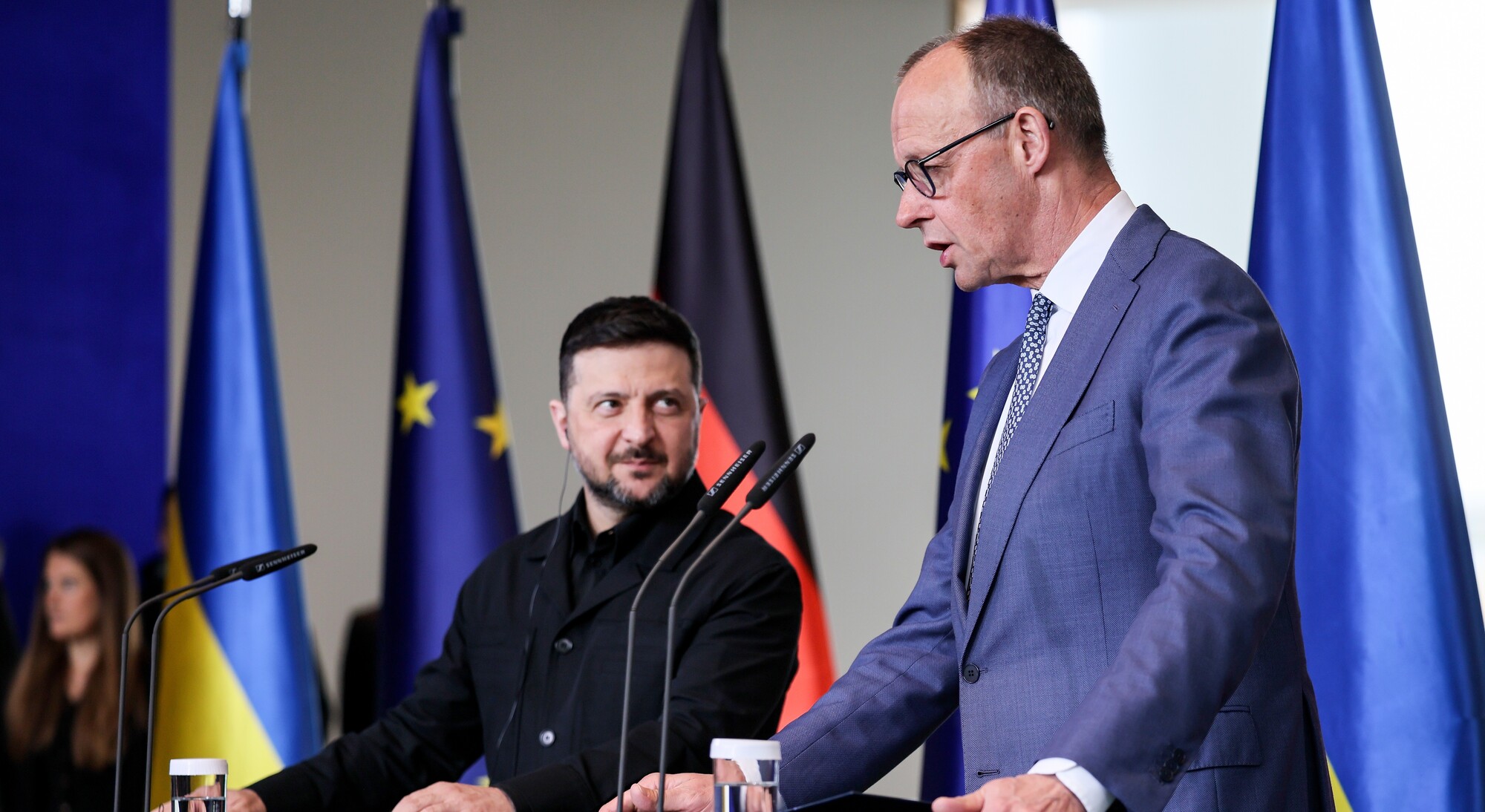
On April 12, parliamentary elections were held in Hungary. On the same day, Ukraine celebrated Easter. Vladimir Zelenskyy did not miss this coincidence during a joint briefing with German Chancellor Friedrich Merz.
"The elections were on Sunday, April 12. The Hungarian people made their choice. In Ukraine on that day we had Easter — the triumph of light over darkness. I think this is very symbolic."
— President of Ukraine Volodymyr Zelenskyy
What happened in Budapest
The opposition party "Tisza" led by Péter Magyar won a constitutional majority — 138 seats out of 133 required. Viktor Orbán's "Fidesz" party received approximately 55 seats. Orbán is stepping down as prime minister after 16 years in power — and immediately announced a party congress on April 28 for "regrouping."
Magyar said in his victory speech on the banks of the Danube that he is flying to Brussels soon to unblock EU credits frozen due to Orbán's blocking. He also called for all appointees of the previous government to resign: now Tisza's constitutional majority will be enough to remove them.
Why this directly concerns Ukraine
Under Orbán, Hungary was a consistent blocker of pro-European integration decisions in Kyiv's favor. In parallel, a specific technical issue was brewing: since January 27, 2025, the "Druzhba" oil pipeline has not been supplying Russian oil to Hungary and Slovakia — after damage on the Ukrainian section due to Russian strikes.
Orbán publicly accused Kyiv of deliberately cutting off the supply and on this basis blocked the next EU credit tranche for Ukraine and the 20th sanctions package against Russia. Zelenskyy insisted on the opposite: the pipeline was damaged by enemy strikes, repairs are ongoing.
"We will complete the repairs because that's the agreement. I told them we will finish this spring. A lot has already been done there."
— Zelenskyy on the "Druzhba" oil pipeline
During the briefing with Merz, Zelenskyy confirmed that repairs to "Druzhba" will be completed by the end of April. According to Reuters, April is the most likely timeframe, and significant progress has already been made.
Winners and losers
- Ukraine — the main blocking factor in the EU Council is removed; new Hungarian negotiators are not obligated to defend Budapest's interests at Kyiv's expense.
- The EU — Ursula von der Leyen wrote that "Hungary has chosen Europe"; the union is rid of internal veto power at a critical moment.
- Orbán — a 16-year model of "strategic neutrality" that balanced between Moscow and Brussels lost at the ballot box to its own country, not to external pressure.
- Russia — is losing its most consistent lobbyist within the EU.
The symbolism chosen by Zelenskyy is not mere rhetorical decoration. It captures a real shift: Hungarians voted on a day when the values that Kyiv invokes were in the spotlight. But the symbol will become fact only if Magyar truly unblocks the frozen credits and changes the tone of bilateral relations by the end of the spring session of the European Parliament — otherwise it is simply a fortunate coincidence of dates.





