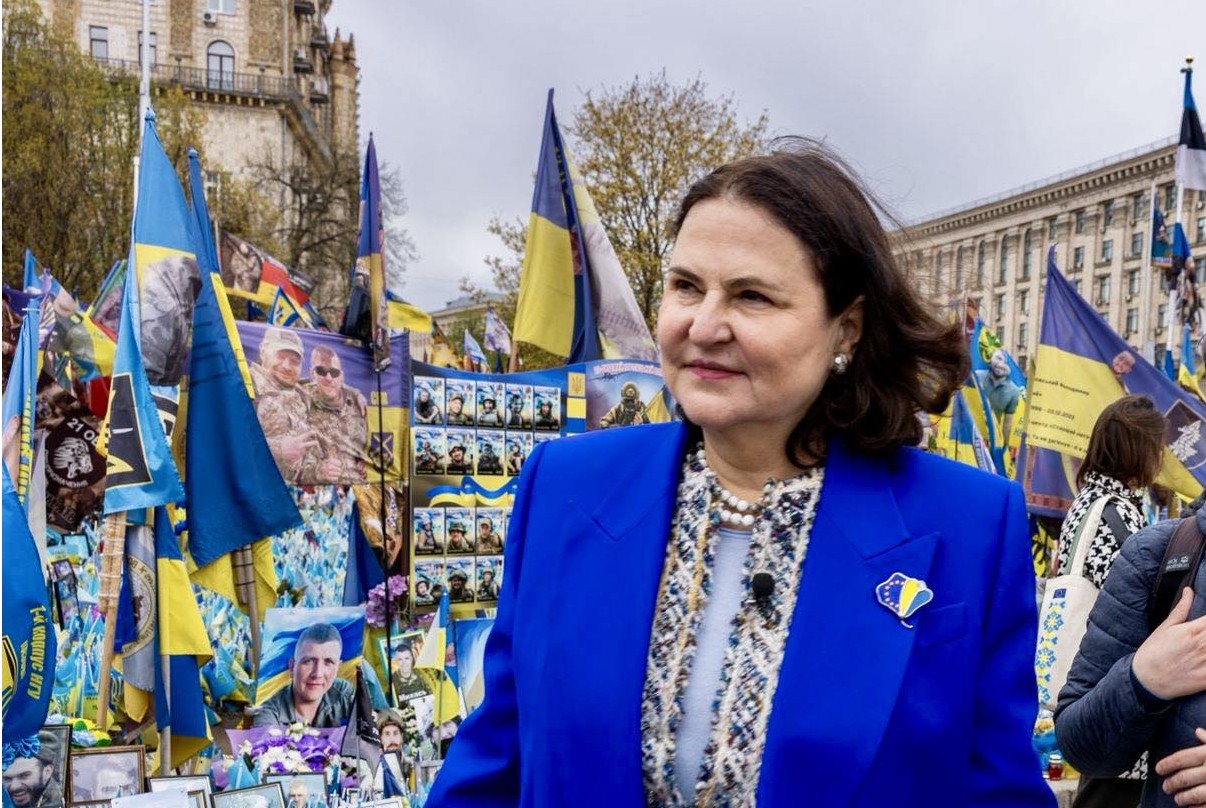
Russia is threatening Kyiv with strikes again. This time — openly, with a direct link to the presence of foreign diplomats and military advisors. The response came not only from the Ukrainian Foreign Ministry, but also from the person to whom this threat is directly addressed.
EU Ambassador to Ukraine Katarina Mathernova stated that she is not leaving. According to her, Moscow's threats are a "sign of despair," not a demonstration of strength. Mathernova remains in the Ukrainian capital, and this is not just a personal position: it is a signal from an institution that represents 27 countries.
The Ukrainian Foreign Ministry chose stronger language. A spokesperson for the ministry called Russia's threats "shameless blackmail" — rhetoric that registers: Kyiv does not view these statements as military reality, but as an instrument of pressure on partners.
Why this is happening now
The threats emerged against the backdrop of increased presence of Western instructors and diplomatic personnel in Ukraine. Moscow consistently attempts to establish a connection between this presence and the legitimacy of strikes on Kyiv — essentially building a narrative of "Western responsibility" for escalation.
The logic is simple: if diplomats and advisors leave — Russia gains a symbolic victory and weakens coordination. If they stay — Moscow will have grounds for another round of statements about "provocation."
Mathernova broke this dilemma publicly with her decision.
What lies behind the word "despair"
Diplomatic language rarely uses such direct assessments. A "sign of despair" is not a neutral statement, but an interpretation of Moscow's motives. The EU ambassador essentially claims: Russia resorts to threats not because it has real intent and ability to implement them on a new scale, but because other tools of pressure are being exhausted.
This is also read as an assessment of the state of Russian strategy at a broader level — not just military.
A risk that doesn't disappear
At the same time, it is important not to substitute analysis with reassurance. Kyiv is indeed being struck — and Moscow's threats do not always remain rhetoric. Mathernova's decision to stay is a political gesture, but it does not eliminate the real vulnerability of the city.
The question is not whether the threats are blackmail — they obviously are. The question is whether the presence of EU diplomats in Kyiv changes the actual level of protection of the city from strikes, or only the level of political support for Ukraine — and whether the latter is enough without the former.





