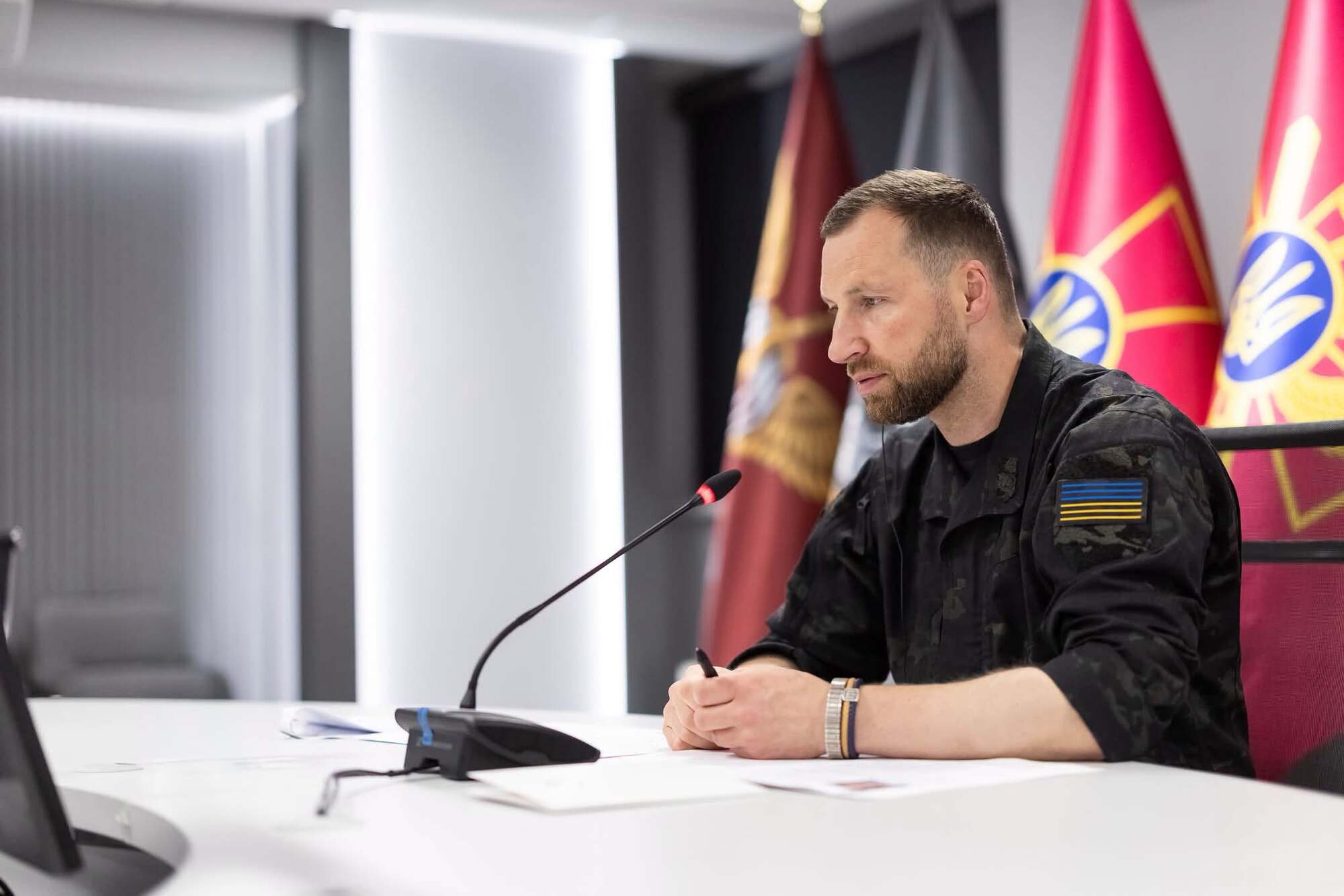
When the defense minister meets with the NATO Secretary General a few days before "Ramstein," it is rarely about courtesy. Yevhen Khmara held online negotiations with Mark Rutte and Boris Pistorius on September 5, and the practical subtext of both conversations—money and air defense, not abstract "partner unity"—speaks volumes.
A deficit that won't disappear on its own
Prime Minister Koretskyi has already named the figure: $27 billion in defense budget deficit. This is not a hypothetical problem for the future—it is a sum that needs to be covered right now to avoid the question of military salaries come autumn. The Verkhovna Rada assures that there is no threat yet, but "yet" is the key word when it comes to a wartime budget.
That is precisely why the conversation with Pistorius had a concrete dimension: not just support, but financing of defense needs. Germany is one of the few partners capable of filling part of this gap without lengthy bureaucratic approvals.
Air defense as priority number one, not a checklist item
The conversation with Rutte focused on air defense systems. This is not news in itself—Ukraine has been requesting air defense since the first year of the full-scale war. What is new is that it is again priority number one on the eve of "Ramstein," which British Defense Secretary Wes Streeting initiated precisely because of intensified Russian air attacks.
"Ukraine relies on further unity among partners and swift decisions necessary to protect lives and strengthen the front," the Defense Ministry said in a statement.
The phrase about "swift decisions" is not merely rhetorical here: before a difficult winter, every week's delay in air defense systems means new strikes on energy infrastructure and undefended cities.
An unexpected emphasis: production instead of supplies
The most interesting aspect of the conversation with Pistorius is not financing, but the development of joint German-Ukrainian defense industry. This is a shift from the logic of "give us weapons" to the logic of "let's build production together"—a fundamentally different type of dependence on a partner.
Joint production means localizing technology in Ukraine, less dependence on supply schedules, and potentially faster replacement of lost weapons. But this is also a long process: factories are not built in a month, and the front needs solutions now.
What "Ramstein" will show
The Ramstein format is already tested: it works when partners come with concrete figures, not declarations. This meeting's question is simple—will NATO countries agree to cover at least part of the $27 billion deficit and accelerate air defense system deliveries before Russia uses winter attacks on energy infrastructure as its main pressure lever.
If the new "Ramstein" produces concrete figures on financing and timelines for air defense system supplies—winter will be difficult, but manageable. If it merely results in statements of support—the question about military salaries, which the Rada is currently addressing, could return within weeks.