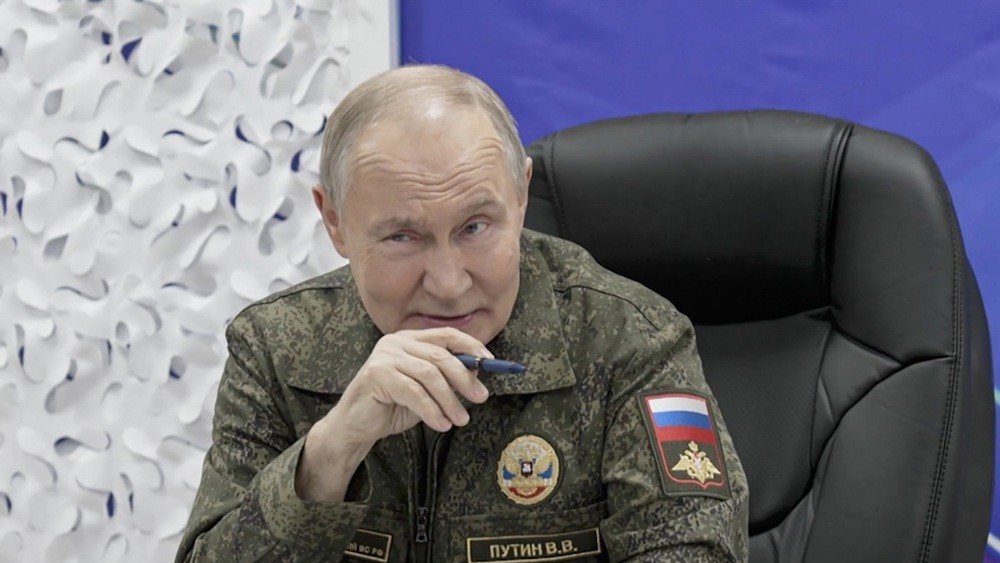
On June 5 at the St. Petersburg International Economic Forum, Vladimir Putin responded to an open letter from the President of Ukraine. He did not refuse to negotiate on diplomatic grounds and did not set new conditions — he called the tone of the letter "rudeness" and thanked Donald Trump for "educating" Zelensky. This is not the rhetoric of refusal. This is the rhetoric of someone discussing something else.
What was in the letter — and what the Kremlin heard
Zelensky proposed a simple formula: a ceasefire on the principle of "we stay where we are" during direct negotiations. According to Ukraine's Foreign Ministry, the document was transmitted through all diplomatic channels and was addressed not only to Putin but also to influential groups within Russia and partners, including the United States. In other words, the letter had a dual function from the start — a proposal and a public test.
Putin responded to the test, but not to the proposal. He latched onto a mention of his age, accused Kyiv of not wanting to see the Trump administration as a guarantor of agreements, and repeated through Peskov the old position: if you want negotiations, come to Moscow.
"Putin chose war and refused to end it for the sake of a summer offensive"
Andriy Kovalenko, head of the Center for Countering Disinformation at the NSDC, Telegram
"Parallel reality" — what this means technically
Kovalenko explained the refusal in a comment to LIGA.net not as a diplomatic position but as a symptom: Putin "lives in a parallel reality" regarding what is happening on the front. This is not a metaphor for a broad audience — it is a specific operational problem. If top leadership receives a distorted picture of the army's successes and capabilities, any proposal based on the actual state of affairs is perceived as nonsensical or provocative.
This explains the reaction to the letter: Zelensky wrote about Russia's inability to capture Donbas this year and about RF losses on the front. For a person with an adequate intelligence picture — this is an argument. For a person in a different information system — this is exactly "rudeness".
Who benefits from the refusal — and who reads it as a signal
- Putin avoids any format where fixing the front line means publicly acknowledging the limits of conquests — especially before a domestic audience that has been told for years about larger goals.
- Zelensky got what he needed: a documented public test where Moscow refused even a 30-day pause. This is an argument for partners regarding new aid packages.
- Trump supported the idea of a personal meeting between leaders and added his standard remark about monthly losses in the war — that is, he did not take sides but fixed his position as a mediator.
- Moscow meanwhile received a reason to talk about Zelensky's "illegitimacy" — Putin again raised the issue of usurping power, which is part of a long-term narrative rather than a situational reply.
Why now
Zelensky wrote the letter at a moment when Ukraine, by his own admission, stopped being a priority for the United States because of the Iranian dossier. SPIEF is a convenient platform for Putin: he speaks to a business audience where bellicose rhetoric is softened by an economic framework, and any response appears balanced. The timing on both sides is not accidental.
If Russia is indeed preparing for an intensification of a summer offensive, as Kovalenko claims, then the next real indicator of the Kremlin's intent — not statements but dynamics on the front over the next two to three weeks: will Moscow escalate immediately after the diplomatic failure, or will it hold back to not give Ukraine's partners additional reason for weapons decisions.





