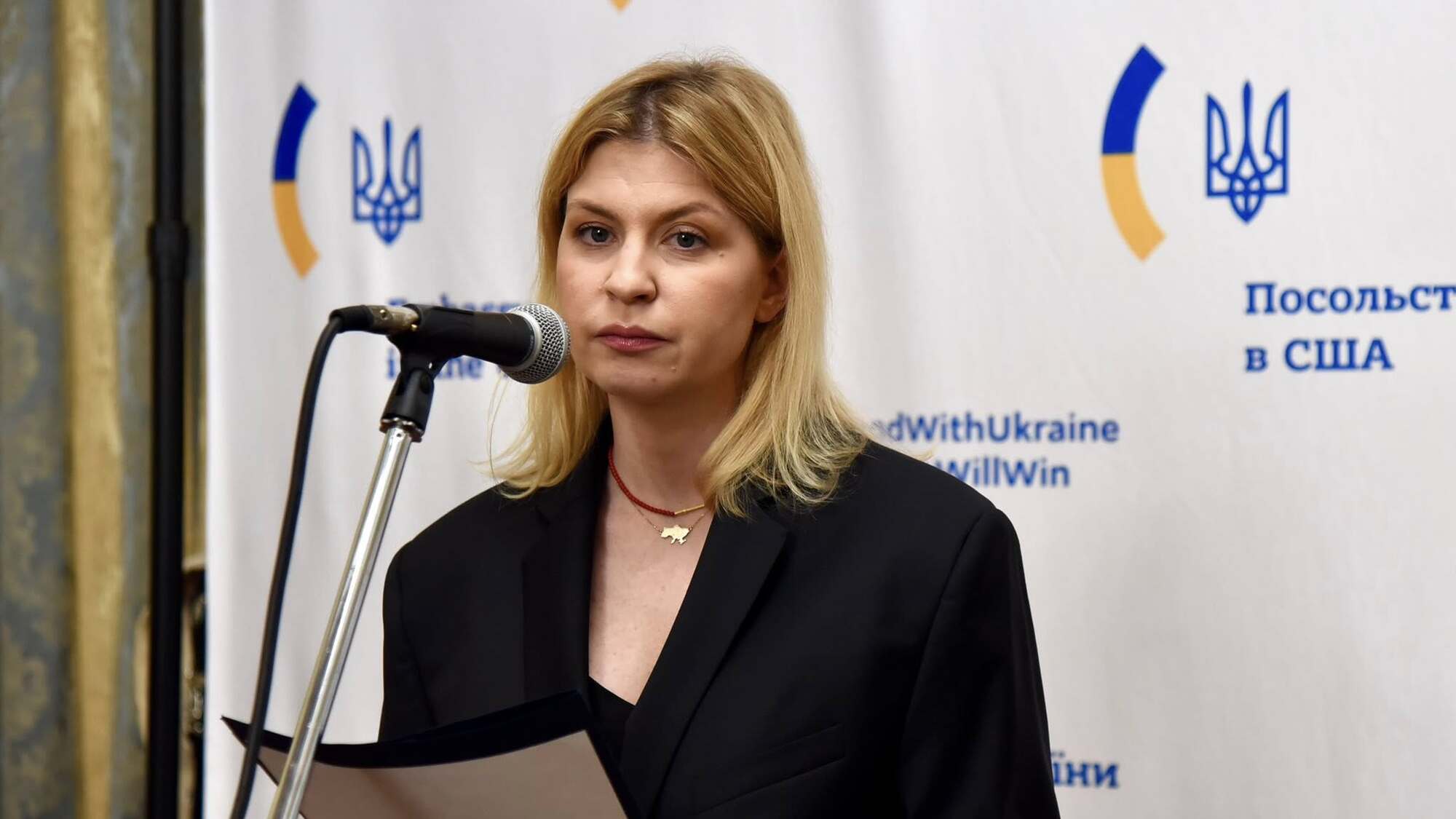
Three days ago, Olha Stefanishyna publicly denied rumors about her resignation. On August 3, Presidential Decree No. 696/2026 put an end to this story: she no longer holds the position of Ambassador of Ukraine to the United States. On social media, the diplomat called it a personal decision and promised to continue working for the country — but the speed with which assurances of stability turned into dismissal is itself a message.
A career that didn't have time to begin
Zelensky signed the decree appointing Stefanishyna as ambassador on August 27, 2025 — she didn't serve in the position for even a year. To Washington, the vice prime minister for European integration came with baggage that is rarely seen among diplomats: public political weight, experience negotiating with Brussels, and at the same time — a trail of corruption suspicions dating back to 2020, when she confirmed her status as a suspect in the case of former Deputy Justice Minister Lukash.
Her predecessor Oksana Markarova held the position from February 2021 and left after a major scandal surrounding a visit by Zelensky's delegation to a factory in Pennsylvania on the eve of U.S. elections. Both resignations are united by one thing: the position of ambassador in Washington under the current Trump administration has become one of the most vulnerable points of Ukrainian diplomacy — any mistake here costs more than elsewhere.
Why now
The formal reason — a personal decision. The actual context — a wave of personnel changes in the government and military leadership, against which rumors about Stefanishyna emerged. But there is one detail that cannot be removed from the picture: parallel to her resignation, there "is indeed an attempt to bring charges" regarding property declarations — as the diplomat herself described the situation, calling it an "absolutely normal process" and promising to provide arguments in Ukraine.
In July, the SAP (Specialized Anti-Corruption Prosecutor's Office) opened a criminal case based on materials from a Ukrainian Pravda investigation about how people from Stefanishyna's circle received management of four real estate objects through ARMA, including the Trade Union House on Maidan. She has not yet been officially notified of suspicions. But the fact that the criminal case and dismissal from the ambassador's position coincided in time makes the version of purely "personal reasons" one of several possible explanations, rather than the only one.
Who benefits from this pause
For the President's Office, dismissing the ambassador before officially announcing suspicions looks like a way to remove the figure from public attack "on its own terms" — without the disgrace of a minister removed under pressure from anti-corruption bodies. For critics of the government, conversely, the very fact of the resignation immediately after the appearance of criminal proceedings confirms the thesis that personnel decisions at Bankova are rarely accidentally synchronized with the work of the SAP and NABU (National Anti-Corruption Bureau).
There is also a third interest — purely diplomatic. Washington under Trump is bargaining with Kyiv over a format where the ambassador's personal relations with the administration matter as much as official channels. Whoever comes to replace Stefanishyna, Kyiv gains a chance to restart communication from a clean slate — without the baggage of suspicions that opponents within Washington itself could use against Ukraine.
A contradiction that cannot be hidden
On July 30, Stefanishyna stated that Zelensky did not ask her to resign. A few days later, the decree dismissing her appeared anyway. These two statements are not necessarily lies: the decision could have indeed matured rapidly, and the wording "personal decision" does not contradict the fact that the initiative could have come from the president as well. But it is precisely this timing inconsistency — the main reason why the version of a purely voluntary departure is far from convincing to everyone.
"To dismiss Olha Vitaliivna Stefanishyna from the position of Extraordinary and Plenipotentiary Ambassador of Ukraine to the United States of America"
The decree does not contain a statement of motives — and therein lies the entire diplomatic caution of the document: it fixes the fact, not the reason.
What's next
If in the coming weeks the SAP announces official suspicions against Stefanishyna, the dismissal retroactively will look like a preemptive administrative decision. If the case quietly fades away without suspicions — the version of personal reasons for the resignation will remain the most plausible. The question that should be asked now: will Bankova appoint to the position of ambassador to the United States a person without open proceedings, or will it again choose a figure whose reputational vulnerability will become a subject of bargaining in just a few months?







