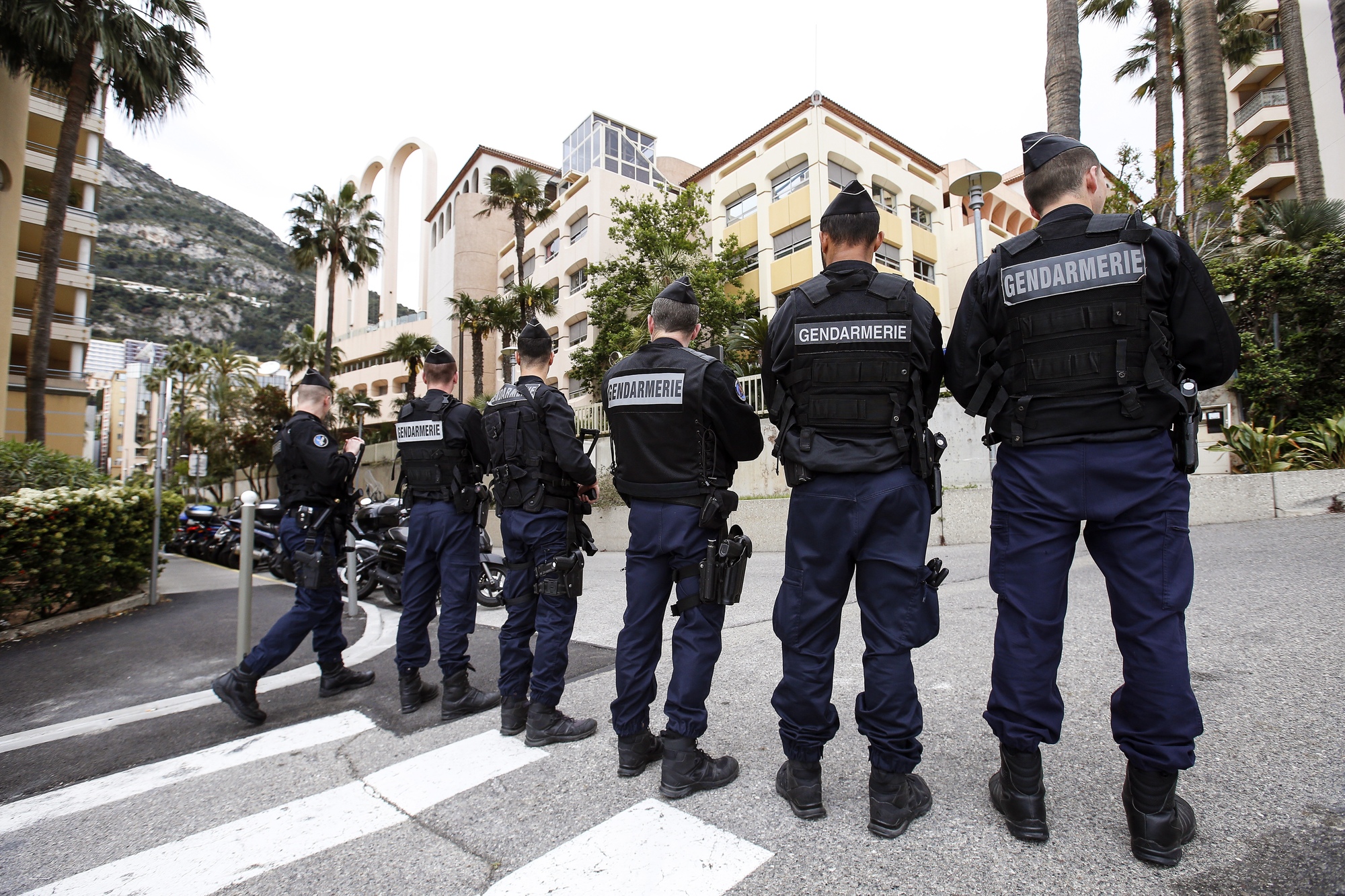
On the evening of June 29, an explosive device packed with bolts and metal shrapnel detonated in the vestibule of a residential building in Monaco, just a few meters from the French border. Three members of one family were injured — a man, a woman aged 50-60, and a 13-year-old teenager. The man was identified as Vadym Yermolayev, a Dnipro entrepreneur; he and his wife ended up in intensive care in critical condition.
Twelve hours after the explosion, the BFMTV channel, citing an informed source, reported that investigators had ruled out the terrorism version. However, this does not mean that an assassination attempt is excluded — only that the case is not being classified under terrorism laws. The suspect remains at large.
Monaco's First Explosion in History
Monaco's Prime Minister Christophe Mirmant called the event unprecedented:
"It is likely a terrorist attack. As far as I know, this is the first such case in the history of the principality."
Christophe Mirmant, Prime Minister of Monaco
Security cameras captured a man fleeing the scene: beige pants, black jacket, black hat that partially covered his face. As reported by ZN.ua, his trail was lost after he crossed the border into France. The suspect's identity has not yet been established.
A Man With Multiple Passports and Sanctions
Vadym Yermolayev is the founder of the Alef trade and production corporation, once one of Ukraine's 100 richest people according to Forbes; in 2021, his assets were valued at 221 million dollars. However, after 2019, he effectively left Ukraine's legal framework: he renounced Ukrainian citizenship and obtained a Cyprus passport, explaining this by a desire to have "international protection."
In December 2023, President Zelensky implemented an NSDC decision imposing personal sanctions against Yermolayev for 10 years. According to the SBU, the grounds were his alcohol business activities in occupied Crimea: his companies paid taxes to the Russian budget.
However, the sanctions did not stop business activities. As Hromadske reported, in autumn 2024, control over assets could formally transfer to Yermolayev's 21-year-old daughter Sofiya Kononenko, who lived in London and Cyprus. In May 2025, the State Geological Service renewed special permits for mineral extraction, which had been blocked due to sanctions.
The family also attracted attention: in December 2025, Yermolayev's son Arthur was detained in Cyprus at Interpol's request — in connection with call center operations.
Context: Not the First Assassination Attempt on a Ukrainian in Europe
The Yermolayev case is not an isolated incident. In May 2025, a former Ukrainian politician and lawyer Andriy Portnov was shot dead in a Madrid suburb. Both cases share one thing: the victims are Ukrainians with questionable pasts who lived in comfortable Western European jurisdictions, and in both cases, those who ordered the attacks have not been found.
- Yermolayev — under NSDC sanctions, business in occupied Crimea, Cyprus passport
- Portnov — ally of Yanukovych, lawyer linked to pressure on judges
- In both cases, perpetrators disappeared after committing the crime
Theories about who ordered Yermolayev's assassination have not yet been publicly voiced. However, the structure of the explosion — a device in the vestibule, a pre-planned escape route, knowledge of the victim's whereabouts — points to a planned assassination rather than a spontaneous act.
If the investigation manages to establish the perpetrator's identity and trace him to the person who ordered the attack, this would be the first case where such an attack in Western Europe reaches trial with concrete names. So far, none of the similar assassination attempts on "Monaco Ukrainians" has passed this threshold.







