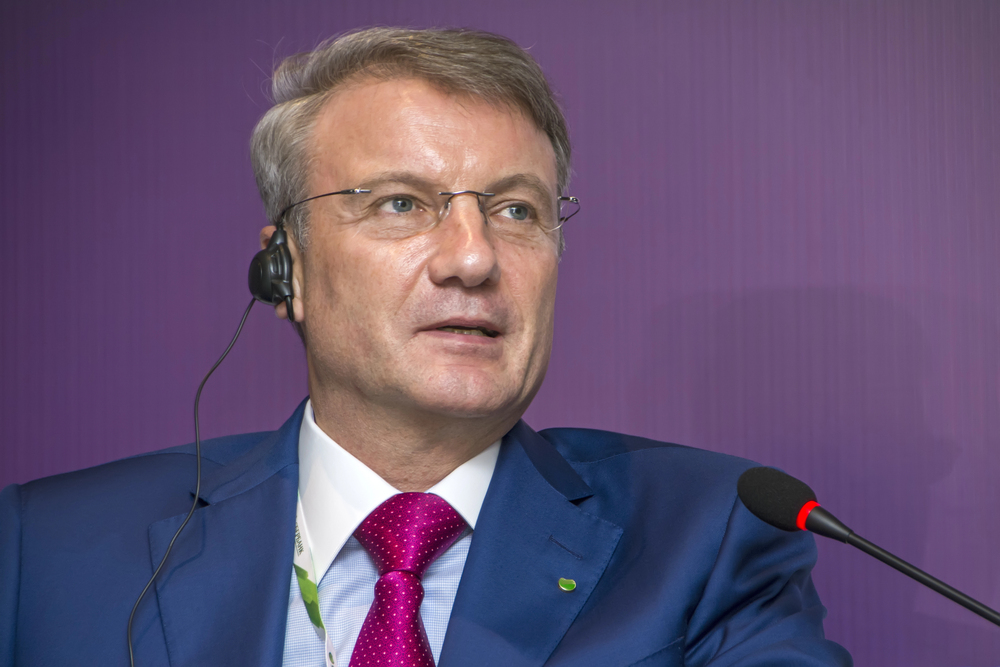
German Gref is not an opposition economist or an independent analyst. He heads Russia's largest state bank, is part of Putin's inner circle, and is one of the main beneficiaries of the very system he is now publicly criticizing. That is why his words about collapse carry more weight than any external forecast.
What happened to the "military boom"
The Russian economy grew at 4.1% in 2023 and 4.3% in 2024 — rates that exceeded most G7 countries. It was an artificial overheating: record military spending, budget injections, labor shortages due to mobilization pushed wages and consumption upward. The Central Bank responded by raising rates — in October 2024, it reached 21%, the highest level since the Soviet Union's collapse.
The result — a classic trap: inflation was partially curbed, but the rest of the economy ground to a halt along with it.
"The second quarter can essentially be viewed as technical stagnation. July and August show fairly clear symptoms that we are approaching zero marks."
— German Gref, Eastern Economic Forum in Vladivostok, September 2025
According to Reuters, Finance Minister Anton Siluanov already reported to Putin: the GDP growth forecast for 2025 was lowered from 2.5% to 1.5%. The IMF is even more pessimistic — 0.9% in 2025 and 1.0% in 2026.
Real rates — among the world's highest
The Central Bank of Russia has been gradually lowering its key rate since May 2025: as of June — 14.25%. But Gref insists this is not enough. According to him, for the economy to "start recovering," the rate must fall below 12%. Otherwise, he warns, recession risks will only grow.
The figure that explains why: the real interest rate in Russia — around 18% with current inflation at 4% — remains among the world's highest and continues to strangle lending even after nominal rate cuts. The country's credit portfolio, according to Sberbank's own estimates, can only begin to grow in the second half of the year — and only if monetary policy is eased by at least 200 basis points.
Three pressures at once
Stagnation is not the only problem. In parallel, Russia's economy is being squeezed by:
- Oil revenues: in August 2025, proceeds from oil and gas sales fell 35% compared to the same month last year — due to low commodity prices and intensified sanctions.
- Reserve funds: to cover the budget deficit, Moscow is spending accumulated reserves which, according to Fortune estimates, could be exhausted by the end of this year.
- Harvest: Russia is experiencing one of its worst agricultural seasons despite its status as an agrarian superpower — adding pressure to the budget and food inflation.
Consumer spending is already reacting: according to SberIndex, in August, consumption growth slowed to 9.5% year-on-year — down from an average of 13.9% for January–July. For millions of Russians, this means more expensive loans, frozen business investments, and declining real incomes in sectors unrelated to the defense industry.
What independent economists say
"The economy may, and most likely will, contract in 2025."
— Vladislav Inozemtsev, economist, in a comment to The Moscow Times
Inozemtsev estimates possible GDP decline in the range of 0.5–1.2%. Economist Dmitry Polevoy from Raiffeisenbank assesses second-quarter growth as "close to zero after seasonal adjustment." Capital Economics analyst Liam Peach gives 0.3% — which formally avoids technical recession but leaves the economy on the brink.
Notably, criticism of the Central Bank's monetary policy has long been led not only by liberal economists, but also by billionaire Oleg Deripaska, metallurgy magnate Alexei Mordashov, and Rostec state corporation chief Sergei Chemezov — those who have something to lose from expensive money.
Gref noted at Sberbank's shareholders meeting that some inflationary factors are not related to monetary policy at all — alluding to structural problems of the war economy that cannot be solved by rates. The Central Bank under Elvira Nabiullina's leadership continues cautious easing, but the pace — 25 basis points — disappoints markets expecting more.
If by the end of 2025 rates remain above 12% and oil revenues do not recover, Russia will get its first annual GDP contraction since 2022 — and no longer from independent analysts, but from its own Central Bank's reports.