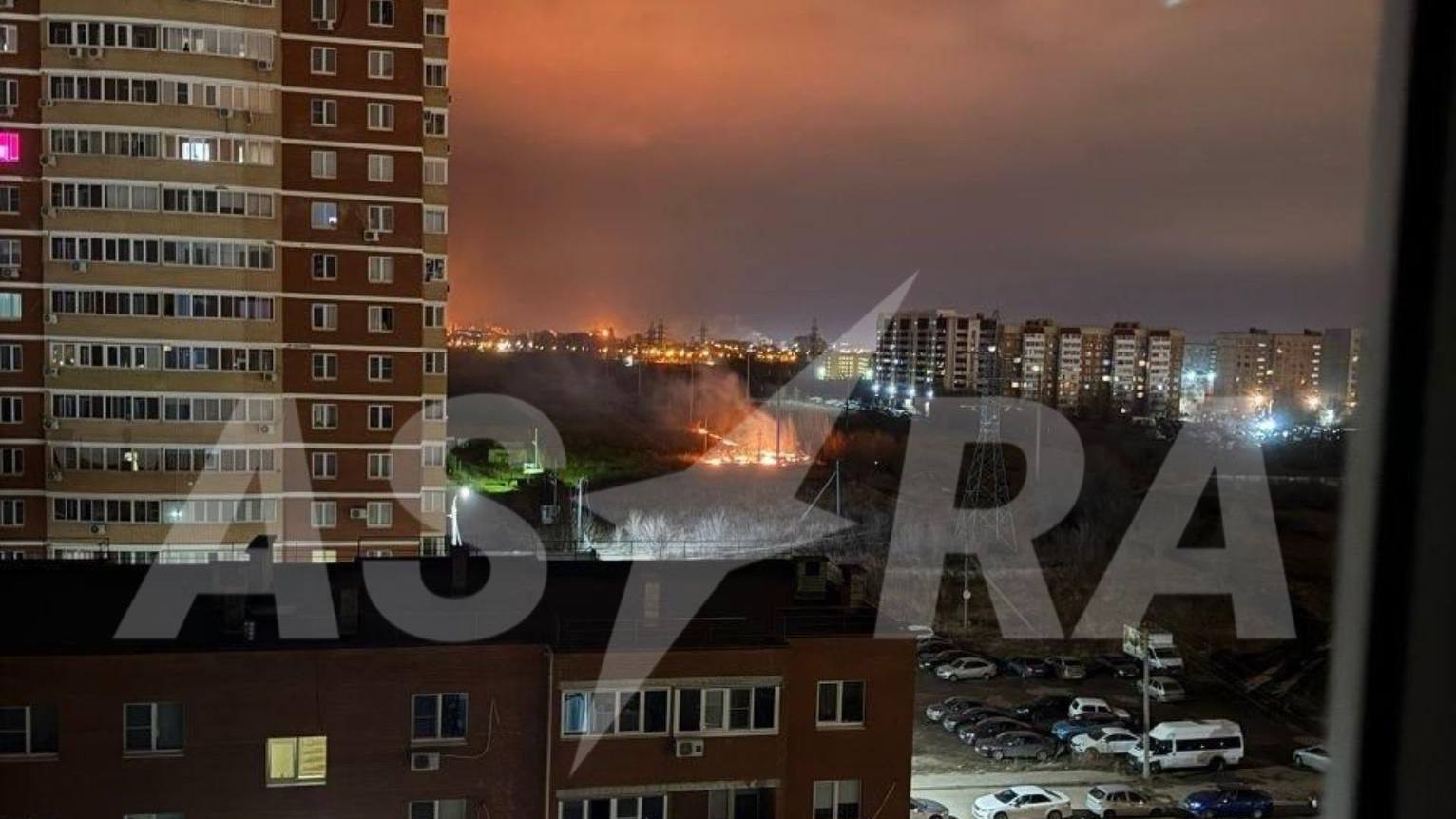
On the night of April 4 drones attacked Tolyatti in Samara Oblast and Taganrog in Rostov Oblast. In Tolyatti a fire swept through the industrial zone between two chemical enterprises — «Tolyattikauchuk» and «KuybyshevAzot». According to ASTRA, which conducted an OSINT analysis of eyewitness video footage, the ignition point is located precisely in the area of these two plants. Governor of Samara Oblast Vyacheslav Fedoryshchev confirmed the attack but said there were no casualties.
In Taganrog the situation proved bloodier. Governor of Rostov Oblast Yuriy Slyusar reported one dead and four wounded — among them a foreign national. Warehouses of a logistics company were damaged. Telegram channels also recorded impacts in the area of the enterprise «KhozAgro».
Not just chemicals — raw materials for explosives
«KuybyshevAzot» is not an ordinary industrial site. Founded in 1966, it is one of Russia's leading chemical plants: it produces caprolactam, polyamides, ammonia, urea and ammonium nitrate. The latter is key: for agriculture it is a fertilizer, but ammonium nitrate is the basis of industrial explosives — ammonal, igdanite and cheap mixtures with TNT, which are used in the mining industry that fills the Russian budget with ore and coal. As early as 2023 the plant launched a granulation and evaporation unit for ammonium nitrate with a capacity of 2,300 kg per day.
“Without ammonium nitrate, Russia’s mining industry, which feeds the budget with ore and coal, starts to cough.”
LB.ua, analysis of strategic bombings, February 2026
«Tolyattikauchuk», for its part, specializes in synthetic rubber and components for the tire and rubber-technical industries — critical for military hardware.
Third strike in 24 days
This is no longer an isolated event. The chronology of attacks on Tolyatti's industrial zone looks like this:
- 11 March — first strike on «KuybyshevAzot», explosions and fire.
- 21 March — strike on «Tolyattikauchuk» and «KuybyshevAzot» simultaneously, large-scale fire.
- 30 March — another drone attack on «KuybyshevAzot»; according to Kyiv Post, after the March strike the plant suspended operations.
- 4 April — a new attack on the same industrial zone.
Four strikes in 24 days on the same facilities indicate a systematic, not situational, campaign. For the drones to reach Tolyatti — roughly 1,000 km from the border with Ukraine — they would have had to pass unnoticed through the air-defense systems of Belgorod, Voronezh, Tambov, Penza and Samara oblasts.
Official silence from Moscow
The Russian Ministry of Defence traditionally reports “downed UAVs” without details about ground consequences. The real scale of damage at «KuybyshevAzot» and «Tolyattikauchuk» after the latest attack is still unknown — the plant is not commenting, and regional authorities are limiting themselves to the minimum.
If systemic strikes on the Tolyatti industrial zone do indeed reduce ammonium nitrate production, the next question is whether Russia’s mining industry will feel it before the summer blasting season, when demand for explosives traditionally rises.





