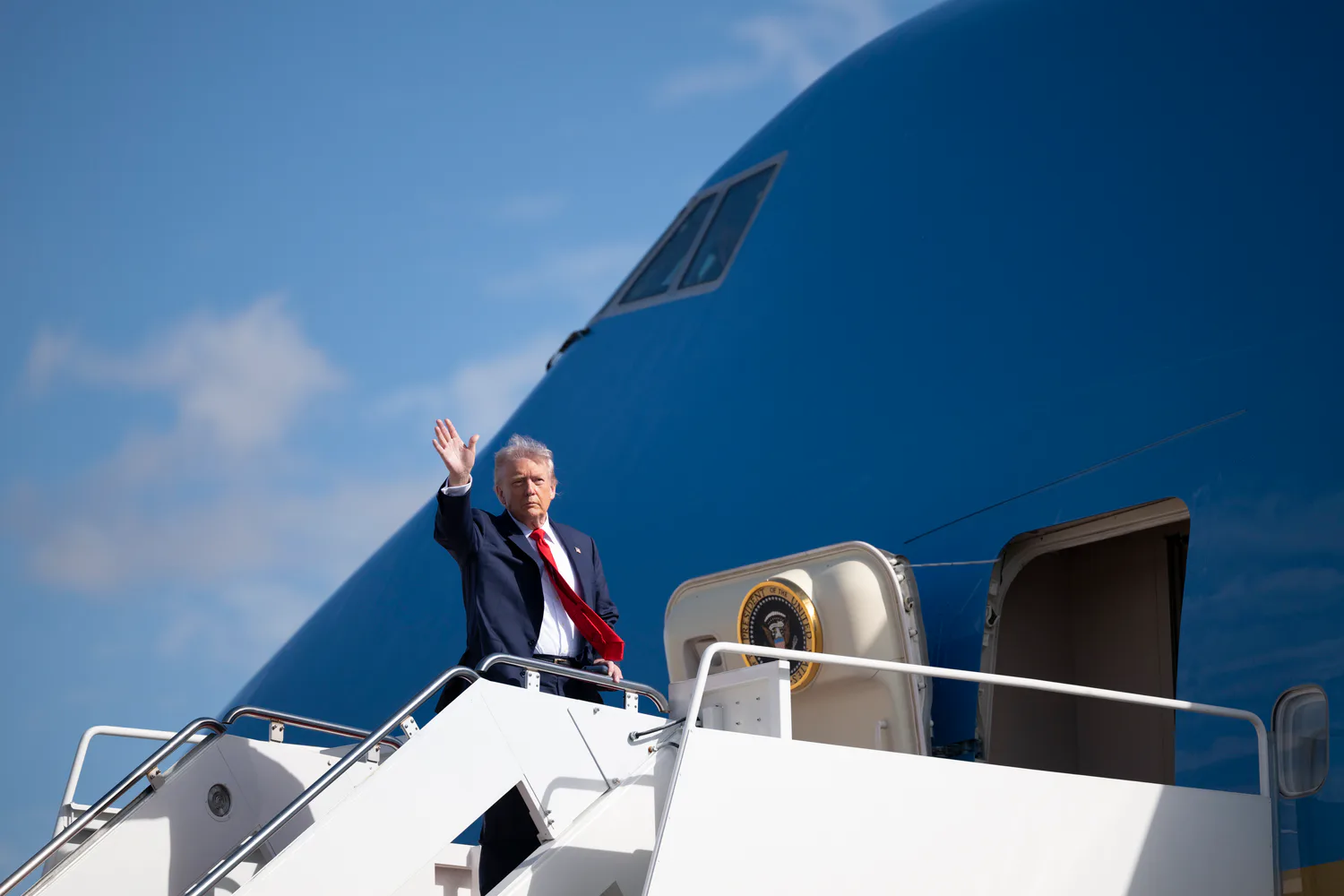
On the tarmac at Andrews Air Force Base, Donald Trump spoke about an attempted assassination as if recounting an action movie episode. "I'm often threatened," he tossed to journalists on Tuesday evening when asked if he knew about a specific threat during the NATO summit in Ankara. According to the president, the decision to move him from Air Force One to a military aircraft was made not by the White House, but by the Secret Service and the military — and he simply followed orders.
The scheme was complex: while Trump flew on a different aircraft, the presidential Air Force One continued as planned — with Secretary of State Marco Rubio and Treasury Secretary Scott Bessent on board. Defense Secretary Pete Hegseth flew with the president on the same military aircraft. All three knew about the switch in advance.
What exactly happened in the air
According to the Washington Post, cited by ABC News, the operation made Air Force One a "decoy" with journalists and part of the White House staff on board. The windows of the aircraft where the president was "supposed" to be were ordered kept closed throughout the flight, and the transponder was turned off — despite the fact that Trump himself was not there. The publication's source directly states: if the president was removed from the aircraft, then the threat to that aircraft remained real.
Trump himself presented it differently to journalists — saying that the aircraft on which he flew was the riskier one: "I think it was at greater risk, because I think that plane is probably the one they would have chosen." Formally, this contradicts the logic of a "decoy," where the danger was supposed to be concentrated on the empty — or rather, filled with subordinates without the president — aircraft. Publicly, during the flight itself, Trump explained the aircraft change in mundane terms: the old Air Force One was sent to Britain so the military could inspect the new aircraft, gifted by Qatar.
Why this was revealed now
Details of the operation leaked not because the White House decided to boast about it. First, CBS and ABC News reported on the flight due to the threat from Iran back in July, then the Washington Post added details about the transponder and closed windows. Trump's comment on the Andrews base tarmac is already a reaction to an investigation, not an initiative from the president's team. There was no sense in staying silent: when three cabinet members publicly figure as passengers on the "decoy aircraft," official confirmation becomes cheaper than a week of evasive "no comments."
In a statement to ABC News, the White House chose a self-defense frame rather than secrecy: "America has many enemies who are targeting him, and we use all means at our disposal to counter these threats." This is a favorable version for the administration: confirmation of a murder threat reinforces Trump's image as a target of hostile states and justifies toughness toward Iran without the need to present new intelligence evidence.
Who benefits and who doesn't
- Trump and his team — the story reinforces the image of a president whom hostile regimes want to kill, which works toward consolidating the electorate and silent support for tough decisions regarding Tehran.
- The Secret Service and the Pentagon — public confirmation that the operation was initiated by them, not the White House, removes suspicion from the agencies of exaggerating the threat for the president's publicity.
- Iran — conversely, disadvantageous: confirmation of a specific assassination attempt gives Washington an additional argument for sanctions or strikes without needing to reveal intelligence sources.
Trump's opponents approach from a different angle — not denying the threat itself, but asking why journalists and part of the White House staff were deliberately kept on board an aircraft that the Secret Service considered more vulnerable, without warning them about the actual level of risk. The question about the boundary between protecting the president and putting at risk people who didn't know about the switch remains open — and it is this question, rather than the fact of the "decoy" itself, that could become a topic for congressional hearings.
If the Secret Service truly recorded a specific missile threat from Iran at the moment of takeoff from Ankara, it is logical to expect that relevant congressional committees will ask for details in the coming weeks. The only question is whether the administration will agree to declassify anything beyond the already depleted supply of public statements.