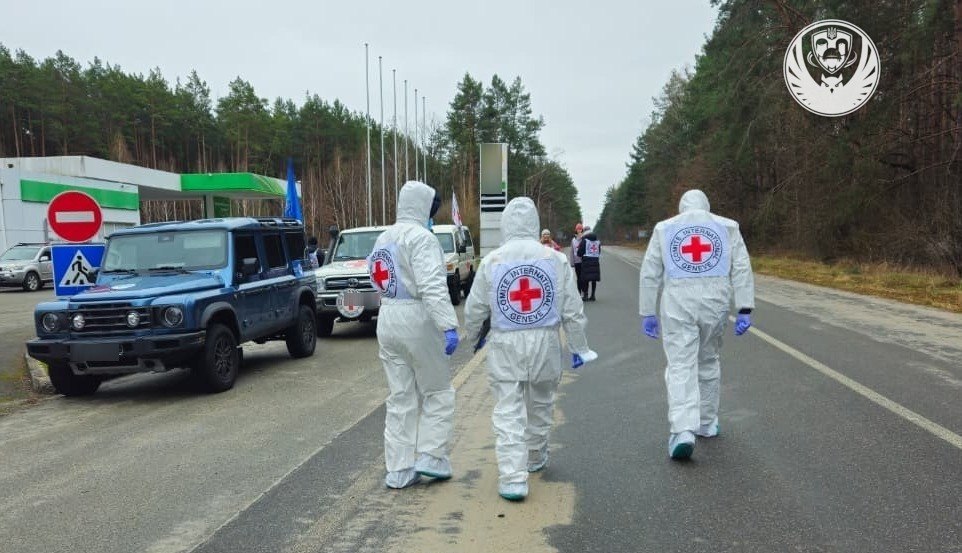
On April 9, one of the largest single repatriations during the full-scale war took place: the Coordination Headquarters on the Treatment of Prisoners of War reported the return of the bodies of a thousand people. According to the Russian side, these are Ukrainian military personnel who died on the Kursk, Donetsk, and Zaporizhzhia fronts.
But the very fact of the transfer is only the first step. Families often don't see what happens next for weeks.
What the process looks like after the exchange
Bodies arrive at regional forensic medical examination bureaus. There, an inspection takes place, samples are collected, a DNA profile is built, and it is cross-checked with a database of missing relatives. As reported by Suspilne, citing Maksym Tsutskiirdze, first deputy head of the National Police, two parallel methods are used: visual features — tattoos, piercings, clothing — and molecular-genetic examination.
"We identified 4,600 bodies through body inspection using identifying features. At the same time, for each body that was identified through recognition, we collected DNA, and in the future conducted molecular-genetic examination, which also confirmed it."
Maksym Tsutskiirdze, first deputy head of the National Police
Only in 2024, the Ministry of Internal Affairs system conducted over 74,000 examinations on almost 151,000 objects — bodies, their fragments, personal items. For comparison: according to frontliner.ua, over 8,000 people were identified in a year.
Deliberate complications
According to Kyiv Post, the Ministry of Internal Affairs records a systemic practice: Russia transfers bodies in poor condition, often without accompanying documents and names. Sometimes the bodies of Russian soldiers themselves are found among the transferred remains. Burned or long-buried remains do not allow DNA to be extracted — then the only option remaining is a dental formula or other indirect methods.
The Registry of the Missing as of September 2024 contained 55,000 records. Of these, over 3,000 bodies remain unidentified — they are stored in refrigerated chambers of special facilities.
Context: not the first and not the last
In June 2025, Ukraine returned over 2,400 bodies within one month — in two separate exchanges. In February of the same year — 757 deceased. Repatriations became one of the few practical results of the Istanbul talks between Kyiv and Moscow, which took place from May to July, — alongside the exchange of live prisoners.
- Kursk, Donetsk, Zaporizhzhia fronts — three zones from which, according to the SBU, the bodies of this exchange originate.
- 8+ months — that is how long identification of complex cases can take on average.
- 19 institutions of the Ministry of Internal Affairs in 2024 stored unidentified bodies.
If Russia continues to transfer bodies without documents and damaged — the queue of unidentified remains will grow faster than laboratories can reduce it. The issue is not the number of exchanges, but whether Ukraine will receive enough DNA samples from families of the missing to cross-reference them with thousands of remains already waiting in storage.





