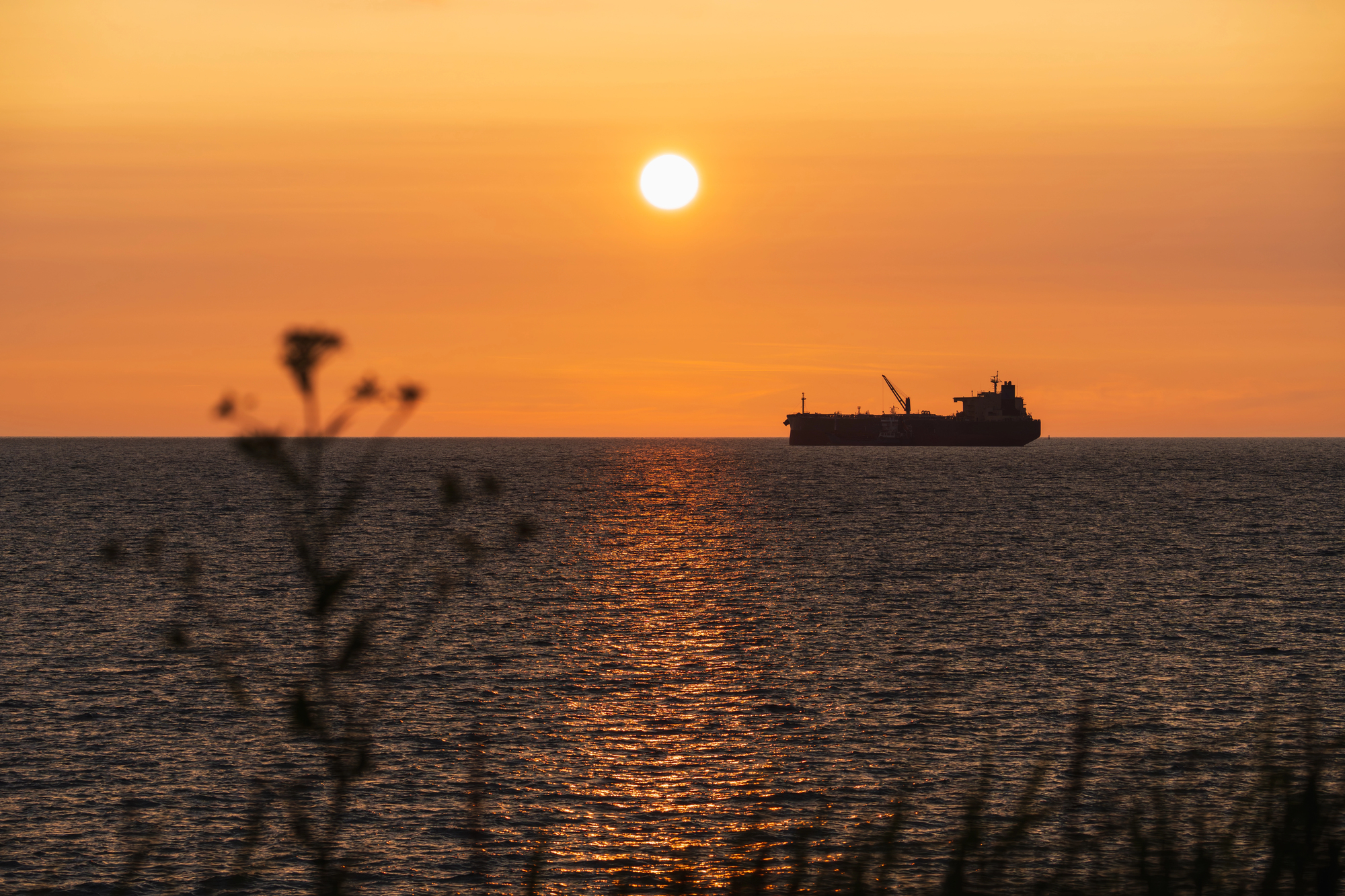
On the morning of April 9, 2026, the MarineTraffic tracking service detected the first two vessels passing through the Strait of Hormuz after the announcement of a ceasefire between the United States and Iran. These were not oil tankers, but bulk carriers — dry cargo ships. By the end of the first day, according to S&P Global Market Intelligence, there were four such vessels. Before the war began on February 28, 2026, 138 vessels passed through here daily.
Numbers Behind Which People Stand
The Strait of Hormuz is not an abstract "artery of world trade": approximately 20% of global maritime oil supplies and 20% of liquefied natural gas pass through it. The closure of the strait starting March 2 has already caused the shutdown of oil wells in Iraq and Kuwait — because local storage facilities are full and there is nowhere to transport the oil. According to calculations by the Federal Reserve Bank of Dallas, the exclusion of Persian oil from the market raised the average WTI price to $98 per barrel and reduced the forecast for global GDP growth by 2.9 percentage points on an annual basis. The price of gasoline in the United States on the day of the ceasefire was $4.14 per gallon — the highest since 2022.
Why Ceasefire ≠ Opening
Iranian Foreign Minister Abbas Araghchi stated that "safe passage through the strait is only possible through coordination with Iran's Armed Forces and taking into account technical limitations." This means: each vessel requires separate approval from the IRGC.
At the same time, Iranian state media reported a new closure of the strait following Israeli strikes on Lebanon — the White House called this report "false," but trade effectively stopped again.
Kpler analyst Matt Smith estimates that in the near term, only 10–15 vessels per day will be able to pass through the strait: Iran continues to verify each request. Hundreds of vessels are anchored outside the strait awaiting clarity, which the insurance market has yet to provide.
"In the Red Sea, a ceasefire agreement with the Houthis was concluded back in January — and traffic has still not resumed."
Nikos Petrakakos, Managing Director of maritime investment fund Tufton, CNBC
Petrakakos adds that the problem is not just financial: ship captains are personally responsible for transit decisions. "For now, most of them quite reasonably think: no matter what the bonus is, it's not worth the risk to life," he explains. According to him, this may change over time — but not in a matter of days.
Insurance: The Invisible Barrier
Even if the Iranian side permits passage, shipowners face concrete arithmetic: war risk insurance premiums have risen from 0.125% to 0.2–0.4% of the vessel's value per transit. For a large oil tanker, this is an additional $250,000 per voyage. Maersk confirmed in a statement that the ceasefire "does not yet provide full maritime certainty" and that it needs to "understand all conditions of the agreement" before resuming routes.
- Before the war, 138 vessels transited through the strait daily.
- At the time of the ceasefire, more than 150 vessels were anchored outside the strait.
- The IEA released 400 million barrels from strategic reserves on March 11 — approximately 4 days of global consumption — as a temporary buffer.
- Vessels continue to disable transponders to avoid becoming targets — actual transit statistics are underestimated.
According to logistics operators, even after the physical opening of the strait, hundreds of thousands of containers will remain blocked in ports in India, Oman, and Pakistan. "It will take weeks, if not months, to restore pre-war schedules," industry experts conclude.
If Iran fails to implement a transparent transit permit mechanism within the next two weeks of the ceasefire — rather than situational coordination through the IRGC — the insurance market will not lift its premiums, and hundreds of vessels will remain anchored regardless of what is signed on paper.







