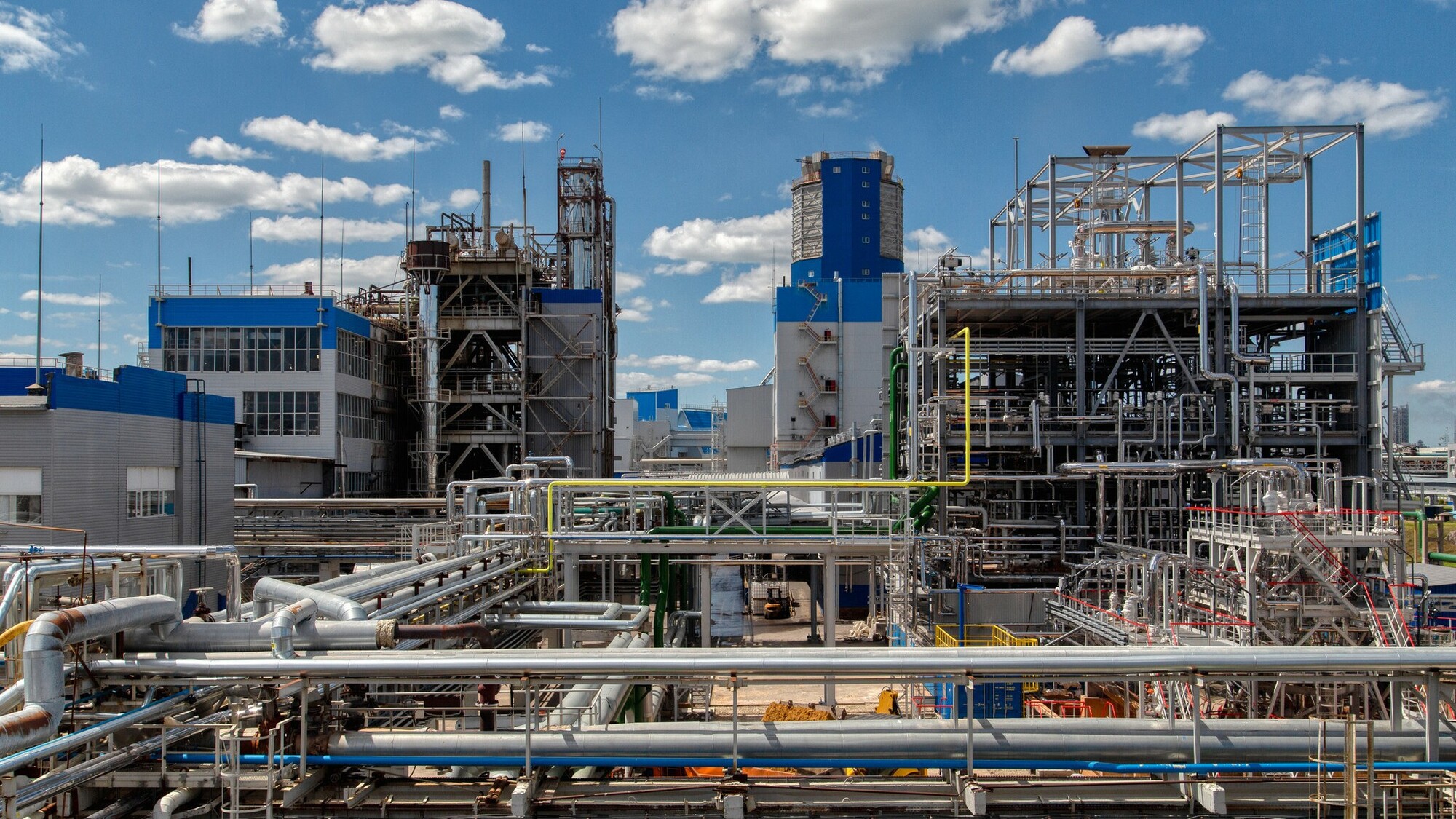
During the latest drone attack on the Tula region, videos appeared showing flashes and smoke in the Novomoskovsk area. Local Telegram channels and open-source geolocation indicate the territory near the chemical plant "Azot" — an enterprise that is part of the EuroChem holding structure.
"Azot" in Novomoskovsk is not an ordinary facility. The plant produces ammonia, nitric acid, ammonium nitrate, and other dual-use compounds. Ammonium nitrate is both a fertilizer and a component of explosives. That is why such enterprises in Russia are officially classified as critical infrastructure facilities with enhanced protection.
No official confirmation of a direct hit came from the Russian side — Tula region Governor Alexei Dyumin limited himself to a standard statement about "air defense operations" and "no civilian casualties." This is a typical formula that neither confirms nor denies infrastructure damage.
Verified photos from within the industrial zone have not yet appeared. Open satellite imagery has not been updated at the time of publication. Therefore, the scale of possible damage remains unknown.
Why this matters beyond a single attack
Strikes on chemical plants are a separate category of risk. On one hand, these are facilities that indirectly work for the Russian military-industrial complex: ammonium nitrate is used in explosive production for artillery shells. On the other hand, any significant damage to ammonia tanks creates a threat to civilians within a radius of several kilometers.
Novomoskovsk is a city with a population of about 120,000 people. "Azot" is located in an industrial zone, but not isolated from residential areas.
If the strike indeed hit production facilities rather than the perimeter or warehouses — a question arises that currently has no answer: how far is Ukraine prepared to go in strikes against facilities with potential chemical risks to civilians, and does there exist a publicly stated criterion for such target selection?





