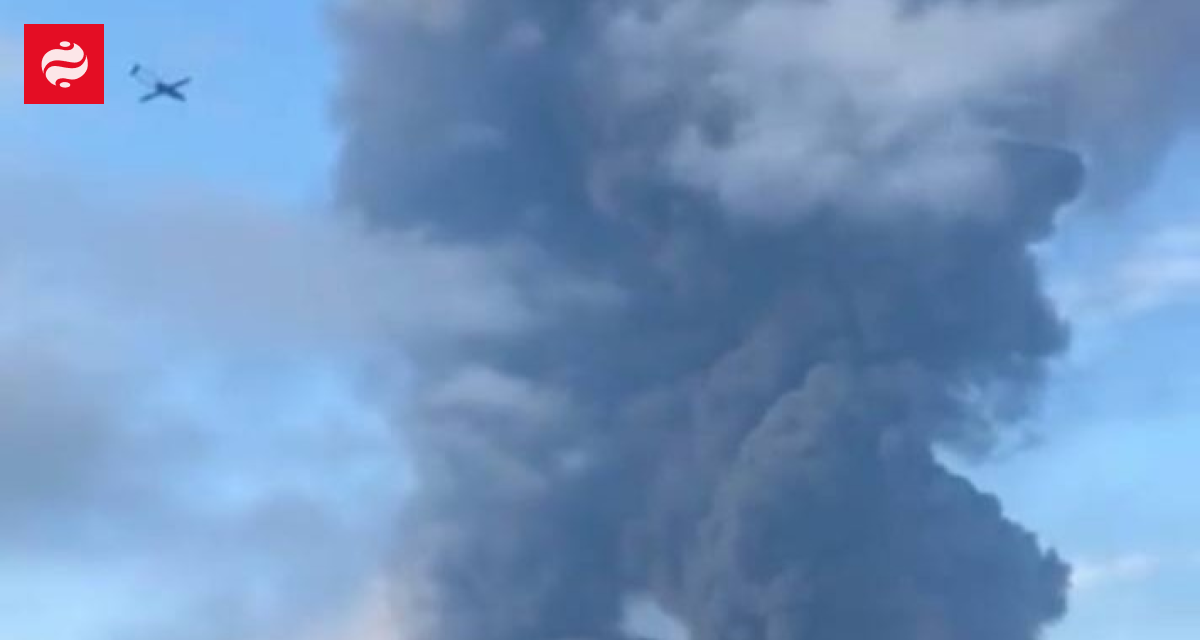
Volodymyr Zelensky, in his evening address on June 14, 2026, listed objects that Ukrainian forces struck during a nighttime attack on Russian territory. The list includes the Azot chemical plant, an oil facility, and at least six airports where flight restrictions were introduced following the strikes.
Azot is one of Russia's largest producers of nitrogen fertilizers, located in Novomoskovsk in Tula Oblast. The enterprise had previously been at risk due to its role in supplying the military-industrial complex: ammonia and derivative compounds are used in explosives production. A strike on such a facility is not merely a symbolic demonstration of reach, but an attempt to disrupt ammunition supply logistics.
The simultaneous damage to an oil facility fits into a consistent Ukrainian strategy of pressuring the energy and fuel infrastructure that directly powers Russia's war machine. Since the start of the full-scale invasion, Ukraine has repeatedly attacked oil refineries and terminals, attempting to reduce fuel reserves for armored vehicles and aircraft.
The most tangible signal for civilian audiences came from restrictions at six airports. The closure of airspace over major transport hubs is tracked by independent aviation trackers in real time — and becomes the first public confirmation of an attack before any official statements. On June 14, Russian media reported temporary bans on departures and flight delays in several regions.
Zelensky did not name specific coordinates, damage volumes, or strike methods — standard practice for operational comments that prevents the adversary from gathering data to assess air defense effectiveness. Independent verification of damage extent is currently impossible: satellite imagery with sufficient detail typically appears 12–48 hours after a strike.
The question that remains open: if the strike on Azot truly disrupted the production cycle, how much time will Russia need to restore ammonia nitrate supplies to defense enterprises — and will Ukraine manage to capitalize on this window before Moscow rebuilds its logistics?





