Brief — and to the point
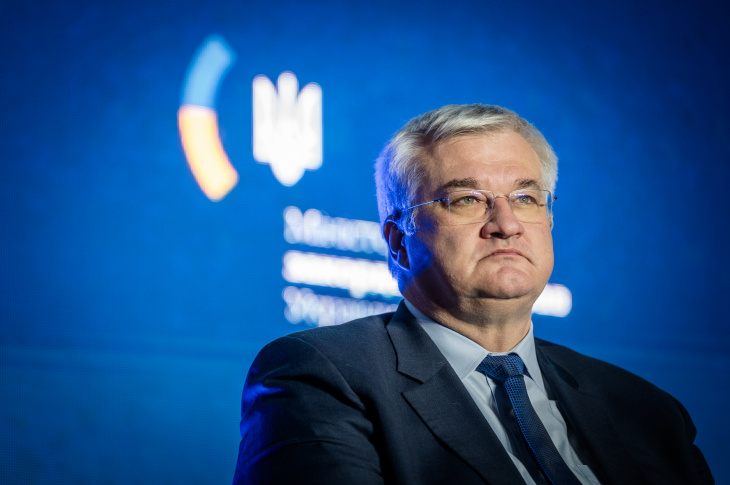
Foreign Minister Andriy Sybiha responded directly to Budapest’s statements, saying that “Ukraine does not accept ultimatums.” This was reported by the Interfax-Ukraine agency. The disagreement stems from Hungary’s demand to restore oil transit through the pipeline “Druzhba,” damaged by Russian strikes, within three days. Kyiv says it is impossible to force a fix and has offered partners alternative supply routes not connected to the Russian Federation.
"Ukraine does not accept ultimatums"
— Andriy Sybiha, Minister of Foreign Affairs of Ukraine (Interfax-Ukraine)
Why it matters: a loan versus energy pressure
Budapest tied the transit issue to blocking a preferential loan for Ukraine of about €90 billion and to cooperation on a sanctions package against Moscow. As LIGA.net explained, for Kyiv this is not only about money: a significant portion of the loan was intended for defense needs and critical infrastructure. Therefore Hungary’s decision has both financial and political dimensions.
What Budapest demands and what Kyiv points to
According to Hungarian media (Index), Hungary’s deputy energy minister Gábor Cseppek said that if transit is not restored, Budapest will not only continue blocking the loan but will also initiate legal proceedings and demand access for experts to the Brody pumping station. Kyiv emphasizes that this facility was struck by Russia, and restoring damaged infrastructure is impossible while repair crews are under constant attack.
"‘Druzhba’, which was seriously damaged by the occupiers at the end of January, could resume operations within a month to a month and a half"
— Volodymyr Zelenskyy, President of Ukraine
This estimate is partly confirmed by Naftogaz leadership: Serhii Koretskyi gave approximate restoration timelines of about a month to a month and a half, but stressed that work is complicated by the security of repair crews.
Other consequences — the cash couriers incident and NBU decisions
The events already have practical effects. On March 6 it became known that Hungarian law enforcement detained Ukrainian cash couriers carrying a large sum of cash and gold; later Kyiv secured their release, while work to return the cargo continues. In response, the National Bank of Ukraine decided to convert banks’ non-cash foreign currency into cash to bolster bank vaults — a direct reaction to logistics risks and access to assets.
Analysis: why Kyiv will not give in
Experts stress several key points. First, repairing the Druzhba under wartime conditions cannot be turned into a tool of pressure: repair crews under fire is a technical and security problem, not a matter for political bargaining. Second, Budapest is acting in the context of Orbán’s domestic politics: pre-election motives may drive hardline statements that increase pressure on Kyiv ahead of important EU decisions on assistance.
What’s next?
Kyiv has already proposed alternative oil supply routes to Hungary and Slovakia to reduce dependence on Druzhba. Two scenarios are possible going forward: diplomatic escalation with legal attempts to resolve the dispute, or a gradual easing of tensions through international mediation and practical energy supply solutions. The question for European partners is whether they will allow a precedent in which a single country uses energy as a lever of pressure during a war on European territory.
"If diplomacy does not work, then the ball is in the partners’ court — declarations must turn into signed contracts and clear guarantees for infrastructure security"
— Energy sector analysts and representatives of international observers
In summary: this is not just a dispute over a pipeline. It is a test of the EU’s and its allies’ ability to protect Ukraine’s logistics, finances and security from unilateral political maneuvers. Kyiv has so far chosen a strategy of firm but rational resistance — and there are both technical and political reasons for that.





