Briefly
The portal Defense Express published a piece claiming that on the morning of March 16 a Russian loitering munition, the «Lancet», allegedly exhibiting signs of artificial intelligence use, fell near the Independence Monument. Serhii Beskrestnov, advisor to the Minister of Defense, doubts that such a UAV could reach the city center and suggests that fragments may have been deliberately dropped from 'shaheds' as an element of an information operation. Technical data are still being collected: radio signals, camera footage, radar data and photographs.
What the source claims
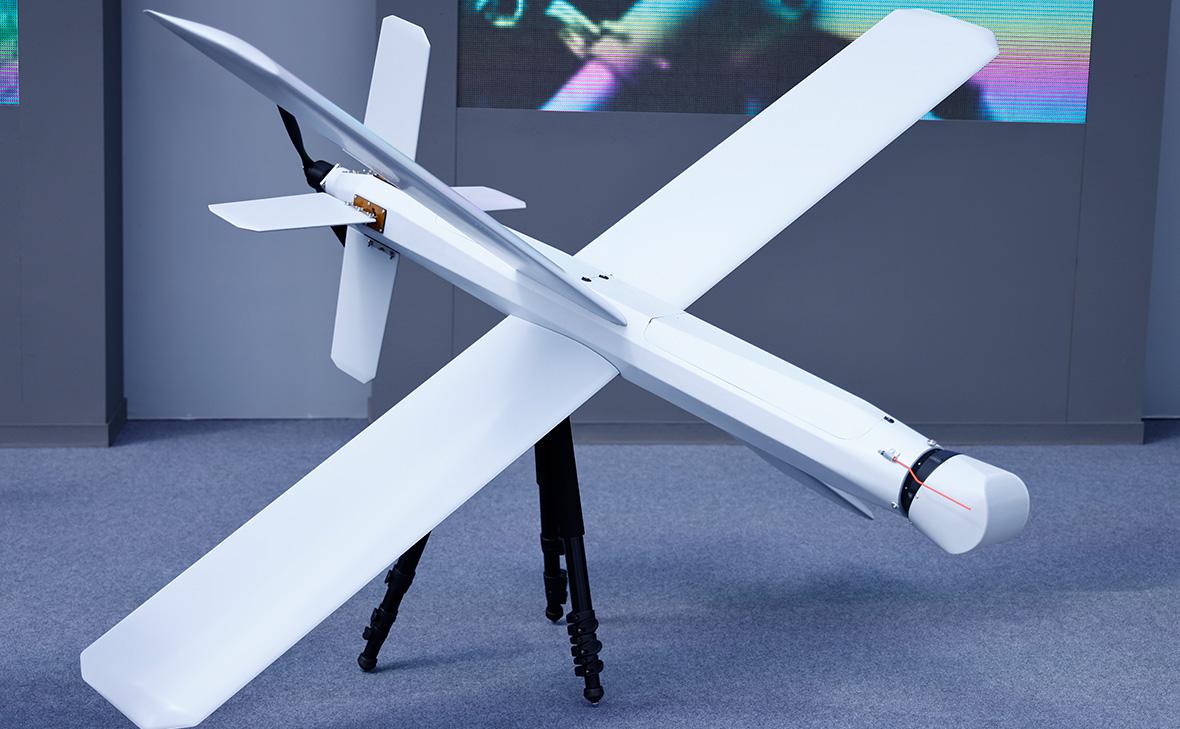
Defense Express, citing unnamed interlocutors, points to characteristic signs: X-shaped tail assembly, a pusher propeller, a wing fragment bearing the marking «RF», and colored rings that reportedly indicate swarm (cooperative) employment and autonomous navigation. The outlet also provides technical assessments: the «typical» flight range of the Lancet is about 50 km (as a communications parameter), Russian reports cite flights up to 90–136 km, and it notes that from the Russian border to central Kyiv is over 200 km, while from Belarusian territory it is about 90 km.
Could this have physically happened?
According to advisor to the Minister of Defense Serhii Beskrestnov, the option of a Lancet directly arriving from Russian territory can be ruled out due to energy and radio-channel limitations: these are electric strike drones with limited battery capacity and small warheads, designed primarily for frontline tasks.
“I very much regret that one publication decided to play into the enemy’s hands and hype this topic by publishing official police photographs from the site where the fragments were found.”
— Serhii Beskrestnov, advisor to the Minister of Defense
This is a straightforward technical point: autonomous modes, markings and swarm logic can be elements of special labeling or protocols, but the mere presence of such markings does not automatically prove that the device flew hundreds of kilometers. There are several plausible scenarios that specialists are currently checking:
- fragments of a genuine Lancet that were moved to another location (for example, dropped from other types of UAVs or from aircraft);
- launch from closer territory (for example, from Belarus or temporarily occupied areas), which requires confirmation of trajectory and radio exchanges;
- misidentification of fragments — some elements may resemble a Lancet but belong to other systems.
Which data will decide
To reach a reliable conclusion, analysts and the military are examining: radio signals and communication logic, trajectories from radar data, video from surveillance cameras and interceptor drones, and the structural characteristics of the fragments (electronics, markings, materials). It is the combination of these sources that will provide an answer about the origin of the device and its mode of operation.
Consequences: equipment, information, trust
If it is confirmed that autonomous Lancets reached central Kyiv, this would mean adjustments in approaches to air defense and a search for technical solutions to detect and jam such systems. If the version about fragments being dropped is confirmed, it would be an example of an information maneuver by the enemy aimed at undermining trust in sources and provoking panic. Both outcomes have practical consequences: from changing defense tactics to communications with the media and the public.
Conclusion
While the technical examination continues, it is worth refraining from definitive conclusions and trusting the results of an investigation based on radio data, video and material analysis of the fragments. The analytical community and the military emphasize: quick judgments replace precise work, and the enemy readily uses ambiguous facts for informational influence. The next step is a public clarification of the obtained technical findings to raise situational awareness among Kyiv residents and reduce the space for disinformation.





