What happened
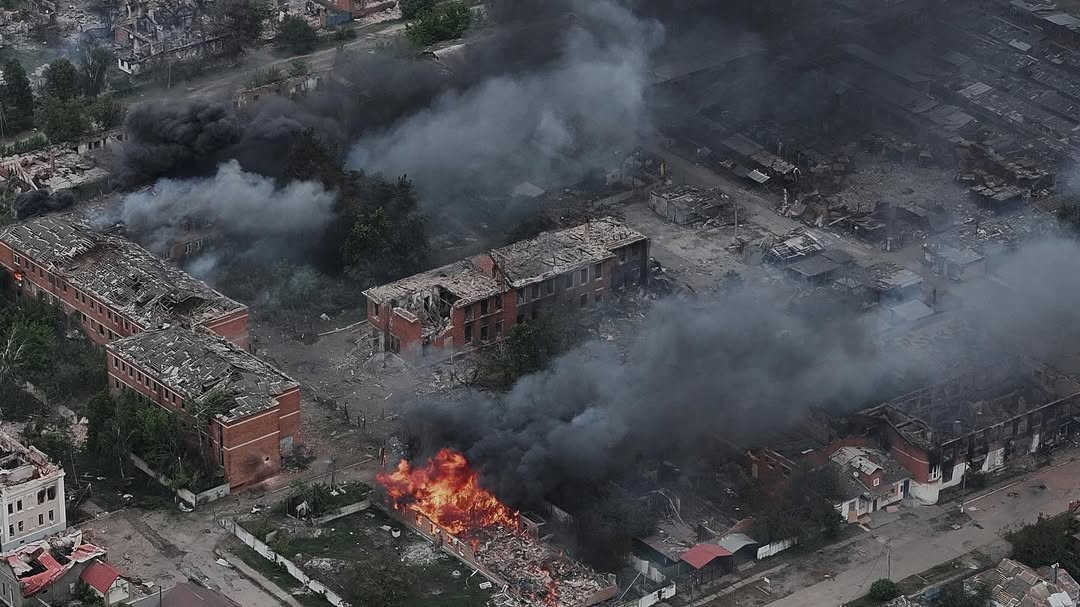
Vovchansk in the Kharkiv region is largely in ruins, and Russian units control much of the city. On a telethon broadcast, the head of the Communications Department of the Joint Forces grouping, Viktor Tregubov, reported that the enemy is trying to encircle Ukrainian units holding positions in the southern part of the city.
"Most of Vovchansk is, objectively, now in ruins. And most of those ruins, unfortunately, are under the control of Russian forces. Despite a Ukrainian presence remaining in the southern part of the city, the enemy is attempting to eliminate it."
— Viktor Tregubov, head of the Communications Department of the Joint Forces grouping (telethon broadcast)
Situation on the ground
According to Tregubov, the enemy is conducting flanking attacks, trying to envelop the units in the south and force them to withdraw or become encircled. Holding positions in a ruined city complicates defense and the organization of supplies.
Why this matters
Encirclement is not only a tactical success for the enemy but also a blow to logistics: cut-off approaches make it harder to deliver ammunition, evacuate the wounded, and rotate forces. This factor often determines whether a unit can hold a position for long.
The comparison with Kupiansk, where the Russians are confined to a few buildings and cut off from main forces, underscores the area's specifics — in Vovchansk, due to the scale of destruction and the enemy's concentration, the task is more difficult.
What experts point out
Military experts point to two critical variables: the availability of supply lines and the ability to maneuver reserves. If commanders can maintain resupply and apply countermeasures to the enemy's flanks, the risk of encirclement will decrease. Otherwise — positions may come under significant pressure.
"So it's simply to envelop the Ukrainian troops in the south of the city and force them to withdraw, or even be encircled. They haven't succeeded, but they are trying very actively. It's really difficult there — in a ruined city it's not easy to hold any defence."
— Viktor Tregubov, head of the Communications Department of the Joint Forces grouping
Conclusion
The situation in Vovchansk demonstrates how local tactical actions can have broader consequences for the front. The outcome will depend on logistical resilience and the speed of command decisions: for now Ukrainian units are holding, but the coming days will be critical. Whether it will be possible to reduce the pressure and shift the initiative is a question that requires attention from both military leadership and the partners responsible for provision.







