Quiet deterrence instead of public accusations
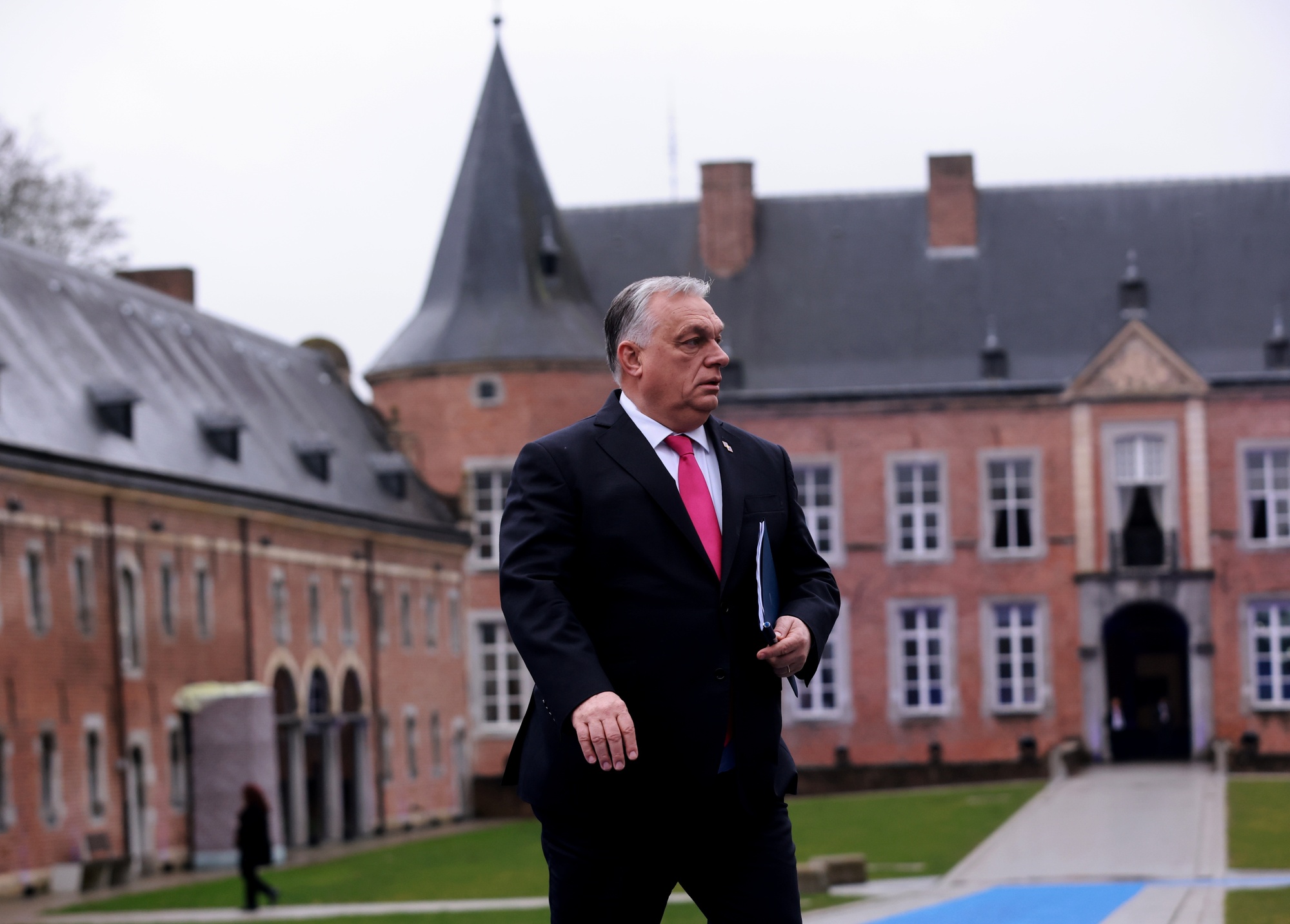
Financial Times, citing interlocutors, reports that the European Commission has visibly softened its rhetoric toward Prime Minister Viktor Orbán and is even considering the possibility of allocating new funds to his government ahead of the parliamentary elections. According to sources, EU institutions fear that public criticism would be used as an argument of "interference" in the domestic campaign.
Mechanics of the decision — why this is happening
The decision is explained by pragmatism: institutions do not want any of their moves to be interpreted as external influence on the vote. This is compounded by a legal backdrop — a recent opinion from the EU Court cast doubt on the earlier decision to unfreeze about €10 billion, while roughly €17 billion for Budapest remain frozen overall over rule-of-law concerns.
"A few months before such historic, decisive elections... they concluded that the best thing is to do nothing. The Commission being cautious is perfectly normal"
— a Hungarian official, interlocutor for FT
At the same time, pro-Kremlin and nationalist networks are active in the information space: the Matthias Corvinus think-tank launched an "Observatory of Interference in Democracy" that monitors the role of EU institutions in national elections. In such conditions, every public statement risks becoming a political instrument.
EU stance: pressure or restraint?
The European Commission appears to have chosen a tactic of minimizing the risk of escalation. FT sources say this is also driven by a desire to preserve the capacity for dialogue with Budapest on matters of pan-European interest — above all financial mechanisms and unity on sanctions and support for Ukraine.
"It makes sense that the Commission is not making any large-scale statements directed at the Hungarians, in order not to risk being portrayed as intervening in the elections"
— an EU diplomat, interlocutor for the piece
What this means for Ukraine
This has several practical consequences for Ukraine. First, the easing of pressure on Orbán reduces external levers over Budapest on issues of blockades and vetoes regarding aid and Ukraine's integration. Second, the possibility of releasing around €2.4 billion before the elections could become a political trump card in Orbán's hands; he has already shown opposition to military support for Ukraine and has drawn closer to Moscow.
The campaign dynamics also matter: polls indicated that the opposition Tisa party, led by Péter Madyar, is ahead of Fides by roughly 10 points — making the election unpredictable. Madyar himself stressed in his speech:
"Hungary's place is in Europe, not only because we need Europe, but because Europe needs us"
— Péter Madyar, leader of the Tisa party
Political tools outside the EU are also in play: on January 27 Hungary summoned the Ukrainian ambassador, accusing Kyiv of alleged interference in the elections, and Ukraine responded in kind. On February 5 Donald Trump joined in support of Orbán — a sign that the issue extends beyond Europe.
Conclusion: what to watch
The EU is choosing a tactic of restraint, but that does not mean the problems disappear. Key indicators for Ukraine: the outcome of the April 12 election, the EU Court's decision on finances, the status of investigations into attempts to recruit officials, and further signals from transatlantic partners. To protect national interests, it is important that diplomacy and support for Ukraine from partners do not depend on short-term political games in Budapest.
Now the move is for partners: declarations must be turned into concrete assistance mechanisms and guarantees that will not be supplanted by political expediency.





