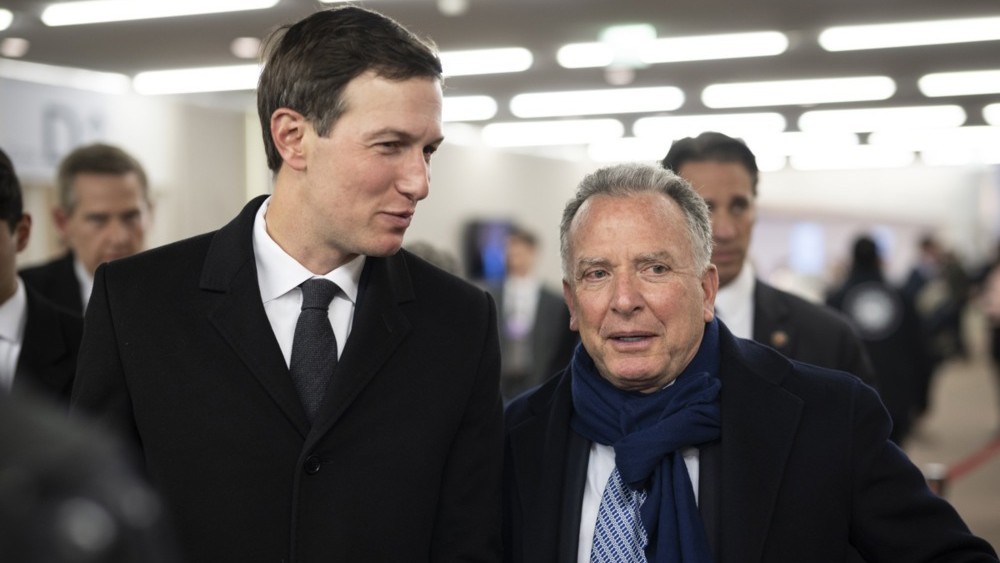
On Sunday, September 6, Trump's special envoy Steve Bannon and US President's son-in-law Jared Kushner are expected to arrive in Kyiv. Before that, they will stop in Moscow. The visit comes at a cost: for a plane with two American negotiators to safely land in the Ukrainian capital, Kyiv will have to keep all its combat aircraft and air defense from striking Russia for several hours — and hope that the Kremlin does the same in return.
This is the essence of the agreement that Volodymyr Zelenskyy announced on September 4: "Today it has been clearly determined that American representatives will be in Ukraine in the coming days and will be in Russia," and Steve Bannon and Jared Kushner will visit Moscow and on Sunday will visit Kyiv.
What was promised — and what wasn't
The president's wording deserves careful reading. This is not about a ceasefire and not even about a pause in hostilities — only about a technical condition for two specific people to travel. During the visit, Ukraine will not carry out air strikes and expects the same silence from Russia.
Zelenskyy himself distinguishes between these things: "We are taking care of them, not Russia". In other words, there is no humanitarian logic to the pause — there is logistical logic: a live negotiator arrived, a live negotiator leaves. Formally this has happened before: on September 1, Zelenskyy announced a blockade of Russian airspace in response to intensified attacks, but immediately made an exception — "clearing Russian airspace of drones at certain time intervals and certain directions" for negotiations. In other words, the silence mechanism is not a new initiative but a repetition of an already tested scheme.
A mechanism without guarantees of compliance
There is no external monitoring of this agreement. There is no monitoring, no third party to record violations, no sanctions for breaking it. There is only a verbal mutual assurance between two warring parties, each of which may interpret "silence" in its own way — by hours, directions, types of weapons.
It is telling that even the decision about the visit hung in question for a long time. A source for Kyiv Independent reported that before the official announcement of Bannon's and Kushner's trip to Moscow and Kyiv, there were doubts about the journey — allegedly due to Bannon's own concerns, which led to discussions of backup scenarios. If the process of coordinating the date and route for two people turned out to be so fragile, trusting a verbal promise about air silence as a sustainable mechanism is optimistic at best.
An additional nuance: Bannon has personally met with Putin five times in 2025 and twice more with Kushner, most recently in January 2026. But neither of them has been to Ukraine before this. The asymmetry of the route is itself a signal of whose office is currently more important to Washington as a decision-making point.
Reactions of the parties: Moscow's silence and the parallel CIA channel
The Kremlin has neither publicly confirmed nor denied the silence condition — a typical tactic: not to take on obligations that could later be used as evidence of guilt. Meanwhile, the visit of Bannon and Kushner takes place against the backdrop of another, already completed contact: on August 25, CIA Director John Ratcliffe visited Moscow in an unannounced visit — the first such visit by the head of the agency in five years.
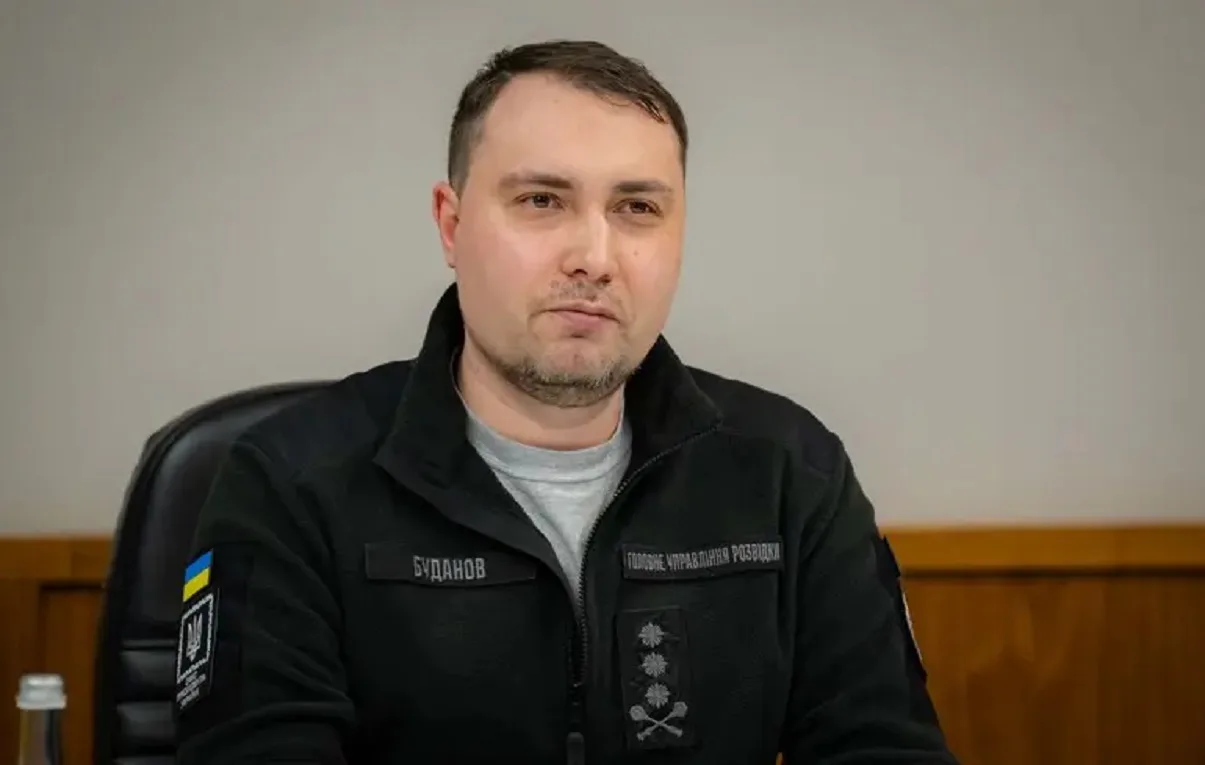
According to interlocutors of the NYT, the communication channels between US and Russian intelligence services are operating in parallel with the diplomatic track of Bannon and Kushner, and the purpose of Ratcliffe's visit was, in particular, to try to convince the Russians to conclude a deal before their military and economic position deteriorated further. At the same time, the head of the President's Office Kyrylo Budanov stated that the war against Ukraine was discussed during Ratcliffe's negotiations, but was not the main topic — that is, the intelligence and diplomatic tracks are so far proceeding not in sync, and Washington is conducting several conversations with Moscow at once, not always coordinated with each other.
What this really means
The agreement on silence in the sky is not a breakthrough in negotiations, but a technical condition for holding the negotiations themselves. Its value can only be assessed by the fact: whether the pause will hold until Sunday evening without mutual accusations of violation, and whether Bannon and Kushner will bring back from Moscow at least one concrete point that Zelenskyy can show as a subject for further bargaining. If not — the September trip will be remembered as another episode of shuttle diplomacy without consequences for the front line.