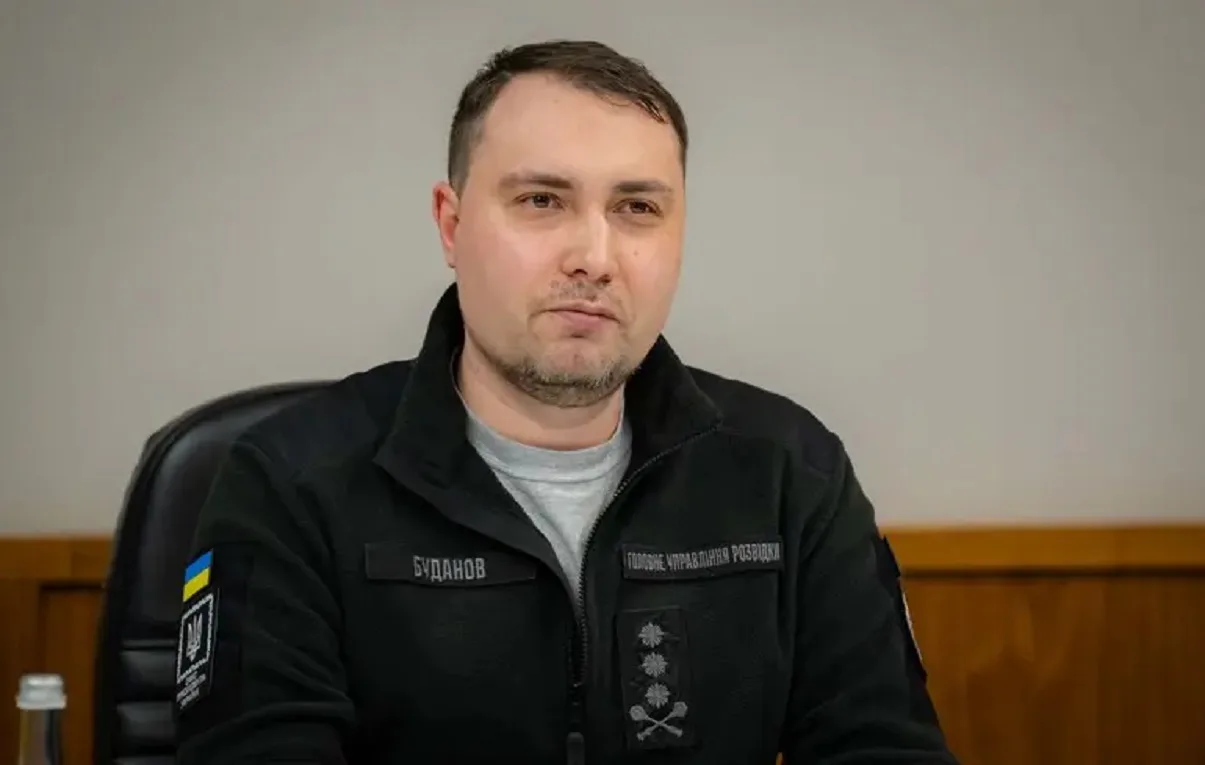
Kyrylo Budanov gave an interview to the New York Times in which he simultaneously announced the resumption of negotiations and explained why quick results should not be expected. According to him, negotiations under the auspices of the Trump administration are expected by the end of September, a few days after parliamentary elections in Russia and a few weeks before midterm elections in the United States
. This is the entire available "deadline" — not a legally binding term, but a window between two electoral cycles that is politically convenient, but guaranteed by nothing in substance.The mechanism: who is supposed to come and why this is being promised for the third time already
According to Budanov, the process is expected to resume with a visit to Kyiv by Steve Witkoff, an envoy from the Trump administration for peace, and Jared Kushner, the president's son-in-law
. But the key detail here is not the names, but the geography: although Witkoff and Kushner have traveled to Moscow several times, they have not been to Kyiv, despite numerous official invitations. The New York Times emphasizes this asymmetry separately, and it says a lot about the actual balance of attention within the "peace process" — the Kremlin received multiple personal contacts, Kyiv so far has only promises. These promises, meanwhile, already have a history of falling through. The first visit by Witkoff and Kushner to Kyiv was reported back in July, postponed at the end of August amid intensified rocket and drone attacks, and at the beginning of September, sources spoke of a trip on September 5-6 — first to Moscow, then to Kyiv. Meanwhile, Ukrainian media wrote that the planned visit by Witkoff and Kushner to Kyiv was under threat, and one media source reported that Witkoff "began to get scared," which prompted discussions of alternative scenarios.The subject of the negotiations themselves did not just appear recently. Budanov took over the Office of the President back in January, and at that time Witkoff and the negotiators narrowed down a 20-point peace plan to two unresolved issues: management of the atomic power station occupied by Russia and control over the territory of Donbas that Ukraine still holds
. In other words, this is not a new round from scratch, but a return to the same two points on which negotiations stalled back in winter.Why an announcement is not an obligation
Budanov himself does not hide the difference between procedural resumption of contacts and actual cessation of hostilities. According to his assessment, despite the expected revival of diplomacy, the head of the OP does not predict a quick end to combat operations — conditions for a ceasefire are unlikely to form before spring 2027
. One of the reasons is Russia's intention to continue military pressure: in the original New York Times material, this is directly linked to another, already the fourth strategic winter bombing campaign during the war, through which Moscow will try to break Ukraine before spring. Budanov's own formula is worth quoting in full:This is not a forecast for specific timeframes, but rather an acknowledgment that the diplomatic track exists in parallel with the military one — and neither of them will cancel the other in the near term."Negotiations will lead to something sooner or later. You cannot fight your entire life."
Reaction of the parties
Ukrainian diplomacy is trying to speak the language of progress while keeping expectations low. Foreign Minister Andrii Sybiha on September 3 announced a "new dynamic" in peace efforts with the resumption of an active political and diplomatic phase, but noted that achieving this without American participation
is unrealistic — in other words, he acknowledged that the initiative and pace of the process depend not on Kyiv. President Zelenskyy on September 3 confirmed a possible imminent visit by Witkoff and Kushner, but with a caveat: first they must visit Moscow. Russia, against this background, is demonstrably restrained. Sources familiar with the trip's preparation describe the reaction in Moscow as cool — in contrast to the warm reception expected in Kyiv, which so far exists only as an expectation, not as a fact.What this really means
The negotiations round announced for the end of September is a procedural event, not a political obligation of either side regarding the outcome. The mechanism for launching it depends on one specific fact that has not happened three times: the physical arrival of Witkoff and Kushner in Kyiv. Until this arrival happens, any timeframe — "by the end of September," "by spring 2027" — remains an assessment, not an agreement. If the visit does take place this time, the question will not be whether talks will begin, but whether those same two points — the atomic station and control over Donbas — on which negotiations already stalled in winter will move forward. If this visit falls through for the fourth time, it will be a far more eloquent answer to the question about the real state of the "peace process" than any press statement.