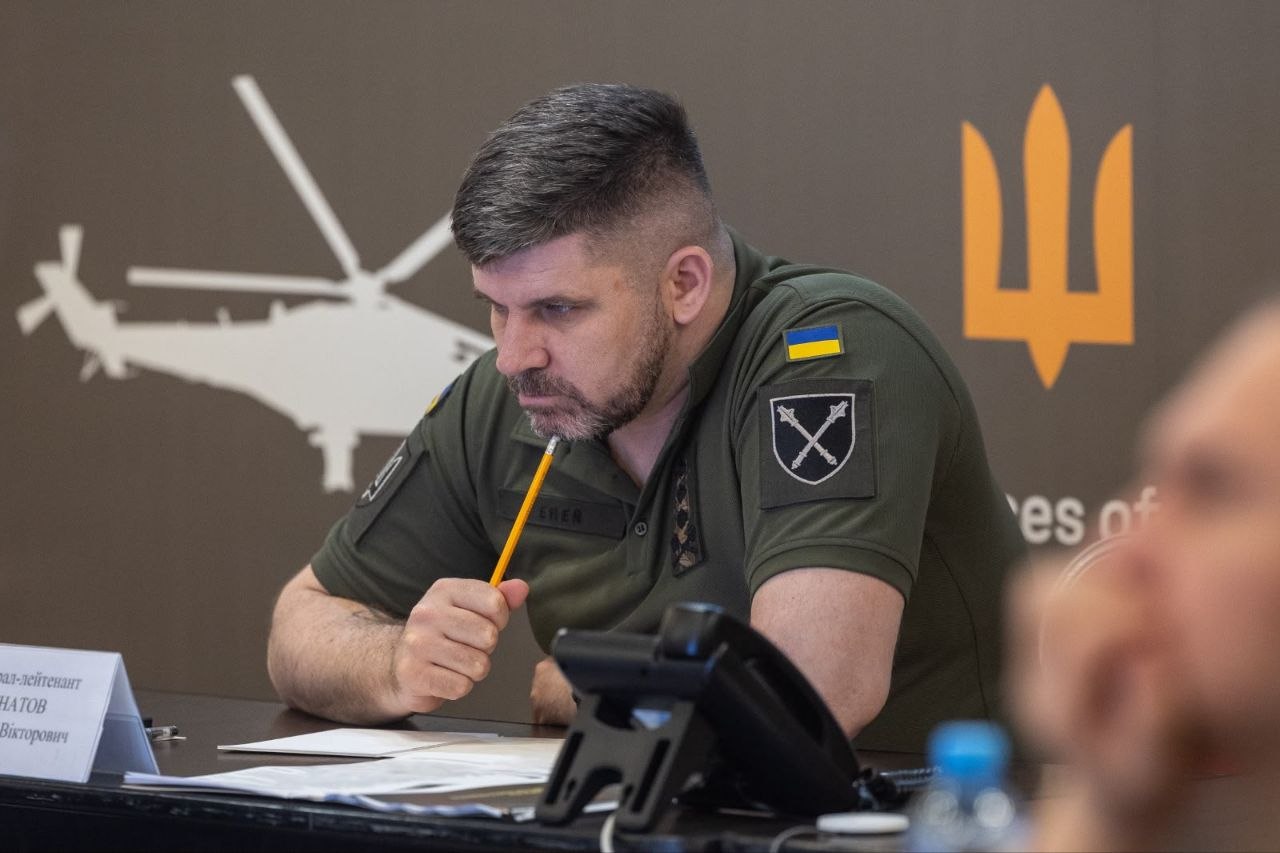
Andriy Hnatov, Chief of the General Staff of the Armed Forces of Ukraine, stated that Ukraine maintains an advantage over Russia in the use of FPV drones, however the occupiers are actively copying Ukrainian developments. In terms of the number of missions of ground robotic systems, the AFU outpace the enemy twofold.
Where the advantage lies and how it is measured
FPV drones have become one of the key tools of this war — thanks to a combination of low cost, precision, and the ability for mass deployment. According to Hnatov, Ukraine uses them more effectively than Russia — both in tactics and results. He separately noted an advantage in ground robotics: the number of missions completed by AFU robotic systems exceeds the Russian figure twofold.
These figures are supported by Ministry of Defense statistics: only in March 2026, Ukrainian units completed over 9,000 missions involving ground robots. For the first quarter of 2026 — already over 24,500. The number of units using UGVs increased from 67 in November 2025 to 167 in March 2026.
Russia copies — and accelerates the pace
Ukraine's advantage is not static. Commander of the Unmanned Systems Forces Robert "Madyar" Brody openly admitted that Russia is "tearing off" the Ukrainian model of drone unit organization. The number of Russian drone crews and units in spring 2026 crossed the 100,000 person mark.
"The enemy increases the number of drones and missiles monthly, outnumbers Ukraine in resources and does not abandon its goals."
Andriy Hnatov, Chief of the General Staff of the AFU, interview with LIGA.net
In parallel, Russia has switched to fiber-optic FPV drones, protected from electronic warfare. According to industry analysts' estimates, by September 2025, Russia was producing over 50,000 such drones per month. Ukraine introduced the same technology, but earlier and with greater flexibility.
Structural challenge: people versus machines
According to data from Ukraine's National Security and Defense Council, 60% of Russian army losses are inflicted precisely with the help of FPV drones. This explains why the Ministry of Defense set a goal — to transfer 100% of front-line logistics to robotic systems, to remove people from fire in the strike zone.
- In the first half of 2026, Ukraine plans to contract 25,000 ground robotic systems — twice more than for the entire 2025.
- Intelligence has recorded Russia's plan to produce 2 million FPV drones in 2025 — Ukraine planned 4.5 million.
- Russia is critically dependent on Chinese electronics; sanctions pressure on this channel remains partially ineffective due to shell companies.
Hnatov refrained from making specific forecasts regarding the end of the war, emphasizing: "I am a military man, not a politician. We are doing everything for this on the battlefield."
The question is not whether Ukraine will maintain its advantage in drones — but whether it will manage to scale production and tactics faster than Russia overcomes the quality gap through sheer numbers. If sanctions pressure on Chinese components is not increased, by the end of 2026, this gap could prove significantly smaller than it is today.





