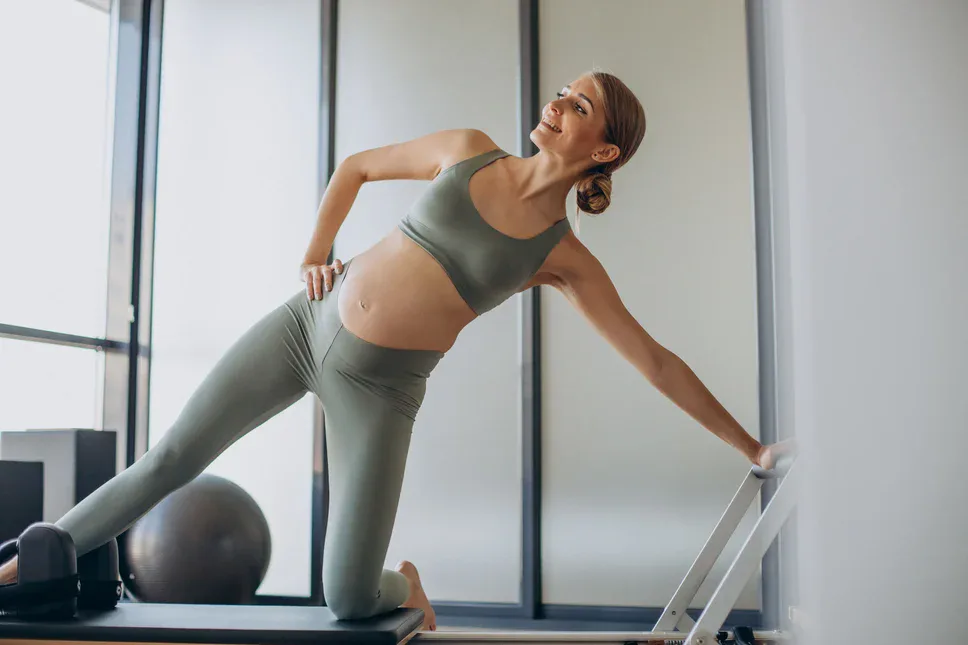
Olga Dubenko, an obstetrician-gynecologist, explains it simply: movement gives a pregnant woman's body the ability to cope with additional stress. But behind this brief formulation lies several decades of change in medical paradigm.
From "lie still and don't move" to 150 minutes per week
The American College of Obstetricians and Gynecologists (ACOG) has officially abandoned recommendations for bed rest and activity restrictions during pregnancy — physical activity is now recognized as part of a healthy pregnancy. Current recommendations call for 20–30-minute sessions most days of the week with a total load of 150 minutes of moderate activity.
It is telling that the previous restrictions had no evidence-based foundation. Most contraindications to physical activity during pregnancy were based on "expert opinion" rather than empirical data — and no study confirmed that restricting movement improves pregnancy outcomes in these cases.
What specifically does movement provide
2024 reviews confirm: physical activity reduces the risk of gestational diabetes, preeclampsia, and excessive weight gain during pregnancy. Additionally, there is evidence that exercise during pregnancy reduces the frequency of premature labor.
The effect has been documented for various formats: aerobic exercise, stabilization and stretching training, water exercises, neurodynamic techniques — all of them produce positive results for the health and well-being of pregnant women.
Exception — not the rule
Dr. Dubenko clarifies: the only true exceptions remain pathologies that directly threaten miscarriage. Even in women with contraindications, specialists recommend maintaining usual daily activities where possible — given the proven harm of complete bed rest.
"Women with uncomplicated pregnancies should be advised to engage in aerobic and strength-training exercises before, during, and after pregnancy"
ACOG Guidelines, 2020
In practice: what does this look like
- Moderate walking, swimming, yoga — safe at practically all stages
- Intensity — the guideline is "I can talk during exercise" (the talk test)
- Strength exercises — permitted, but require consultation with a doctor about specific exercises and weights
- Bed rest — only for absolute medical indications, not "preventively"
It is telling that current guidelines restricting activity were formulated based on "expert opinion" rather than evidence — and may be outdated in light of new research. This means that some women still receive overly cautious recommendations depending on when and where their doctor trained.
If your doctor prescribes activity restrictions — the question is not "should I comply" but specifically: what particular complication is this restriction supposed to prevent, and is there evidence that it helps?