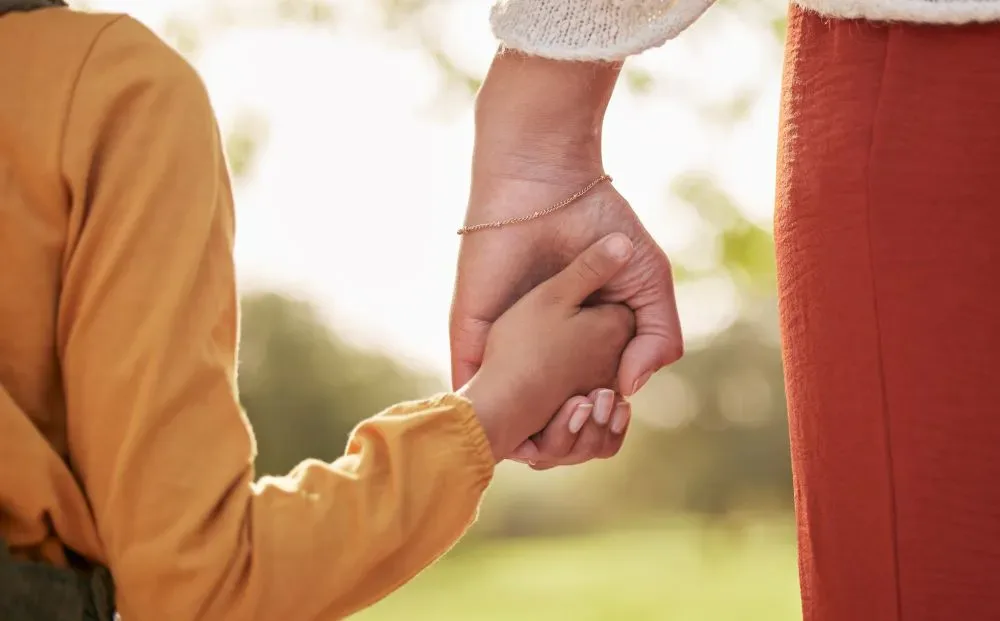
When a child falls silent after an air raid siren and asks nothing — this is not calm. According to child psychologist Olena Shershnova, silence itself is one of the most alarming signals: the child has already learned not to burden adults with their fear.
According to a UNICEF survey conducted in February 2024, 36% of Ukrainian children have experienced traumatic war-related events. Meanwhile, only 9% of parents link their child's poor mental state to the war — the rest simply fail to see a connection between irritability or mood swings and what is happening around them.
What the body says instead of words
Preschoolers regress: they start bedwetting again, ask to be held, refuse food. Teenagers, conversely, "shut down" — hours on their phones, sharp responses, refusal to talk. Shershnova emphasizes: both reactions are not whims or poor parenting, but a nervous system seeking control where there is none.
PTSD symptoms in children and adults coincide: flashbacks, avoidance of anything reminiscent of the event, partial memory loss, difficulty concentrating, constant sense of tension. The difference lies in how children express it: not with words, but through body and behavior.
Daily routine — it's not about discipline
The advice to "maintain a routine" sounds banal, but behind it stands concrete neurobiology. Predictability is the only resource parents can give a child when the outside world is unpredictable. The same bedtime, the same breakfast, the same fairy tale before sleep — this is not ritual for ritual's sake, but a signal to the brain: "there is no danger now."
"A child does not need to know everything. But they must know the truth — in a form their age can handle."
Olena Shershnova, child psychologist
Shershnova warns against two extremes: complete silence about events and unfiltered news streams in the child's presence. The first breeds anxiety from the unknown, the second from excess. Only the middle ground works: brief, honest, calm explanation at the child's level of understanding.
What specifically to do — and what not to do
- Speak first — don't wait for the child to ask. "There was an air raid today, I was scared too. We are safe now" — this is enough for younger children.
- Don't dismiss fear — "don't be afraid" doesn't work. What works: "I understand it's scary. I'm here."
- Monitor yourself — children read parental anxiety more accurately than any psychologist. If an adult doesn't handle their own state, the child's daily routine won't help.
- Don't ignore physical symptoms — stomachaches, headaches without physical cause, bedwetting after age 5 — these are reasons to consult a specialist, not "it will go away on its own."
Research published in the European Journal of Psychotraumatology in 2024 confirms: among Ukrainian children surveyed six months after the full-scale invasion began, 26% met diagnostic criteria for PTSD according to ICD-11. The authors note that on average, each child experienced over nine separate stress events related to the war.
This means: the problem is not marginal and not "only for those who are really badly off." It is massive and largely invisible, because most children function normally on the surface.
If symptoms persist for more than four weeks and interfere with learning or sleep — this is no longer adaptation, but an indication for work with a psychologist. The question is not whether Ukraine has enough specialists for this scale. The question is whether parents are ready to acknowledge the problem before the child tells them about it — if they tell them at all.