June 29 is a day where church tradition, global ecology, and an analog nostalgic ritual converge. Three celebrations of different scales, yet each with its own specifics.
Peter and Paul: the fast shortened, the holiday remains
According to the new Julian calendar, to which the PCU and UGCC transitioned on September 1, 2023, the Feast Day of the Holy First-Apostles Peter and Paul is celebrated on June 29 — 13 days earlier than under the old style (July 12). The practical consequence: Peter's Fast in 2025 lasted only two weeks — from June 16 to 29. Under the old calendar, it could stretch for a month or more.
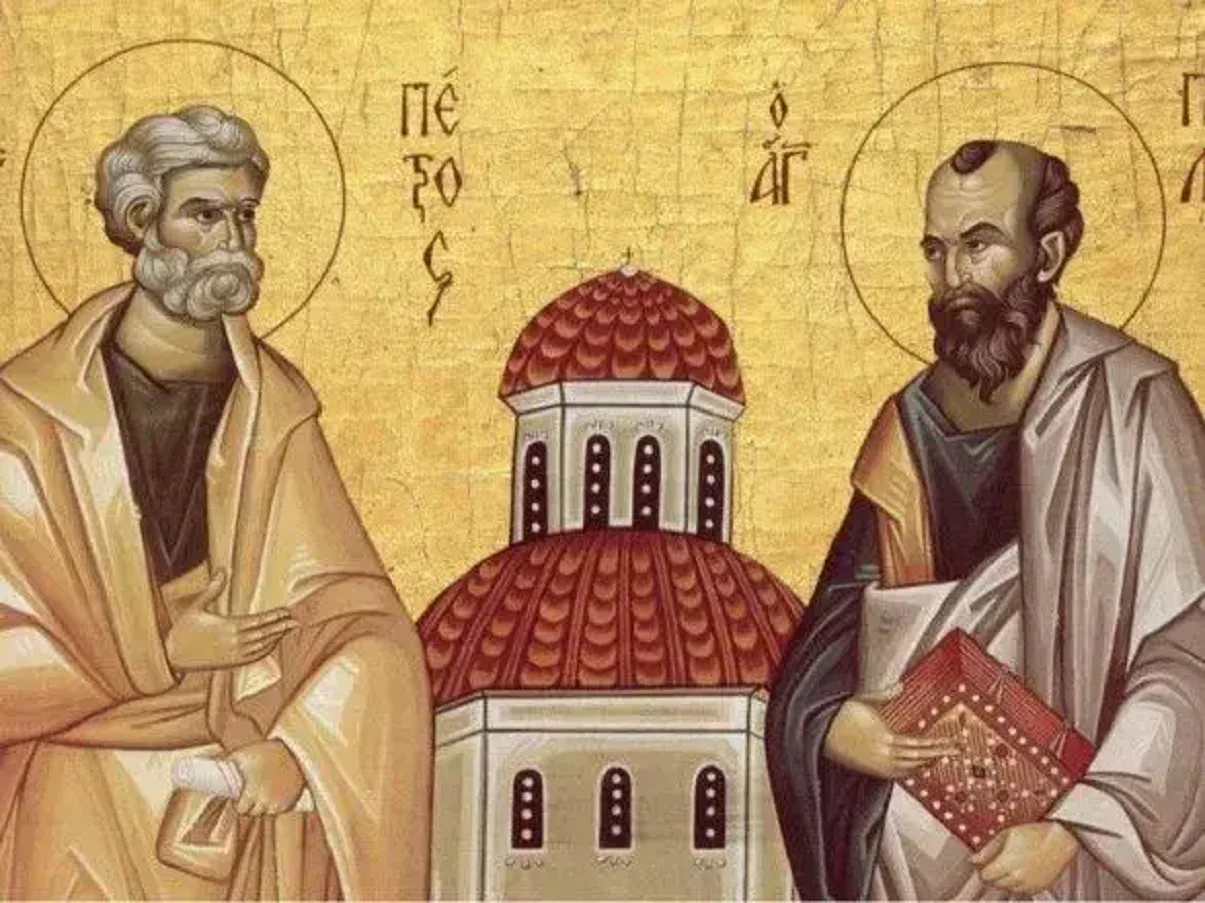
Peter and Paul are the only apostles whom the church calls "first-apostles": not by seniority, but by the scale of their missionary work. Peter was a fisherman from Galilee who led the Jerusalem community. Paul was a Pharisee and persecutor of Christians who, after his conversion, traveled throughout the Mediterranean and founded dozens of churches. Both died in Rome during the time of Nero — according to tradition, in the same year.
"The glorious and most-praised first-apostles are an example that every person is not perfect and is prone to making mistakes"
— from the PCU's explanation of the celebration
Folk tradition associated this holiday with the beginning of harvest and honey collection. The ritual food — mandryky: round pampushky or pastries with cheese and berries, which were baked to mark the end of the fast.
International Day of the Tropics: 40% of land, 80% of biodiversity
The UN established this celebration by resolution in 2016 — the occasion was a report presented to the UN by Nobel laureate Aung San Suu Kyi precisely on June 29, 2014. The purpose of the day is to draw attention to the specific challenges of tropical regions: more than 40 countries, approximately 40% of Earth's land area, and 80% of the world's biodiversity. Despite this, the tropics are still more often mentioned either as a source of diseases or as a tourist paradise — but rarely as an independent subject of global politics.
Camera Day: a genre that did not surrender
Camera Day — an informal but popular social media celebration honoring photography as a practice of slowed attention. Given that smartphones have made photography instantaneous and free, analog and film photography is experiencing steady revival — especially among people under 35 who never used film as their primary format.
What they have in common
- All three celebrations are, in one way or another, about memory and attention: to people who changed the world; to regions that bear a disproportionate burden of climate change; to a moment that is easy to miss.
- Two of the three are a direct result of institutional decisions in recent years: the PCU's calendar change and the UN resolution.
Peter's Fast this year lasted half as long as for believers of the UOC-MP, who remain on the old style. If the PCU ultimately consolidates the new dates in everyday consciousness — within 10 years, June 29, not July 12, will become the "true" Peter and Paul for most Ukrainians. But this will only happen when the date change enters not into church statute, but into family tradition.