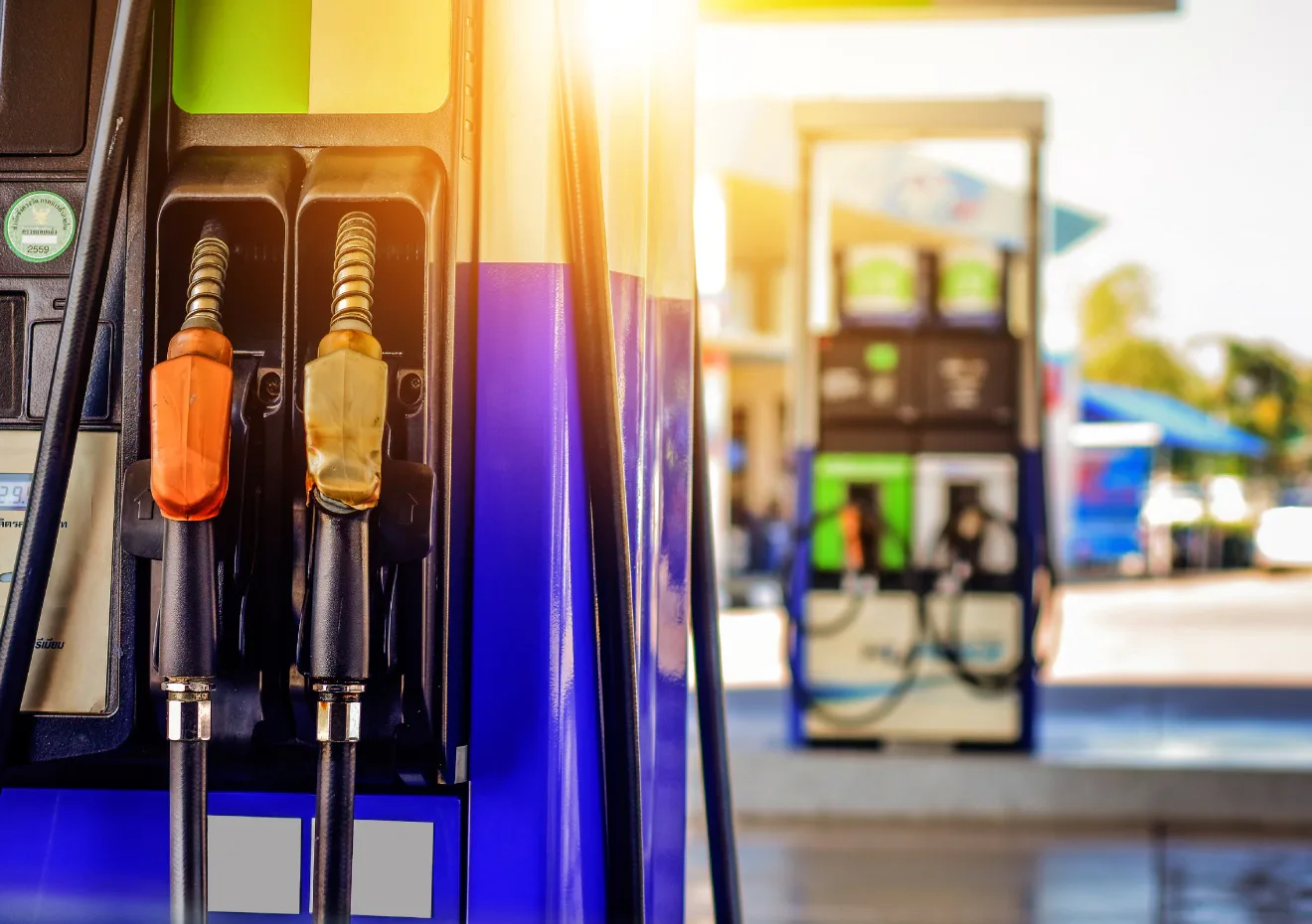
If you saw news in your feed about gas stations limiting diesel refueling to 100 liters due to a shortage — don't rush to go "stock up." Ukraine's Government Center for Strategic Communications (SPRAVDI) called this manipulation, according to UNN.
The OKKO network officially stated that it has not introduced any limits on refueling vehicles. The 100-liter limit applies exclusively to fuel dispensed into containers — that is, cases when a person fills diesel into a container for further resale, storage, or use outside of a vehicle.
The difference that's easy to miss
For an ordinary driver filling up their tank, this news has no practical significance — there is no limit and never was one. But it is precisely this detail — "containers, not cars" — that fell out of media and social media accounts, turning the network's technical clarification into a signal about a massive fuel shortage.
"The distributed messages manipulatively present this as a restriction for all customers, creating the impression of a massive fuel shortage and provoking panic," the Center for Strategic Communications stated.
The limit on containers is more about combating resale and speculation than about a fuel shortage at gas stations.
Why this works as panic
The mechanism is simple: a restriction introduced for a narrow category of operations (fuel dispensed into containers) gets retold as a general rule for all customers. A person driving to a gas station reads the headline "100-liter limit" and starts planning to wait in line or stock up — even though this network's decision doesn't apply to them at all.
Meanwhile, the real question that should be asked is not "are limits being introduced," but "is there an actual fuel shortage in a particular region." This is verified not through social media posts, but through direct inquiry at gas stations or official statements from networks.
What drivers should do
- If news about "limits" doesn't contain a direct statement from the gas station network — that's a reason to verify it, not share it.
- Refueling a car and refueling a container — these are two different modes of service, and rules for them may differ without any connection to a shortage.
- Panic at gas stations more often creates queues and temporary local shortages than it responds to real ones.
The question that remains open: will gas station networks start publicly clarifying such statements immediately, or will refutations continue to appear days later after panic has already influenced drivers' behavior?







