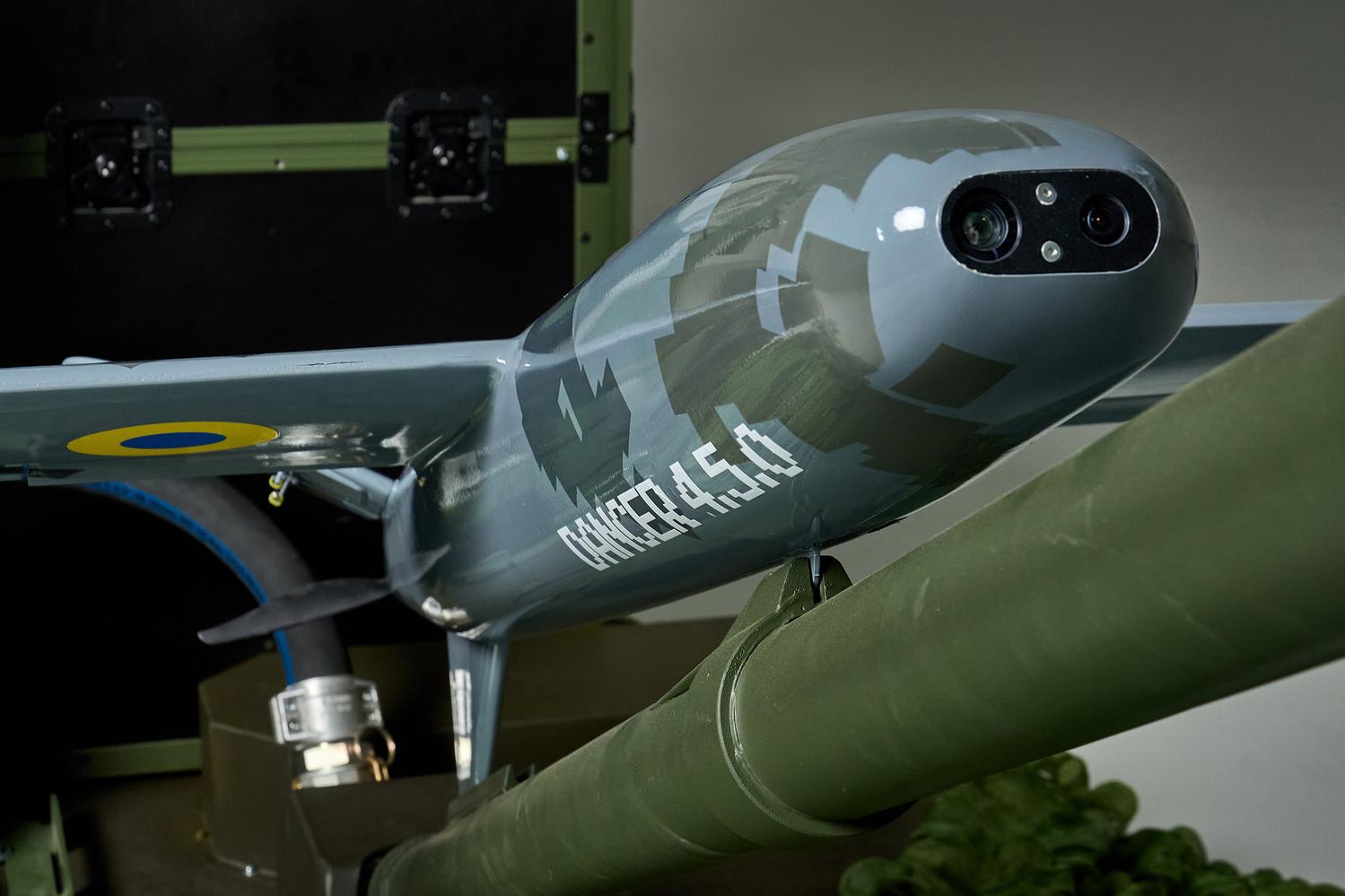
When Russia began accelerating its "Shaheds," the standard response — quadcopters with speeds up to 300 km/h — no longer fit the interception arithmetic. Yartura is trying to close this gap with its new system.
What's Inside Dancer 4.5.0
The unmanned aerial system is capable of reaching speeds up to 450 km/h, striking targets at altitudes up to 4.8 km and at ranges up to 30 km from the launch point. This allows it to engage targets that appear far from operator positions or are maintained at significant altitudes.
The key feature is the built-in module of automatic target guidance (ATTS) based on artificial intelligence. According to Yartura and Militech co-founder Nadine Omelchenko, during initial flight tests, the drone confirmed its ability to re-engage a target after the first miss — without operator intervention.
"4.5.0" in military circles means "all quiet," and the flight pattern during interception resembles a dance around the target.
— Yartura team on the product naming logic
Context: Is 450 km/h Really That Much?
Compared to competitors — yes. Most serial Ukrainian interceptors are designed for 250–350 km/h: STING from Wild Hornets, STRILA from WIY Drones (400 km/h only during tests), Octopus from Ukrspecsystems — up to 300 km/h. As noted in the Covert Shores analytical review, the typical interceptor speed is currently "around 300 km/h," with only select samples "significantly exceeding this mark."
Dancer 4.5.0 claims exactly this upper segment — and does so not only through speed but also autonomy. Most competitors require constant operator control; Dancer can "catch" targets independently.
What's Still Missing from the Presentation
Yartura has not disclosed the system's price, production timelines, or combat trial data — only flight tests confirming ATTS capability. This is standard for the industry: Wild Hornets publishes combat effectiveness (80–90% hit rates), while newer players operate only with technical specifications.
- Speed: up to 450 km/h
- Range: up to 30 km
- Ceiling: up to 4.8 km
- Guidance: AI module ATTS with repeat attack capability
- Targets: reconnaissance UAVs, kamikaze drones, small tactical unmanned systems
Currently, Ukraine produces at least five different interceptor models — and, according to UNITED24 Media, Gulf countries are already "queuing" to purchase them. Dancer 4.5.0 enters a market where competition among domestic manufacturers is already quite intense.
The question is not whether 450 km/h is enough for current threats — it is. The question is whether Yartura will transition from flight tests to proven combat effectiveness before Russia raises the speed bar for its strike drones once again.