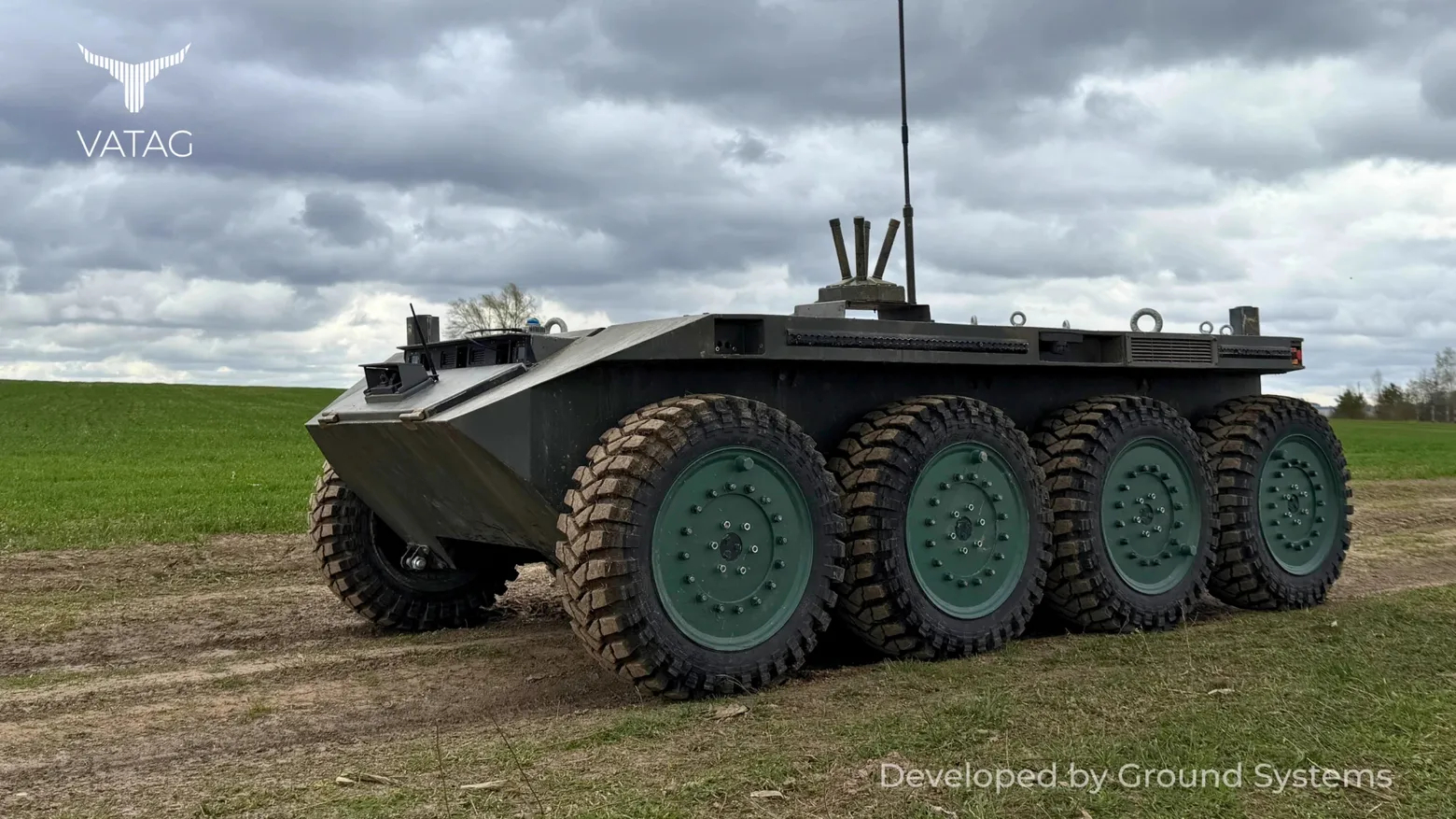
In January 2026, ground robotic complexes (GRCs) completed 7,500 missions at the front. By May, this number had already exceeded 14,000. Over five months, the total figure crossed the 50,000 mark. These figures from Ukraine's Ministry of Defense are more than just statistics: they explain why Anastasiia Mishkina, director of Ukraine's Technological Forces, calls the need for 50,000 GRCs annually realistic rather than fantastical.
From logistics to assault: what robots carry
Two years ago, a ground drone was a curiosity. Today, GRCs deliver ammunition, evacuate the wounded, and sometimes independently capture enemy positions. For the first time in this war's history, Ukrainian forces captured an enemy position using exclusively unmanned platforms, President Zelensky stated. The number of units systematically employing GRCs increased from 2025 to 2026, growing from 117 to 230.
According to Mishkina, technological progress follows an exponential trajectory: what seemed incredible in 2022 — robots handling logistics on the frontlines — is now everyday practice.
"We are constantly moving in some sort of exponential progression. To imagine in 2022 that robots would now be transporting logistics seemed incredible. But today this is already reality."
Anastasiia Mishkina, director of Ukraine's Technological Forces, interview with BlueBird Tech
Procurement: figures that confirm ambition
Defense Minister Mykhailo Fedorov, after meeting with domestic GRC manufacturers, announced a contract for 25,000 machines for just the first half of 2026 — more than twice the total for all of 2025. In parallel, the ministry is already signing contracts for 2027 to stabilize supply chains. The goal publicly stated by Fedorov: 100% frontline logistics — without people, only robots.
Since January 2026, the Defense Ministry has spent over 14 billion hryvnias (approximately $330 million) on the supply of drones, GRCs, and electronic warfare systems through the digital procurement platform. The figure of 50,000 units per year from Mishkina is not a ceiling but a benchmark to maintain the pace.
An ecosystem that didn't exist in 2022
Scaling is only possible because an entire industry emerged from scratch over three years. According to Brave1 cluster CEO Andriy Hrytseniuk, the ecosystem now includes approximately 300 ground drone developer companies — compared to zero in 2022. Brave1 has issued 175 grants to GRC developers. In parallel, Ukrainian engineers are no longer limited to one task per platform: electronic warfare systems, radars, mortars, and missiles are mounted on the same chassis depending on the mission.
- Logistics and evacuation — the basic scenario, already widespread
- Assault and position capture — first documented cases in 2025–2026
- Electronic warfare, radar, fire support — new roles on the same chassis
- Export potential — GRCs are among the technologies of interest to the Global South
If the Defense Ministry truly deploys 50,000 GRCs to the front within a year, Ukraine will become the first army in the world to systematically replace humans with robots at the tactical logistics level. The question is not whether there will be enough machines — contracts are signed. The question is whether operator training and tactical doctrine can keep pace with the speed set by the hardware.