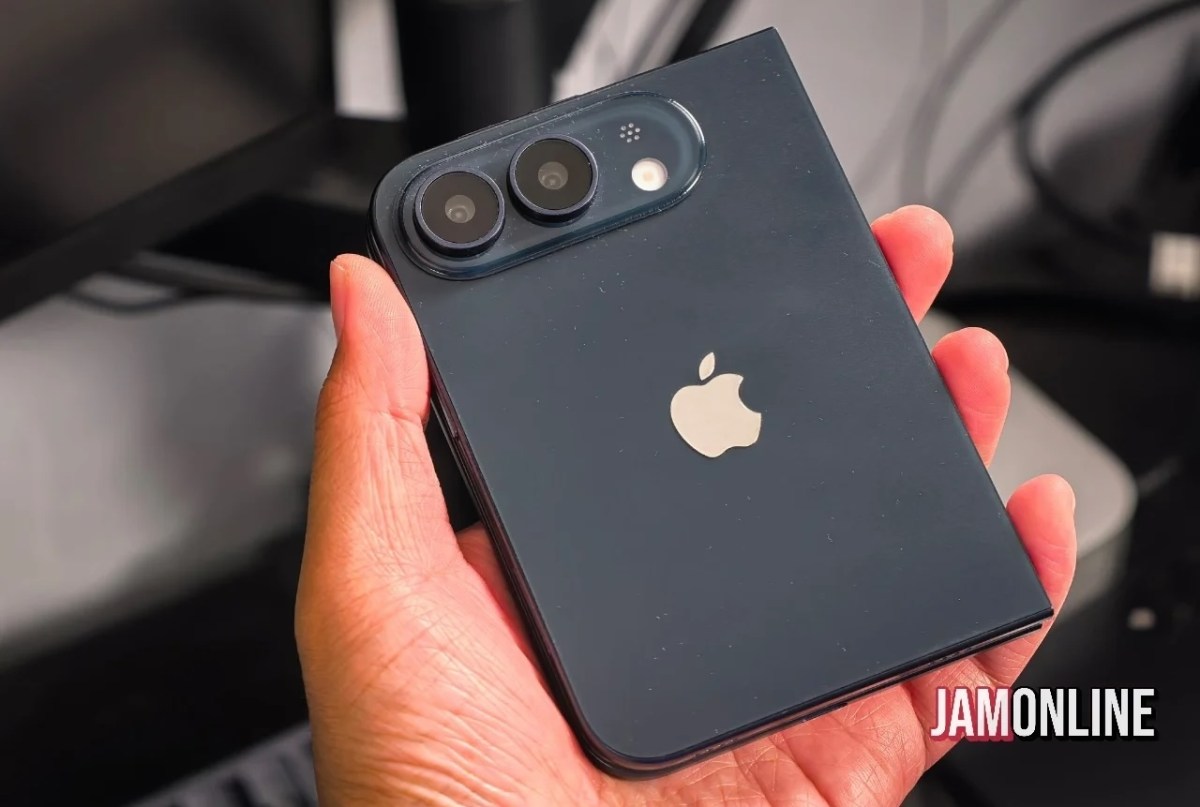
Apple rarely makes mistakes in code that reaches the public. So when developers found lines in the fourth beta version of iOS 27 describing Battery Health that explain how multiple batteries work simultaneously — including a warning about a non-original part for one of them — this is no longer just rumors.
What exactly was found in the code
According to Macworld, the new lines in the battery settings section contain the word batteries in plural — a format that has never appeared in any iPhone version before. The system also provides separate monitoring of the authenticity of each cell. A similar architecture is used in Apple laptops, but for a smartphone, this would be a first precedent.
Notably, iOS 27 already contained previous hints of support for foldable displays — and the new lines fit into the same picture.
Suppliers have already registered cells
The code discovery is not isolated. Before the beta release, Chinese insider Digital Chat Station reported that Apple's battery supplier submitted regulatory documents for two cells: 1,921 mA·h and 2,962 mA·h. Together — approximately 4,883 mA·h.
"The supply chain forecasts a total capacity of 4,800–5,000 mA·h, although this still requires confirmation"
Digital Chat Station, Weibo
For comparison: Samsung Galaxy Z Fold 7 has 4,400 mA·h, Google Pixel 10 Pro Fold — 5,015 mA·h. A foldable iPhone, if the figures are accurate, would fall between them.
Analyst Ming-Chi Kuo previously clarified that the iPhone Fold will use the same high-density cell technology as the ultra-thin iPhone 17 — meaning Apple is deliberately sacrificing space for energy density.
Why two batteries — not a design whim
In a foldable smartphone, the body is divided in half by a hinge. Placing one large cell in such a form factor is technically challenging — it either won't fit in the profile or will make the device asymmetrically heavy. Two smaller cells distributed between the halves is a standard solution for book-style folds. Apple simply decided to implement this with its authenticity monitoring system, which already exists in MacBooks.
Expected sales launch — September 2025 along with the iPhone 18 lineup. According to forecasts, the starting price for a foldable iPhone Ultra will be around $1,999 for the 256 GB version.
If Apple truly announces the device in September, iOS 27 will be released alongside it — and the dual battery monitoring system will end up in a smartphone that officially doesn't exist yet. The question is not whether there will be a foldable iPhone, but whether Apple can convince buyers to pay twice as much for an iPhone 18 Pro Max for a form factor that competitors have been perfecting for five years.







