Systemic modernization with effects beyond the Island
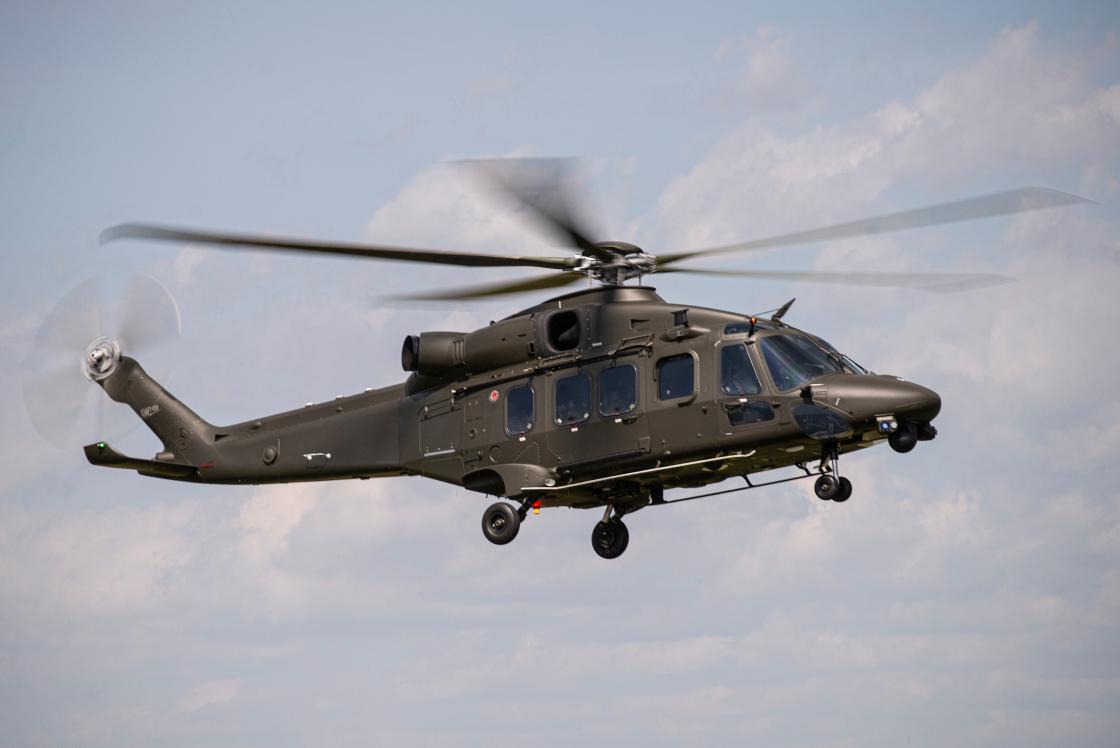
The UK Ministry of Defence on 2 March 2026 signed a £1 billion contract with Leonardo to supply 23 multi-role AW149 helicopters under the New Medium Helicopter (NMH) programme. This is not just an equipment purchase — it is a step in the long-term modernization of the transport and medical components of the British armed forces.
What was bought and where it will be built
The helicopters will be built at Leonardo's factory in Yeovil. Under the plan, the AW149 will gradually replace the retired Puma HC2, and will also take on some of the roles of the Bell 212 and the training/multi-role H135 Juno and H145 Jupiter. For the Army this means fleet standardization and a reduced logistical burden.
Brief on characteristics
AW149 is a medium military helicopter with a maximum take-off weight of 8.6 tonnes. It is powered by two General Electric CT7-2E1 engines of 2,000 hp each, and has a five-blade main rotor and a four-blade tail rotor. Maximum speed — up to 165 knots, cruise — around 145 knots, range — ≈500 nautical miles (extendable with auxiliary tanks), service ceiling — up to 20,000 feet.
The cabin accommodates up to 16 troops in full kit or up to 18 passengers. In a medical configuration — up to six wounded on stretchers together with medical personnel. An external sling/hoist allows carriage of loads up to 2,720 kg.
"The contract also includes funding for the development of the autonomous Proteus helicopter and secures production workload in Yeovil for years to come."
— Leonardo, press release
NATO stance and significance for Ukraine
This order is part of a broader wave of weapons modernization within NATO. Combined with recent declarations by Ukraine, France and Britain and contracts for modern guided munitions (for example, the GBU-53/B for the F‑35), it signals an increase in mobility, precision and support in crisis operations.
Direct delivery of AW149 to Ukraine has not been announced, but the effects are felt indirectly: strengthening allies' logistical resilience, expanding opportunities for training and repair, and stabilizing production chains, which could become a resource over the long term.
Short conclusion
The order for 23 AW149s is not just numbers in a budget: it is a decision about the ability to rapidly move forces, evacuate the wounded and keep industrial capacity operational. The question for partners now is whether the upgraded capabilities and industrial resources will be turned into concrete support that helps Ukraine more quickly restore its own capabilities?