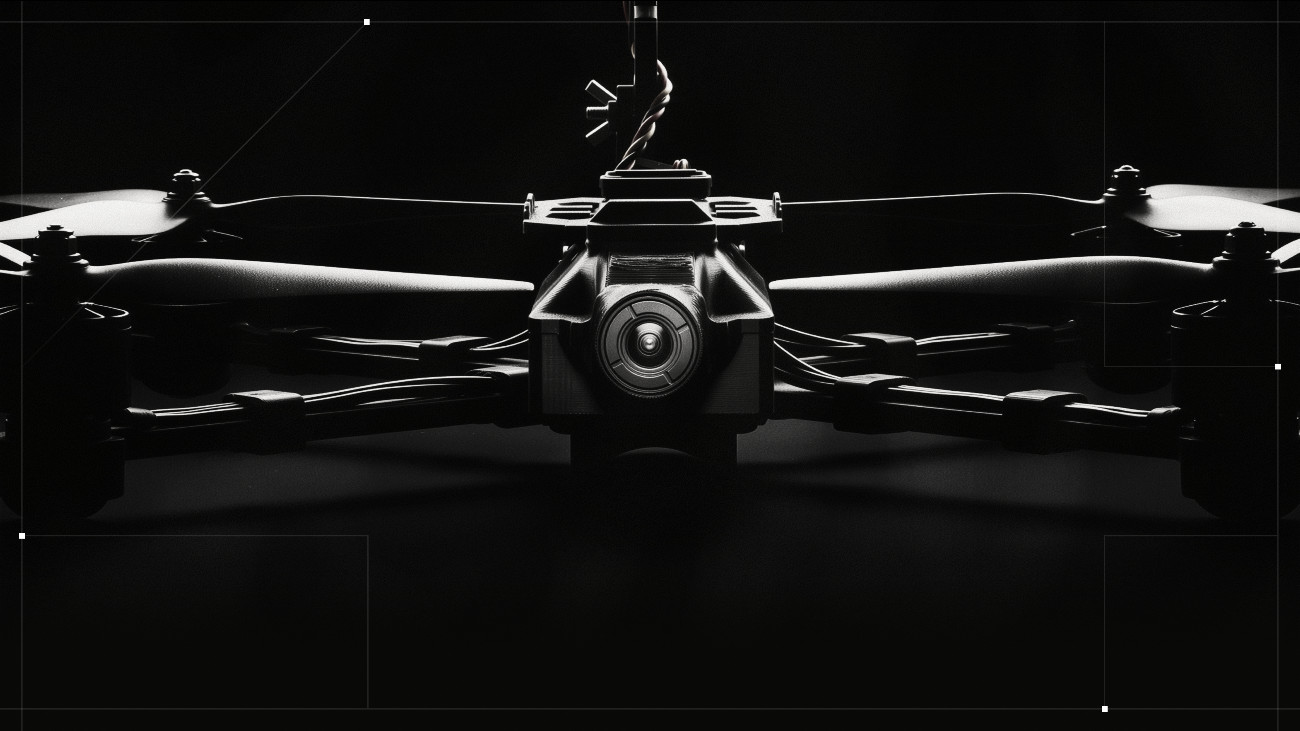
48,000 hryvnias — approximately the cost of an average smartphone. This is the price at which Lupynis-10-TFL-1-T is valued on the Brave1 Market marketplace. For this money, a military unit receives a night-vision FPV drone with thermal imaging and autonomous targeting, capable of operating at ranges up to 30 km even under active electronic warfare.
From Startup to State Registry
The Kyiv-based company The Fourth Law, founded in 2023 by Yaroslav Azhnyuk — previously known as co-founder of Petcube — has received NATO codification for the Lupynis-10-TFL-1-T drone and the TFL-1 autonomy module. The codification paved the way to state platforms DOT-Chain and Brave1 Market, where military units purchase equipment using E-points.
"Codifying the autonomous drone took significantly longer than for standard FPVs because the approval system is much stricter."
Yaroslav Azhnyuk, CEO of The Fourth Law
This is not merely a bureaucratic step: codification means the state has confirmed the product standards and can procure it at scale.
What Autonomy Actually Solves
The key problem with modern FPV drones is not range or explosives, but electronic warfare: the enemy jams the control signal, and the pilot loses control. Lupynis-10 solves this through the TFL-1 module: after acquiring a target, the drone maintains it independently using computer vision algorithms, requiring no operator contact during the final phase of the attack.
The thermal imaging camera "Kurbas-640α" manufactured by Ukrainian company Odd Systems enables operation at night and in smoky conditions. Notably, both companies — The Fourth Law and Odd Systems — are led by the same Azhnyuk, meaning the entire critical component chain remains within a single Ukrainian perimeter.
Numbers That Are Hard to Ignore
- +10% to cost compared to standard FPV — this is exactly what the TFL-1 autonomy module adds
- ×2–4 effectiveness of strikes — documented increase in mission success rates according to the company
- 30 km — operational range, placing Lupynis-10 beyond the classic "tactical" FPV class
- 50+ units of the Ukrainian Armed Forces already use TFL-1 technology in combat conditions
A Nasdaq Investor and Scaling Logic
In early 2025, The Fourth Law attracted strategic investments from American company Axon — a TASER manufacturer with a market capitalization of approximately $34 billion. The amount is undisclosed, but funds are directed toward developing autonomy for intercepting Shahed-type drones and protecting critical infrastructure. For Axon, this is already the second public entry into Ukrainian defense technologies in recent weeks.
The investor's logic is clear: Ukraine is the only active theater of military operations where autonomous drones are tested under real conditions of massive electronic warfare. This is data that cannot be obtained at a testing range.
If the TFL-1 effectiveness truly confirms itself at the level of ×2–4 in documented combat episodes, the question is not whether the army will scale purchases — but whether production can keep up with front-line demands before winter.