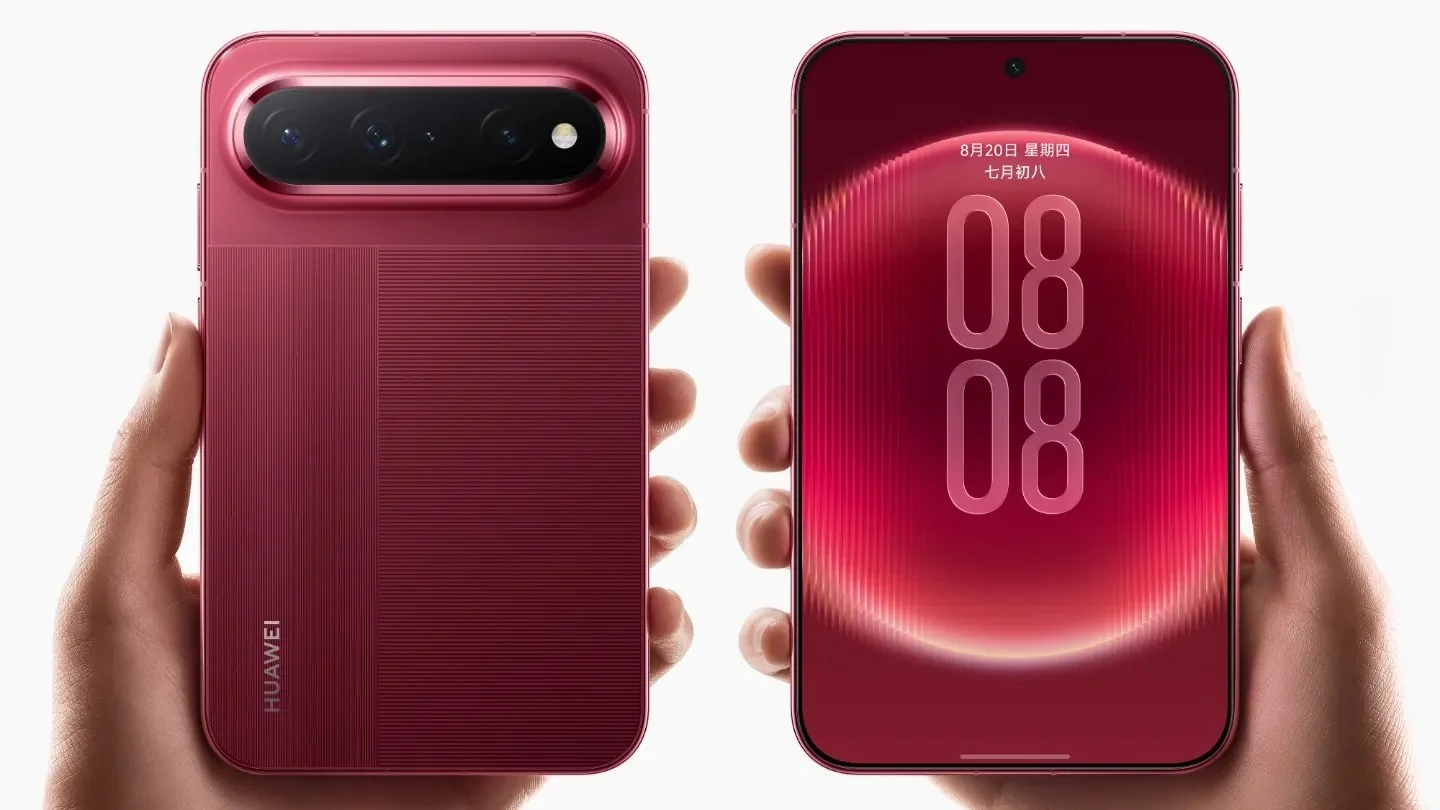
While Samsung and Apple are investing billions in folding mechanisms for foldable smartphones, Huawei has shown that a broader picture can be achieved without this. Pura X View is a conventional monoblock device that simply changed the screen proportions: instead of the usual 19.5:9 or 20:9, it has 16:9.5 — essentially a format closer to widescreen video or even laptop display proportions.
The problem that all manufacturers are trying to solve
Modern smartphones have become elongated and narrow — convenient to hold in one hand, but inconvenient to watch videos without black bars or read text without constant scrolling. Foldable phones solve this by unfolding the screen in half, but they add weight, thickness, and a vulnerable mechanism — the very weakness that iFixit recently discovered in the Galaxy Fold 8.
Huawei chose the simpler path: not to unfold the screen, but to make it wider from the start. The display occupies 96.1% of the front panel with bezels only 1.05 mm thick — this is near the maximum that can be squeezed out of a monoblock body without bending.
What is lost for the sake of width
A wider screen in a conventional body means a compromise with ergonomics — holding such a smartphone in one hand while typing with your thumb will become more difficult than with narrow models. However, Huawei compensates for this with technical specifications: a 7000 mAh battery at just 6.68 mm body thickness and 201 grams weight — specs that would have seemed impossible for such a thin device just a couple of years ago.
Screen brightness of 6500 nits is no longer about comfortable indoor reading, but about readability in direct sunlight, where most flagship devices still "dim out."
Why this matters outside of China
Pura X View runs on HarmonyOS — an operating system that exists separately from Android and is currently practically unavailable outside the Chinese market and a few adjacent regions. This means the new device is unlikely to appear in Europe or the USA anytime soon, and Western users' familiarity with the format will be limited to videos and reviews.
But the experiment itself is important as a signal: Huawei is testing the hypothesis that not everyone needs a foldable screen to get "more space" for content. If the idea takes root in the Chinese market — where the company has tremendous freedom to experiment without Google services and other restrictions — it is possible that similar proportions will appear in the global models of other manufacturers, who are carefully watching market reaction.
Sales start on August 28 — that's when it will become clear whether buyers are ready to exchange familiar ergonomics for a wider picture, or whether the market will still vote for foldable screens despite their fragility.