In brief
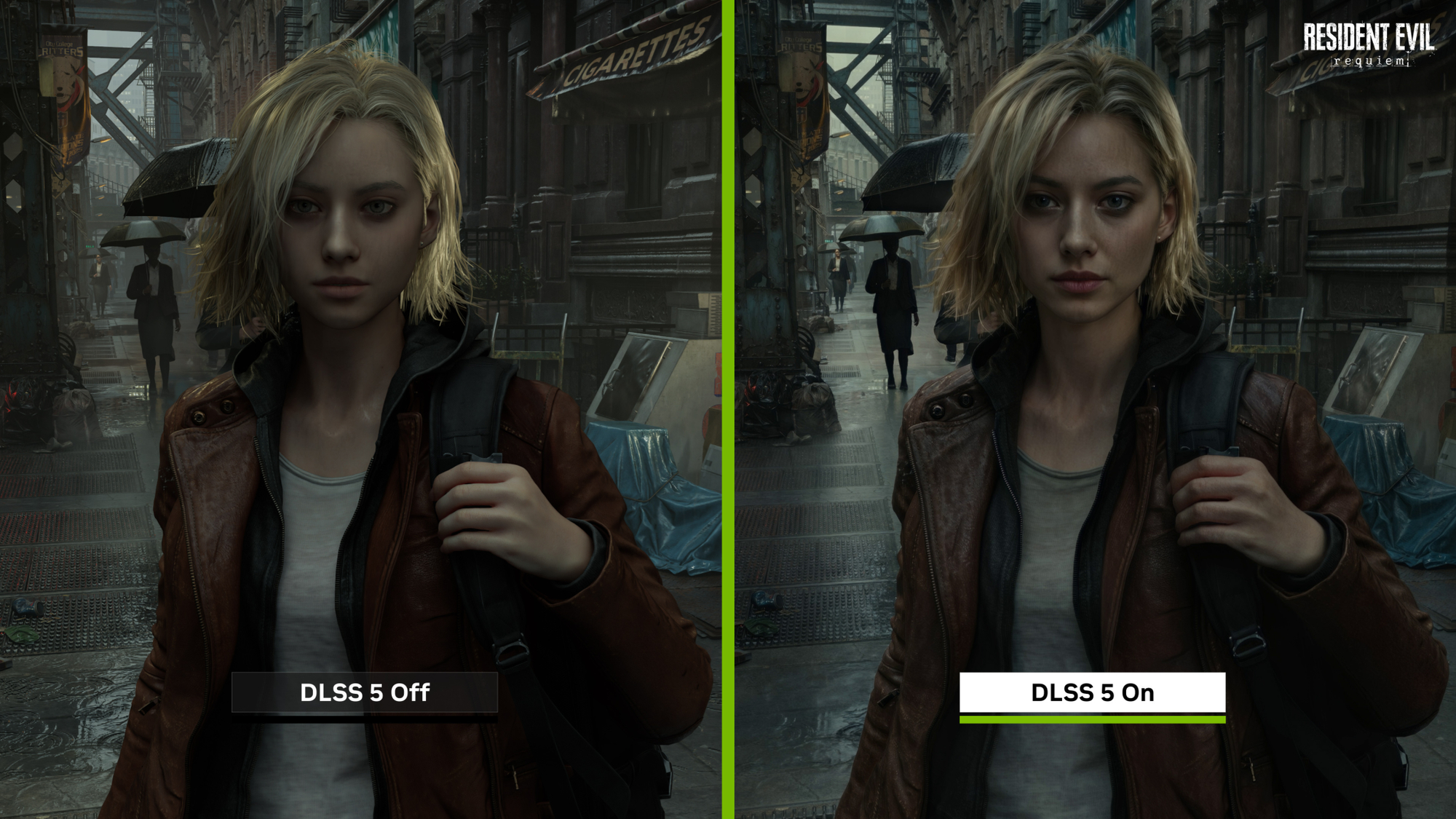
At the Nvidia GTC 2026 conference the company unveiled DLSS 5 — a new generation of AI-based image upscaling that uses generative models to predict and complete parts of an image. According to the company, this enables a higher level of photorealism without fully rendering every element, and therefore significantly reduces the load on graphics processors.
What is DLSS 5
Technically, DLSS 5 combines classic 3D-rendering algorithms with generative AI: the model predicts missing fragments of an image and "fills them in" instead of fully recalculating the scene. This produces two key effects — higher detail and lower computational requirements.
"DLSS 5 combines classic 3D graphics with generative artificial intelligence, allowing the creation of detailed scenes without fully rendering every element."
— Nvidia, GTC 2026 press release
Where it's applied — not only gaming
Nvidia emphasizes that the DLSS 5 approach goes beyond games. Analysts and developers see applications in cloud visualization, simulations, and in data-processing platforms — Snowflake, Databricks and Google BigQuery are mentioned as possible environments for integrating such approaches. The practical effect is faster scene playback and lower costs for GPU infrastructure.
Why this matters for Ukraine
According to Nvidia and Ukrainian sources, the company and partners plan to create language models for the courts and the "Diia" app. Combining generative AI with load optimization could reduce the cost of deploying such systems and speed up their launch. For the state, this is an opportunity to accelerate digital transformation and lower spending on computing resources.
At the same time, Nvidia announced a $2 billion investment in a spin-off related to Yandex to build data centers for AI needs. This indicates the growing role of large-scale infrastructure in deploying such solutions.
Risks and open questions
New possibilities bring questions: where will the data be stored, who controls the models, and whether this will lead to dependence on individual infrastructure providers. For public services, transparency requirements, compliance with personal data legislation and technical audits of models are critical.
What’s next
DLSS 5 is a tool that can lower the entry barrier for large computational tasks and make realistic visualization cheaper and faster. The coming months will show how the announcement transforms into commercial products and government projects in Ukraine: contract signings, data-center construction and the implementation of security standards — these are concrete markers to watch.
"Now the question is not whether such scaling is possible — but who will use it and under what conditions."
— a digital transformation expert (comment for RazomUA)
The situation presents an opportunity: the technology can speed up digital services and save resources. But for this to become a real win for Ukraine, the technical advantages must be accompanied by clear rules of the game — from data protection to transparent procurement.