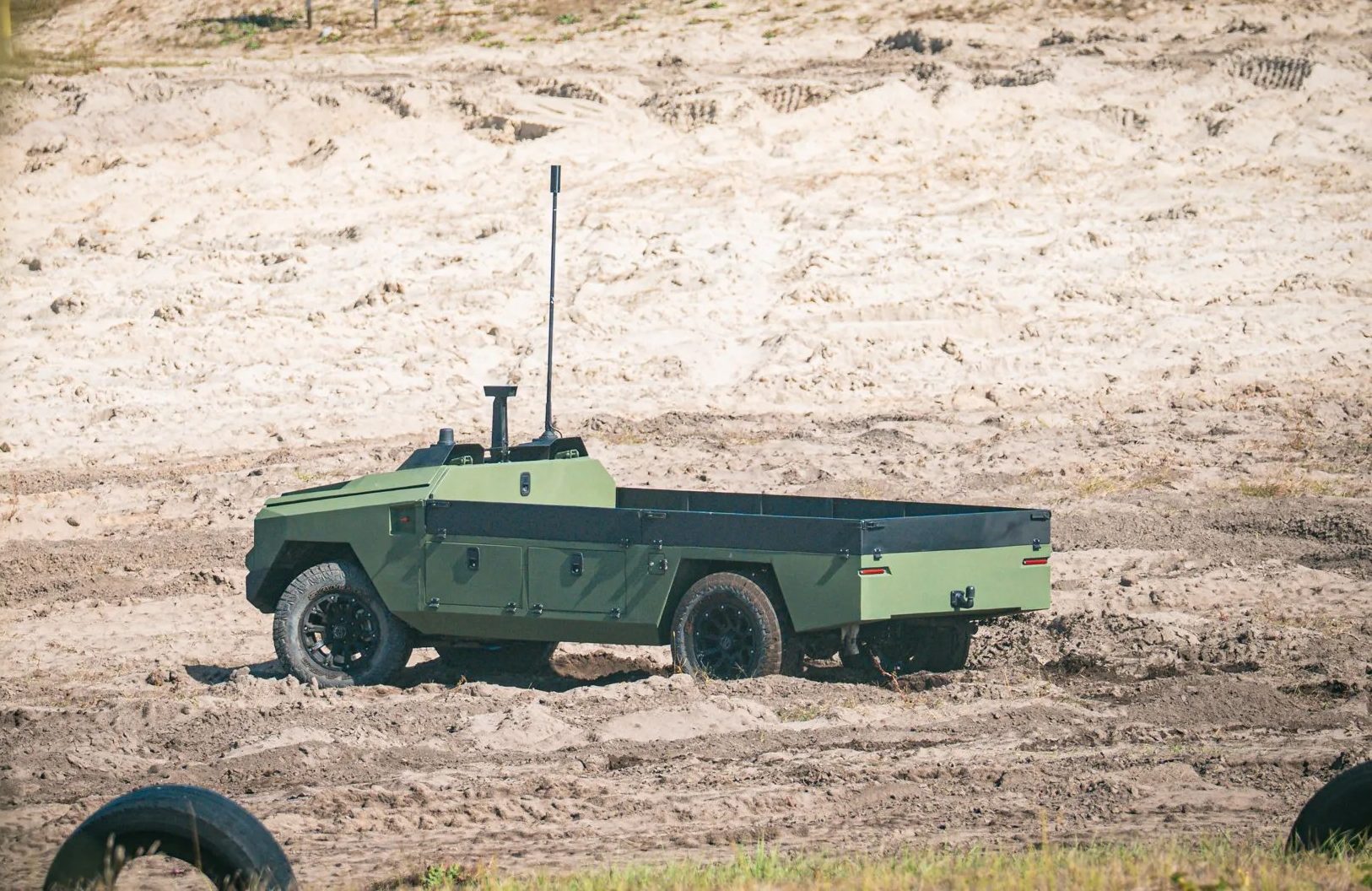
770 kg versus 1,480 kg — on paper, this looks like a dry technical figure. In practice, it means that one Protector ground robotic complex (GRC) can now transport cargo equivalent to a fully loaded light pickup truck in a single trip, and do so where no vehicle could go without risking the crew.
Why payload capacity is a matter of survival, not comfort
On the front lines, "last mile" logistics is the most dangerous section of supply. These are hundreds of meters or kilometers from the safe zone to the position, often swept by drone and artillery fire. Every trip a soldier makes with a box of ammunition or water is a risk of becoming a target for an FPV drone.
This is precisely why doubling the Protector's payload capacity is not just an engineering achievement, but an attempt to reduce the number of dangerous human trips through the threat zone. If previously it took two robot trips to transport a certain volume of cargo, now one trip is enough — which means less time the vehicle spends in the strike zone and fewer recharging or refueling cycles.
What engineers actually changed
To make the platform handle more load without losing maneuverability, developers redesigned the rear suspension — adding pneumatic springs. This technical solution is familiar to automakers: air suspension allows the chassis to maintain stability regardless of the load, unlike a rigid leaf spring system.
The second important point is communications. LTE was added as a backup to the main Starlink channel. This is a practical solution in case the satellite signal is jammed or temporarily unavailable due to terrain or weather conditions: the robot doesn't lose control in the middle of a route.
What usage statistics show
According to the manufacturer, one Protector complex transports over 15 tons of cargo per month, performing up to 20 logistics missions. This includes food, ammunition, and other supplies — the routine but critical work that previously required constant personnel involvement.
If one robot performs 20 missions per month, it effectively replaces daily dangerous trips by people — and that is exactly the practical value of the modernization, not the kilograms themselves.
Ground robotics on the front is gradually transitioning from experimental units to a mass practical tool — alongside robots for evacuating the wounded, demining, or combating drones, which Ukrainian manufacturers have also recently reported on.
What's next
The key question now is not how much the robot can lift, but how many such complexes can actually be supplied to units on the front simultaneously. If Protector production scales proportionally to demand, each additional kilogram of payload capacity will translate into a specific number of saved human trips under fire — and that is already measured not in kilograms, but in lives.